
Pruning
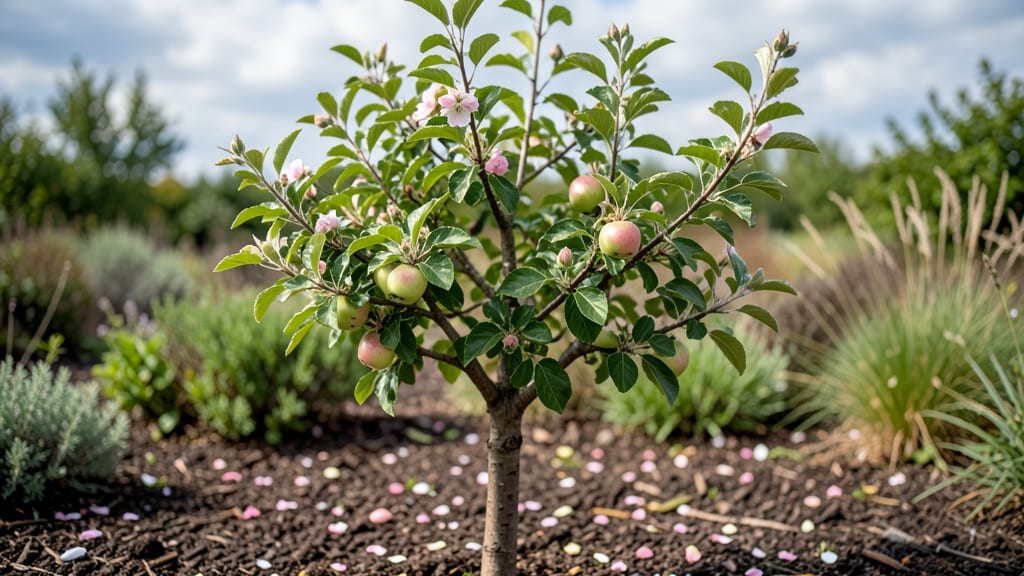
My small apple fruit tree produces 20 pounds of fruit every year in a 10' x 10' backyard corner—proof that dwarf varieties deliver serious harvests without the space. 🍏 I planted 'Liberty' after my neighbor’s sprawling trees kept shading my patio, and now I get crisp, disease-resistant apples without the upkeep of a full-sized tree.
The secret starts with the right variety: semi-dwarf trees like 'Honeycrisp' or 'Fuji' stay manageable while producing standard-sized fruit.
You’ll need well-draining soil (amend with compost if yours is heavy clay), a sunny spot with at least 6-8 hours of light daily, and a sturdy container or hole twice as wide as the root ball.
Water deeply once a week after planting, then taper to every 2-3 weeks once established.
By summer, you’ll see lush foliage and tiny blossoms that turn into fruit. Prune in late winter to remove dead wood and open the center for airflow—this keeps pests at bay and ensures bigger, sweeter apples.
Thin fruit clusters in early summer to leave 6-8 inches between each apple; this prevents overcrowding and improves size.
These trees thrive in containers or small yards, and their compact size makes them perfect for urban gardens or patios. With minimal effort, you’ll enjoy homegrown apples for pies, snacks, or gifting—no orchard required. Let’s get yours growing!
📚 In This Guide
- What you need
- Instructions
- Tips and common mistakes
- Wrapping up and next steps
What you need
- ● Dwarf or semi-dwarf apple tree (choose compact varieties like 'Columnar,' 'Spindle,' or 'Bush' types—check local climate suitability).
- ● High-quality potting soil or well-draining garden soil (10+ gallons for container growing; amend with compost for in-ground planting).
- ● Container or planting hole: For containers: A 5-gallon minimum (7+ gallons ideal) with drainage holes. Fabric or ceramic pots work best.
- ● For in-ground: A hole twice as wide as the root ball and 6–12 inches deep.
- ● Organic fertilizer (balanced 10-10-10 or fruit-specific blend, 1–2 cups per planting season).
- ● Pruning tools: Bypass pruners (for clean cuts on branches ½-inch thick).
- ● Loppers (for thicker branches ¾–1½ inches thick).
- ● Sharp pruning saw (for stubborn branches 2+ inches thick).
- ● Mulch (2–3 inches of wood chips or straw to retain moisture and suppress weeds).
- ○ Watering can or hose with adjustable nozzle (drip irrigation is optional but ideal for consistency).
- ● Tree support stake (1–2 4–6 ft bamboo or metal stakes with soft ties to prevent wind damage).
- ● Slow-release fertilizer spikes (for hassle-free nutrient delivery).
- ● Fruit tree spray (organic copper fungicide or horticultural oil to prevent pests/diseases).
- ● Grow lights or sunlamp (if growing indoors or in low-light areas).
- ● Tree guard or protective netting (to deter critters like deer or birds).
Step-by-Step guide to planting and caring for compact apple trees
Here's how to grow a productive, space-saving apple tree that thrives in even the smallest yard.
🌱 Step 1: Select and Prepare the Right Variety and Location
Choose a dwarf or semi-dwarf variety like 'Liberty', 'Enterprise', or 'GoldRush'—these stay under 10 feet tall while producing full-sized fruit. Check your hardiness zone to pick a cold-hardy variety that matches your climate. I always verify with local nurseries since microclimates vary even within zones.
Site your tree where it gets at least 6-8 hours of direct sun daily. Compact trees need full sun to produce fruit, but they tolerate partial shade better than standard varieties. Avoid low spots where cold air pools—apple blossoms need frost-free nights for pollination. Test the soil pH with a kit; apples thrive in slightly acidic soil (6.0-6.5).
🪴 Step 2: Plant at the Correct Depth and Stake for Support
Dig a hole twice as wide as the root ball but no deeper. The top of the root ball should sit 1-2 inches above ground level—this prevents waterlogging and crown rot. Gently loosen the roots if they're circling and spread them outward before placing in the hole.
Backfill with native soil mixed with 2-3 inches of compost to improve drainage. Water deeply to settle the soil, then stake the tree if needed—compact varieties still benefit from support during their first growing season. I use a 4-foot stake driven at a 45-degree angle away from the prevailing wind, tied loosely with soft fabric strips.
☀️ Step 3: Water Deeply and Mulch for Moisture Retention
Water immediately after planting to eliminate air pockets, then provide 1-2 inches of water weekly during the first growing season. Compact trees have smaller root systems, so consistent moisture is critical. I use a soaker hose to deliver water slowly at the base without wetting the foliage.
Apply 2-3 inches of organic mulch (like wood chips or straw) around the base, keeping it 6 inches away from the trunk. This conserves moisture, regulates soil temperature, and suppresses weeds. Replenish mulch annually—it breaks down over time, especially in rainy climates.
✂️ Step 4: Prune for Shape and Airflow in Early Spring
Prune during late winter or early spring before buds swell, removing any dead, diseased, or crossing branches. Compact trees need open-center shaping to allow sunlight and airflow to reach the center—this prevents fungal diseases. Cut back one-third of last year's growth to encourage new, vigorous branches.
Thin out overly dense growth to leave 4-6 main scaffold branches spaced evenly around the trunk. Avoid heavy pruning in fall—it stimulates new growth that won't harden off before winter. I always sterilize pruners with rubbing alcohol between cuts to prevent spreading disease.
🍏 Step 5: Fertilize and Monitor for Pests/Diseases
Apply a balanced, slow-release fertilizer (10-10-10) in early spring and again after harvest. Compact trees need less fertilizer than standard varieties, so follow package instructions for dwarf trees specifically. I also top-dress with compost annually to improve soil fertility naturally.
Watch for common apple pests like aphids, codling moths, and fungal diseases such as apple scab. Use neem oil or insecticidal soap for early pest control, and apply copper fungicide preventatively in spring if your area is prone to scab. Healthy soil and proper spacing reduce disease pressure significantly.
Tips & tricks for perfect compact apple trees
These key insights will help you maximize your small-space orchard's potential while avoiding common pitfalls that stifle growth.
Variety Selection Wisdom: When choosing between dwarf and semi-dwarf varieties, consider your climate's specific microclimate. Semi-dwarf varieties like 'Enterprise' often handle heat stress better than dwarfs, while 'Liberty' resists apple scab naturally—critical if your area has humid summers. I've found that container-grown trees adapt better to urban environments where soil quality varies significantly.
Planting Depth Secret: The 1-2 inch height above ground level isn't just about aesthetics—it creates a natural moisture barrier that prevents crown rot. If your soil is particularly heavy clay, consider adding a 1-inch layer of coarse sand to the bottom of the planting hole. This improves drainage without compromising the tree's stability, especially important for compact varieties with shallower root systems.
Watering Strategy: Those 1-2 inches of weekly water during the first year should be delivered in the morning to prevent fungal diseases from evening moisture. I've seen dramatic improvements in root establishment when using a soaker hose for 20-30 minutes rather than quick watering methods. The slow release encourages deeper root penetration, which is crucial for compact trees that need to spread their roots efficiently in limited space.
Pruning Technique: When cutting back one-third of last year's growth in Step 4, focus on removing branches that grow inward or rub against each other. These are the hidden culprits that create entry points for diseases. I always make cuts just outside the branch collar—the swollen area where the branch meets the trunk—to promote faster healing and prevent water from pooling in the wound.
Pro Tips for Small Apple Fruit Tree
- These key insights will help you maximize your small-space orchard's potential while avoiding common pitfalls that stifle growth.
- Variety Selection Wisdom: When choosing between dwarf and semi-dwarf varieties, consider your climate's specific microclimate.
- Planting Depth Secret: The 1-2 inch height above ground level isn't just about aesthetics—it creates a natural moisture barrier that prevents crown rot.
Frequently asked questions
Got questions about growing small apple fruit trees?
You’re not alone! Here are some of the most common concerns—and their solutions—to help you cultivate a thriving, space-saving orchard.
What’s the best small apple tree variety for beginners?
Start with ‘Liberty,’ ‘Golden Delicious,’ or ‘Honeycrisp’ dwarf varieties—they’re disease-resistant, easy to care for, and produce sweet, reliable fruit. Look for columnar or semi-dwarf types (like ‘Columnar Apple’) to save space while keeping yields high.
How long does it take for a small apple tree to bear fruit?
Most dwarf apple trees fruit in 2–4 years after planting, while columnar varieties can produce apples as early as 1–2 years. Patience pays off—young trees need time to establish roots and develop energy for blooms. Pro tip: Fertilize with low-nitrogen options (like 5-10-10) to encourage flowering.
Can I grow a small apple tree in a pot?
Use a 15–20 gallon container with drainage holes and well-draining soil. Opt for columnar or spindle-bush varieties (like ‘Patriot’ or ‘Enterprise’)—they thrive in pots and can be moved seasonally. Key rule: Repot every 2–3 years and prune roots to prevent circling.
Why aren’t my small apple tree’s flowers turning into fruit?
Common culprits include poor pollination (plant two compatible varieties nearby), late frosts (protect blossoms with frost cloth), or nutrient imbalances (test soil for boron or zinc). Check for pests too—aphids or mites can stress trees. Fix it: Hand-pollinate with a paintbrush if bees are scarce!
How often should I prune a small apple tree?
Prune once a year in late winter (before buds swell) to remove dead wood, crossing branches, and suckers. For dwarf/columnar trees, keep the shape open and airy—this prevents disease and improves fruit access. Rule of thumb: Never prune when temps are below 40°F.
Can I grow apples in a small urban yard or balcony?
Yes! Choose ‘Pixie’ (ultra-dwarf) or ‘Columnar’ varieties—they fit in 4’x4’ spaces or large pots. For balconies, ensure 6+ hours of sun and use self-pollinating types (like ‘Anna’). Bonus: Train vines vertically to save space!
Wrapping up and next steps
Growing a small apple fruit tree is a rewarding way to enjoy fresh, homegrown apples—even in limited spaces! 🍏 With the right compact variety and proper pruning, you’ll harvest delicious fruit while keeping your garden tidy.
Whether you’re a beginner or a seasoned gardener, these tips will help you nurture a thriving tree and savor the sweet taste of success.
Ready to get started? Pick your favorite variety, gather your tools, and give your tree the love it deserves. Soon, you’ll be enjoying apples straight from your backyard—no orchard required! 🌱