
Pruning
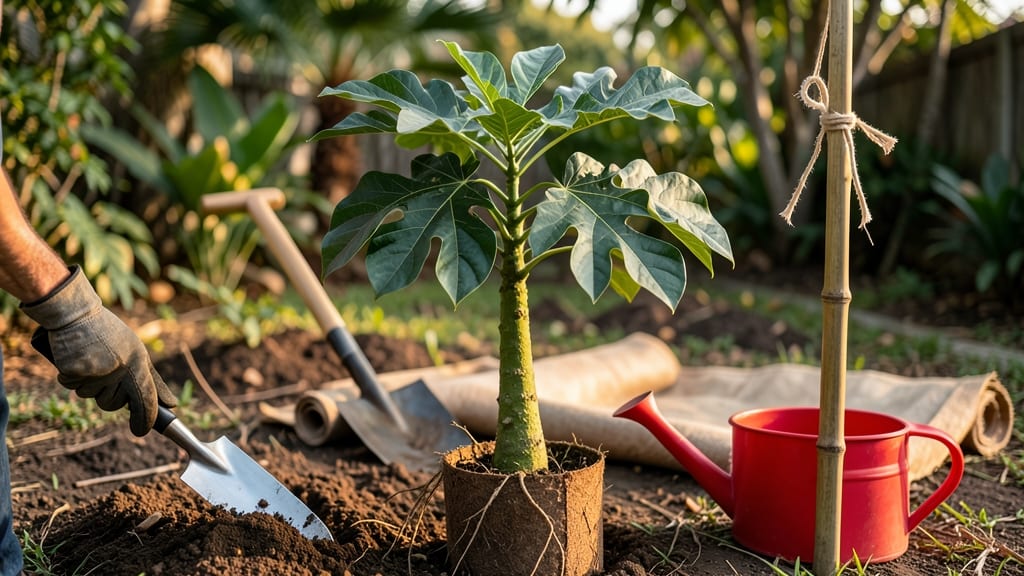
Planting a jackfruit tree means tropical flavors on your doorstep—if you nail the climate and soil. 🌴 I’ve watched mine go from a seedling to a fruit-bearing giant in just three years, but the key is starting right: rich, well-draining soil, full sun, and patience for the first few seasons.
This isn’t a fast crop, but once established, a single tree can feed a family for years with its sweet, versatile fruit.
The first decision? Seeds or grafted saplings. Seeds are cheaper but take 5-7 years to bear fruit, while grafted trees fruit in 2-3 years—though they’re pricier. Either way, your soil needs to mimic the tree’s native tropical home: 6.0-7.5 pH, sandy loam with plenty of organic matter.
In cooler climates, grow in containers and overwinter indoors—jackfruit trees won’t survive frost no matter how hard you prune.
Here’s the secret to early success: water deeply but infrequently—jackfruit trees hate soggy roots. Once established, they’re drought-tolerant, but young trees need 1-2 inches of water weekly.
Prune strategically to shape the tree and encourage heavy fruiting: cut back 1/3 of the canopy in late winter to boost airflow and fruit production.
The first harvest might be small, but each year after, you’ll see clusters of foot-long fruits that taste like a mix of pineapple, mango, and banana.
Common mistakes? Overwatering (root rot is silent but deadly) and pruning at the wrong time (never cut in summer—it stresses the tree). In home gardens, jackfruit thrives best in USDA zones 10-11, but with containers and care, even zone 9 gardeners can grow them.
The payoff? A tree that keeps producing for decades—and the bragging rights of growing a fruit most people only see in stores.
📚 In This Guide
- What you need
- Instructions
- Tips and common mistakes
- Wrapping up and next steps
What you need
- ● Jackfruit seed or sapling: 1 high-quality seed (freshly extracted) or 1 healthy 1-2 year-old sapling (ensure it’s disease-free).
- ● Well-draining soil: 50 lbs of a mix of topsoil, sand, and compost (ratio: 2:1:1). For tropical climates, add perlite or coconut coir for aeration.
- ● Pot or planting hole: For container planting: 1 large pot (15+ gallons) with drainage holes.
- ● For outdoor planting: A hole twice as wide and deep as the root ball.
- ● Fertilizer: 1 lb of balanced organic fertilizer (10-10-10 NPK ratio) or composted manure (e.g., cow or chicken).
- ● Mulch: 2-3 inches of wood chips or straw to retain moisture.
- ● Watering can or hose: With a gentle spray nozzle for seedlings.
- ● Pruning tools: 1 pair of bypass pruners (for small branches).
- ● 1 pruning saw (for thicker stems, 3+ inches in diameter).
- ● Soil test kit: To check pH (jackfruit thrives in slightly acidic to neutral soil (5.5–7.0)).
- ● Root stimulator: 1 bottle (e.g., Mycorrhizal fungi) to boost early growth.
- ● Shade cloth: For young saplings in hot climates (30–50% coverage).
- ● Trellis or support: If planting in a container or windy area (e.g., bamboo stakes).
- ● Pest control: Neem oil or insecticidal soap (for aphids/mealybugs).
Step-by-Step instructions for planting a jackfruit tree
Here's how to establish a thriving jackfruit tree with proper spacing, soil prep, and early pruning for maximum fruit production.
🌱 Step 1: Select and Prepare the Planting Site
Jackfruit thrives in full sun with at least 6-8 hours of direct light daily, so choose a location with minimal shade competition. The tree needs wide root space—at least 20 feet in diameter—so avoid planting near structures or other trees that will compete for moisture and nutrients. Test your soil's drainage by digging a 12-inch hole and filling it with water; if it doesn't drain within 4-6 hours, amend the soil with 1-2 inches of coarse sand or perlite to improve aeration.
Jackfruit trees prefer well-draining, slightly acidic soil with a pH between 5.5 and 7.0. If your soil is heavy clay, mix in 3-4 inches of compost into the top 12 inches of soil to loosen it. Avoid planting in low-lying areas where water pools, as jackfruit roots rot easily in soggy conditions. Here's the thing—don't rush this step. A well-prepared site means fewer struggles later with stunted growth or poor fruit set.
🪴 Step 2: Plant the Sapling at the Right Depth and Stake for Support
Dig a planting hole twice as wide as the root ball but only as deep as the container the sapling came in. Gently remove the tree from its container and loosen any circling roots with your fingers—this encourages outward growth instead of girdling. Place the sapling in the hole so the top of the root ball sits level with the surrounding soil (never bury the trunk deeper than it was in the container). Jackfruit trees are sensitive to root suffocation, so backfill with the native soil you removed, tamping lightly every 2 inches to eliminate air pockets.
Stake the young tree with a 4-5 foot wooden stake positioned 3-4 inches away from the trunk, then tie it loosely with soft fabric strips (never wire, which can cut into the bark). Water the tree deeply to settle the soil, then add a 3-inch layer of organic mulch (like wood chips or shredded bark) around the base, keeping it 6 inches away from the trunk to prevent rot. Real talk: Don't over-mulch—too much smothers the roots and traps moisture, inviting fungal issues.
☀️ Step 3: Water Deeply and Establish a Regular Irrigation Schedule
After planting, water the tree deeply every 2-3 days for the first 4-6 weeks to encourage root establishment. You'll know you're doing it right when the top 6 inches of soil feel moist but not soggy. Once established (after 6-12 months), jackfruit trees are drought-tolerant, but young trees need consistent moisture. Use a soaker hose or drip irrigation to deliver water slowly at the base—avoid overhead watering, which can spread fungal spores and cause leaf diseases.
Reduce watering gradually as the tree matures, aiming for 1-2 deep waterings per week during dry spells. Jackfruit trees store water in their trunks, so they handle brief droughts better than overwatering. Watch for wilting leaves (underwatering) or yellowing foliage (overwatering)—both are red flags. Here's where it gets fun: Prune any suckers or competing shoots that emerge from the base within the first year to direct the tree’s energy into a single strong trunk.
✂️ Step 4: Prune Strategically for Airflow and Fruit Production
Pruning jackfruit trees isn’t just about shaping—it’s about light penetration and airflow, which directly impact fruit yield. Start pruning when the tree reaches 3-4 feet tall, removing any dead, diseased, or crossing branches first. Then, thin out 20-30% of the canopy to open it up; this reduces humidity inside the tree, preventing fungal diseases like anthracnose. Always prune just above a leaf node (where new growth emerges) and use sterilized pruning shears to avoid spreading pathogens.
Focus on structural pruning in the first 2-3 years to establish a strong framework. Remove any water sprouts (fast-growing, weak shoots) and suckers (shoots growing from the base or trunk). You’ll also want to head back (shorten) the main branches by 1/3 to encourage bushier growth. This is the moment that matters: Prune in late winter or early spring, just before new growth begins. Avoid heavy pruning during the fruiting season, as it stresses the tree and reduces yield.
⏰ Step 5: Fertilize and Monitor for Pests/Diseases
Jackfruit trees are heavy feeders, so apply a balanced, slow-release fertilizer (like 10-10-10) 3-4 times per year: once in early spring, again after fruiting, then in late summer, and finally in early fall. Spread the fertilizer 6-12 inches away from the trunk and water it in deeply. Avoid high-nitrogen fertilizers, which promote leafy growth at the expense of fruit production. Instead, opt for a fruit-specific fertilizer with higher phosphorus and potassium ratios (like 7-9-5) once the tree starts flowering.
Keep an eye out for common pests like aphids, mealybugs, and fruit flies, which can devastate young trees. Treat infestations early with neem oil or insecticidal soap, spraying in the early morning or late evening to avoid harming beneficial insects. For diseases, remove and destroy any infected leaves or fruit immediately—don’t compost them. Here’s the deal: Prevention is easier than cure. Regularly inspect the undersides of leaves and the bark for early signs of trouble, and always clean up fallen fruit and debris to reduce pest habitats.
Tips & tricks for planting a jackfruit tree
Here's what nobody tells you about turning a sapling into a productive jackfruit tree—these details make all the difference.
Site Selection Insight: The 6-8 hours of sunlight requirement isn't just about location—it's about the quality of light. South-facing sites in the Northern Hemisphere get the most intense morning sun, which is crucial for jackfruit's tropical energy needs. I've seen trees struggle in spots with afternoon shade, even if they technically get 8 hours of light. Consider installing temporary shade cloth during extreme heat (100°F+) to protect young leaves while maintaining that critical light exposure.
Root Ball Technique: When loosening circling roots in Step 2, don't just pull them apart—score them lightly with a knife if they're tightly bound. This prevents root girdling without damaging the tree. I learned this the hard way after watching a client's jackfruit develop a constricted trunk that never grew properly. The key is to make clean, shallow cuts (about 1/4 inch deep) that allow roots to spread naturally once planted.
Pruning Precision: That 20-30% canopy thinning in Step 4 isn't arbitrary—it creates the perfect balance between airflow and photosynthesis. Remove branches that cross or grow inward first, then selectively thin outward-facing branches to maintain that open structure. I recommend marking branches to remove with spray paint before cutting to visualize the final shape. This strategic approach prevents the dense canopies that invite fungal diseases while maximizing fruit exposure to sunlight.
Fertilizer Timing: The 3-4 applications per year might seem like a lot, but timing is everything. That early spring application should happen when you see new growth emerge—typically when daytime temperatures consistently reach 70°F. The post-fruiting application is particularly important because jackfruit trees deplete nutrients during fruit production. I've found that adding a handful of crushed eggshells around the base at this time provides extra calcium for cell wall strength in developing fruit.
Pro Tips for Planting Jackfruit Tree
- Here's what nobody tells you about turning a sapling into a productive jackfruit tree—these details make all the diff...
- Site Selection Insight: The 6-8 hours of sunlight requirement isn't just about location—it's about the quality of lig...
- Root Ball Technique: When loosening circling roots in Step 2, don't just pull them apart—score them lightly with a kn...
Frequently asked questions
Got questions about planting and growing your jackfruit tree?
Here are some of the most common ones—plus straightforward answers to help you avoid pitfalls and maximize success.
When is the best time to plant a jackfruit tree?
The ideal time to plant a jackfruit tree is during the early rainy season (spring to early summer) in tropical climates. This gives roots ample moisture to establish before dry periods. In cooler zones, plant in late spring or early summer after the last frost. Avoid winter planting—jackfruit is frost-sensitive!
How long does it take for a jackfruit tree to bear fruit?
Patience is key! A young jackfruit tree typically takes 3–5 years to bear fruit, depending on climate and care. Dwarf varieties may fruit sooner (2–3 years), while standard trees can take up to 7 years. Pro tip: Fertilize regularly and prune strategically to encourage faster fruiting.
Can I grow a jackfruit tree in a container?
Yes, but it’s tricky! Jackfruit trees thrive in large containers (at least 20+ gallons) with well-draining soil. They’ll need regular pruning to control size and frequent watering. However, they’re heavy feeders—expect to fertilize monthly during growing seasons. Best for small spaces or urban gardens with warm climates.
What pests or diseases should I watch out for?
Common issues include:
- Root rot (from overwatering)—ensure fast-draining soil.
- Scale insects or mealybugs (sap-sucking pests)—treat with neem oil.
- Fungal diseases (like anthracnose)—prune for airflow and avoid wetting leaves.
How do I know if my jackfruit tree is healthy?
A thriving jackfruit tree has:
- Deep green, glossy leaves (no yellowing or spots).
- Steady growth (3–6 feet/year in ideal conditions).
- Strong, woody branches (not brittle or oozing sap).
Wrapping up and next steps
Planting a jackfruit tree is a rewarding journey that brings year-round harvests and lush greenery to your landscape! With the right strategic pruning and care, you’ll enjoy sweet, tropical fruit while keeping your tree healthy and productive. 🌳✨
Now that you’re armed with the knowledge, take the next step—grab your tools, mark your calendar for pruning seasons, and give your jackfruit tree the love it deserves. Happy planting, and may your garden flourish with bountiful rewards!