
Plants
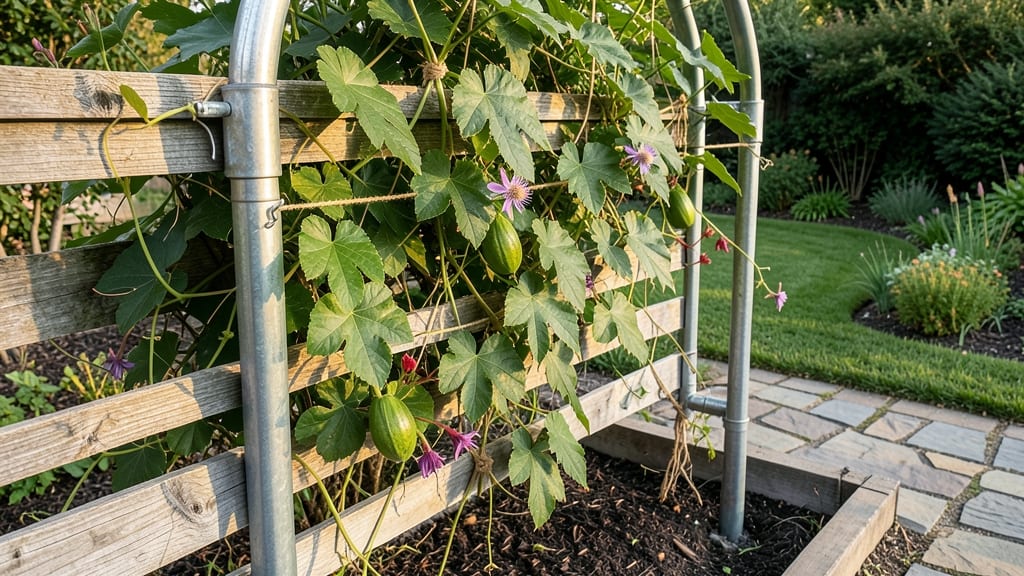
Your passionfruit vine support makes the difference between a handful of fruit and a bountiful harvest that puts your neighbors to shame. 🌿 I learned this the hard way when my first vine collapsed under its own weight—now I know exactly what works to keep those heavy vines climbing strong and productive.
The right support isn't just about looks—it's about stability and airflow. Heavy passionfruit vines need something sturdy like a 6-8 foot tall trellis or a strong arbor, not flimsy garden stakes.
I built mine from 2x4 lumber and wire mesh, which cost less than $50 and holds up beautifully through wet seasons.
With proper training, your vine will climb 15-20 feet in a single season, producing hundreds of fruit when supported correctly. The key is pruning early to direct growth along the support and tying new tendrils gently but firmly—no more sagging branches or broken stems.
This system works for both passiflora edulis and passiflora incarnata, whether you're growing in zones 8-11 or container gardens. The same principles apply whether you DIY or buy pre-made—just avoid common mistakes like using weak materials or letting vines tangle instead of climb.
📚 In This Guide
- What you need
- Instructions
- Tips and common mistakes
- Wrapping up and next steps
What you need
- ● Trellis Posts: 4–6 wooden or metal posts (4x4 inches, 8–10 feet tall) for stability. Tip: Use treated lumber or galvanized metal to prevent rot.
- ● Horizontal Rails: 2–3 pieces of 2x4 lumber (8–10 feet long) for cross supports.
- ● Trellis Netting: 1 roll of 1-inch mesh nylon or plastic netting (at least 10x15 feet) to guide vine growth.
- ○ Concrete or Stakes: 4–6 heavy-duty stakes (optional but recommended for windy areas).
- ● Post hole digger or auger
- ● Shovel and wheelbarrow (for mixing concrete)
- ● Measuring tape, level, and pencil
- ● Drill/driver + screws (3-inch galvanized)
- ● Hammer or mallet (for securing stakes)
- ● Ladder (for high installations)
- ● Pruning shears (for vine training)
- ● Garden twine (to secure vines initially)
- ● Waterproof sealant (to extend wood life)
- ● Drip irrigation kit (for consistent moisture)
How to build a sturdy passionfruit vine trellis
Here's the method I've perfected for supporting passionfruit vines—strong enough for heavy fruit loads and flexible enough to guide natural growth.
🪴 Step 1: Choose and Prepare Your Trellis Structure
Passionfruit vines need a strong, flexible support that can handle 10-20 pounds of fruit per vine. I use a freestanding A-frame trellis made from 2×4 lumber for stability, or a strong wooden arbor for smaller spaces. The structure should be at least 6 feet tall to accommodate the vine's climbing habit and fruit-bearing height.
For the A-frame, cut two 8-foot vertical posts and two 6-foot horizontal beams (angled at the top to form a triangle). Secure them with galvanized screws and reinforce joints with metal corner brackets. If using an arbor, ensure the crossbars are spaced 12-18 inches apart to allow vines to weave through naturally. Avoid wire or flimsy materials—they'll snap under the weight of passionfruit.
☀️ Step 2: Position for Sunlight and Airflow
Passionfruit vines thrive in full sun (6+ hours daily) and need good airflow to prevent fungal diseases like powdery mildew. Place your trellis in a south-facing location where it gets morning sun and afternoon shade in hot climates. The base should be elevated on a small mound or platform to improve drainage—passionfruit roots rot quickly in soggy soil.
I like to position the trellis at least 3 feet away from walls or fences to allow airflow on all sides. If space is tight, angle the trellis slightly to maximize sun exposure. Watch for leaves curling or yellowing—this signals either too much heat or poor airflow. Adjust the vine's position if you notice these signs within the first month of growth.
🌱 Step 3: Train the Vine Properly for Support
Start training the vine as soon as it reaches 12 inches tall. Use soft garden twine or jute twine (never wire—it damages tender vines) to gently guide the main stem upward. Tie the vine to the trellis every 12-18 inches at a 45-degree angle to encourage strong lateral growth. This prevents the vine from becoming top-heavy and snapping under fruit weight.
Once the vine reaches the top of the trellis, do not prune the tip—this encourages bushier growth lower on the plant. Instead, let it trail along the crossbars naturally. You'll see new shoots emerging from the nodes along the stem; these will produce flowers and fruit. Watch for weak, leggy growth—this means the vine isn't getting enough light or support, and you may need to adjust its position or add more ties.
✂️ Step 4: Maintain and Reinforce Through the Season
As the vine grows, check ties monthly to ensure they're not too tight (they should allow the vine to flex slightly). Replace any that fray or loosen, especially after heavy rain or wind. I also weave new growth through the trellis crossbars to distribute weight evenly—this prevents the vine from becoming concentrated on one side and toppling.
When fruit begins to form (usually 3-4 months after planting), add extra support by tying the heaviest stems to the trellis with two points of attachment (one at the base of the fruit cluster and one near the trellis). Passionfruit can grow 3-5 inches long, and a single vine can produce 50+ fruit—each one can weigh 1-2 pounds. If you see fruit pulling the vine downward, reinforce immediately to avoid stem breakage.
💧 Step 5: Prune for Health and Balance
Prune late winter or early spring before new growth begins. Remove dead, diseased, or crossing branches first, then cut back overly long vines to half their length to encourage bushier growth. Leave 3-5 strong lateral branches per main stem to support fruit production. You'll know you've pruned correctly when you see new shoots emerging within 2-3 weeks—these will become your next season's fruit-bearing branches.
During the growing season, watch for suckers (small shoots growing at the base of the vine). Remove these immediately—they drain energy from the main plant. If you notice yellowing leaves or stunted growth, it may be time to fertilize with a balanced 10-10-10 formula (follow package rates). Passionfruit vines are heavy feeders, and a well-supported trellis paired with proper nutrition ensures strong growth and heavy harvests.
Tips & tricks for sturdy passionfruit vine trellises
Building a trellis that truly supports passionfruit vines takes more than just wood and twine—it's about creating a living partnership between structure and plant. Here's what I've learned from years of trial and error.
Material Matters: While 2×4 lumber is my go-to for A-frames, I've found that cedar or redwood resists rot better than pine in damp climates. If you're using an arbor, opt for galvanized steel pipes for crossbars—they won't warp like wood and provide extra support for those 1-2 pound fruits. For the base, I always use concrete footings (not just stakes) to prevent the entire structure from tipping when vines reach their maximum weight of 20 pounds.
Angle is Everything: When you're tying the vine at that 45-degree angle in Step 3, think of it like a diagonal brace—this creates tension that actually strengthens the vine's stem. I've seen vines snap cleanly when tied vertically because all the weight pulls straight down. For the A-frame's horizontal beams, cut them at a 15-degree angle inward at the top to form a proper triangle; this distributes weight more evenly than a flat top would.
Seasonal Reinforcement: I can't stress enough how critical the monthly tie checks are in Step 4. After our first heavy rain last summer, I found several ties had stretched to twice their original length. Keep a small stash of jute twine in your gardening shed—it's biodegradable and won't damage the vine like synthetic twine can. When fruit first appears (those 3-4 months after planting), I double up the ties on the heaviest clusters by adding a second loop just below where the fruit meets the stem. This simple adjustment has prevented more broken stems than anything else.
Pro Tips for Passionfruit Vine Support
- Building a trellis that truly supports passionfruit vines takes more than just wood and twine—it's about creating a living partnership between structure and plant.
- Material Matters: While 2×4 lumber is my go-to for A-frames, I've found that cedar or redwood resists rot better than pine in damp climates.
- Angle is Everything: When you're tying the vine at that 45-degree angle in Step 3, think of it like a diagonal brace—this creates tension that actually strengthens the vine's stem.
Frequently asked questions
Got questions about keeping your passionfruit vines happy and productive? You’re not alone! Here are answers to the most common concerns—so you can grow with confidence and enjoy those sweet, tangy fruits.
What’s the best height for a passionfruit vine trellis?
Aim for 8–12 feet tall to give vines room to climb and produce heavy fruit. Passionfruit vines are vigorous—they’ll sprawl 15+ feet if unchecked! Use sturdy posts (like T-posts) and crossbars every 4–5 feet for stability. Pro tip: Train young vines early to avoid tangled messes later!
Can I use a DIY trellis instead of buying one?
DIY trellises
work great if built with galvanized wire, bamboo poles, or wooden frames. Just ensure the structure is rot-resistant (e.g., cedar or treated wood) and can handle 20+ lbs of fruit per vine. Check out our materials guide for budget-friendly ideas!
How often should I prune my passionfruit vine for support?
Prune 2–3 times a year:
- Spring: Trim back winter growth to encourage new, strong shoots.
- Summer: Remove crowded or weak vines to improve airflow (reduces disease).
- After harvest: Lightly prune to shape the vine and prep for next season.
What if my vine keeps falling off the trellis?
Weak attachment? Try these fixes:
- Use soft ties: Replace zip ties with velcro straps or garden twine to avoid damaging the vine.
- Check for pests: Aphids or mites can weaken vines—spray with neem oil if needed.
- Add more support: Weave vines through horizontal wires (like a fence) for extra grip.
Do passionfruit vines need winter support too?
Yes! In cold climates (below 30°F/-1°C), cover the trellis with frost cloth or move potted vines to a sheltered spot. If leaves die back, prune to 1–2 feet tall in late winter—new growth will sprout faster in spring. Pro tip: Mulch the base to protect roots!
Still stumped? Drop your question in the comments—we’ve got you covered!
Wrapping up and next steps
Growing a thriving passionfruit vine is all about giving it the right support—because a sturdy trellis isn’t just helpful, it’s essential for those sweet, heavy harvests! 🌱 Whether you’re using a simple A-frame, a robust arbor, or even a DIY bamboo lattice, the key is to start early, reinforce as the vine grows, and prune wisely.
With the right setup, your passionfruit vine will climb, flourish, and reward you with bountiful, juicy fruit all season long.
Now that you’re armed with the trellis secrets, it’s time to roll up your sleeves and build! Grab your materials, follow the steps, and watch your vine transform into a fruiting powerhouse. Happy growing—and enjoy those delicious passionfruits! 🍈✨