
Container Gardens
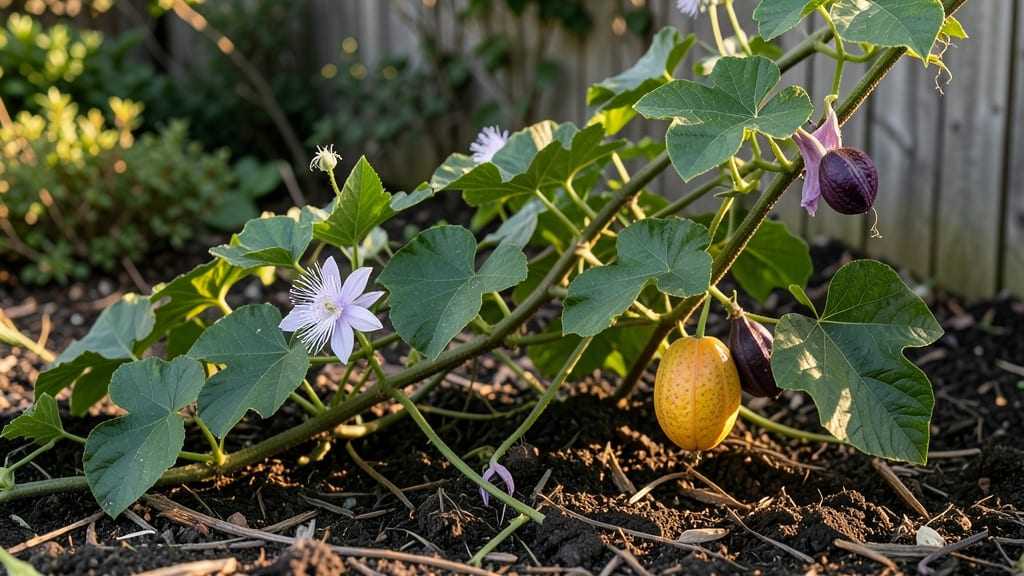
Growing passionfruit thrives in zones where winters stay above 30°F—and chill-hour needs vary wildly by variety. 🌿 My first attempt with a tropical passionfruit in zone 7 ended in frost damage, but I learned which varieties tolerate cooler nights.
The key difference? Some need zero chill hours, while others require 100-500 to fruit properly.
California’s coastal regions, Florida’s subtropical climate, and Australia’s tropical north are passionfruit’s natural sweet spots. Even in cooler zones like 8-10, you can grow them outdoors year-round with proper protection.
For zones 7 and below, container growing with winter shelter becomes your best bet—just keep them near a south-facing wall or under a greenhouse.
What you’ll end up with is vibrant, fragrant vines producing those signature tropical fruits—whether you’re growing in pots on a balcony or training them along a trellis in the garden. The first harvest arrives in 6-12 months, depending on whether you start from seed or a young plant.
Patience pays off with sweet, juicy fruits that taste nothing like store-bought.
Here’s the twist: even in marginal zones, a microclimate trick—like a cold frame or row cover—can extend the growing season. I’ve seen passionfruit survive brief dips to 25°F when protected, so don’t rule out your area just yet.
Let’s match your zone to the right variety and get those vines growing.
📚 In This Guide
- What you need
- Instructions
- Tips and common mistakes
- Wrapping up and next steps
What you need
- ● Passionfruit plants: Choose between Purple (Passiflora edulis) or Yellow (Passiflora flavicarpa) varieties, depending on your zone’s chill-hour requirements. Start with 1–3 healthy nursery plants or rooted cuttings.
- ● Well-draining potting mix: 5–10 gallons per container (use a blend of cactus/succulent mix + perlite/vermiculite for aeration). Avoid heavy garden soil.
- ● Containers: 5–15 gallon pots with drainage holes (larger for mature vines). Terracotta or fabric grow bags work best.
- ○ Support structure: A trellis, arbor, or sturdy wire cage (6+ feet tall) to guide climbing vines. Optional: Use bamboo stakes for smaller varieties.
- ● Pruning shears: Sharp, sterilized shears for trimming vines and dead foliage.
- ● Gloves: Heavy-duty gardening gloves (passionfruit vines have tiny hooks!).
- ● pH test kit: Ideal soil pH: 6.0–7.0. Adjust with lime (to raise) or sulfur (to lower) if needed.
- ● Fertilizer: Balanced fertilizer (10-10-10): Apply monthly during growing season (spring–fall).
- ○ Citrus/acid-loving plant fertilizer: Optional but beneficial for nutrient-dense fruit.
- ● Mulch: Organic mulch (straw or wood chips) to retain moisture and regulate soil temp.
- ● Drip irrigation or hose: Passionfruit needs 1–2 inches of water weekly (more in containers).
How to choose the right passionfruit variety for your growing zone
Not all passionfruit thrive in every climate—here's how to match the perfect variety to your chill-hour needs.
🌱 Step 1: Determine Your Hardiness Zone and Chill-Hour Requirements
Start by identifying your USDA hardiness zone—passionfruit vines tolerate zones 8-11, but their cold tolerance varies dramatically by variety. Most tropical passionfruit (like Passiflora edulis) need no chill hours and die back in frost, while temperate varieties (Passiflora edulis 'Panama Red' or Passiflora caerulea) require 200-500 chill hours to flower reliably.
Check your local weather records for annual chill hours (below 45°F). If you're in zone 9-10 with minimal winter chill, stick to tropical varieties. In zones 7-8, you'll need a temperate passionfruit that can handle 100+ chill hours. I always verify with my local cooperative extension office—they have precise microclimate data that home weather stations miss.
☀️ Step 2: Select Varieties Based on Your Climate Type
Tropical passionfruit (Passiflora edulis) dominate commercial production in Florida and Southern California because they produce year-round with no chill hours. Varieties like 'Purple' or 'Golden' thrive in zones 10-11, but even a light frost will kill the vine. For zone 9, choose semi-tropical hybrids like 'Panama Red' that tolerate brief dips to 28°F if mulched heavily.
Temperate passionfruit (Passiflora caerulea or Passiflora incarnata) are your best bet for zones 7-8. 'Blue Dawn' passionflower needs 300-500 chill hours and produces stunning (but inedible) flowers, while 'Maypop' (P. incarnata) requires 200-300 chill hours and yields small, tart fruit. I've grown 'Maypop' in zone 8a with a 3-inch layer of straw mulch—it survived winters down to 18°F with no protection beyond that.
🪴 Step 3: Prepare Your Site for Zone-Specific Planting
Tropical varieties need full sun (6+ hours daily) and well-draining soil—they wilt quickly in soggy conditions. Amend heavy clay with 3-4 inches of compost and sand to improve drainage. In zones 9-10, plant in raised beds or containers to prevent root rot during monsoon seasons. I use 5-gallon fabric pots for my 'Panama Red' vines—they drain excess water while still insulating roots in winter.
Temperate passionfruit handle cooler soils better but still need rich, slightly acidic (pH 6.0-7.0) loam. Work in aged manure or worm castings at planting to boost organic matter. In zones 7-8, plant vines against a south-facing wall or trellis to capture winter sun. The key is protection from wind—passionfruit leaves are tender and tear easily in gusts, which stunts growth.
⏰ Step 4: Time Planting and Pruning for Your Zone
In tropical zones (10-11), plant year-round—vines grow aggressively with no dormancy. Pinch back new growth after 4-6 leaves to encourage bushier vines. In semi-tropical zones (9), plant in early spring (after last frost) and late summer for a second flush. Prune lightly in winter to remove dead wood, but avoid heavy cuts—tropical vines flower on new growth.
Temperate varieties need spring planting after the last frost, ideally when soil reaches 65°F. Prune in late winter (before buds swell) to remove dead or crossing branches. I always leave 3-4 strong canes—this ensures enough energy for both fruit production and winter survival. In zone 8, I wrap young vines in burlap for the first two winters to prevent cold damage.
💧 Step 5: Adjust Watering and Fertilizing for Your Climate
Tropical passionfruit need consistent moisture—let the top 2 inches of soil dry between waterings, but never let roots sit in water. In zone 10, I water deeply every 2-3 days during summer, reducing to weekly in winter. Fertilize monthly with a balanced 10-10-10 mix to support rapid growth. Over-fertilizing leads to lush foliage but few fruits—always reduce nitrogen if you see more leaves than flowers.
Temperate passionfruit are more drought-tolerant but still need 1-1.5 inches of water weekly. In zone 7, I water deeply once a week and mulch with 4 inches of wood chips to retain moisture. Fertilize twice a year: once in early spring with high-phosphorus (5-10-10) for flowering, and again in mid-summer with potassium-rich (0-0-50) for fruit development. I've found that over-fertilizing in fall encourages tender new growth that freezes in winter.
Tips & tricks for perfect passionfruit variety selection
Matching passionfruit to your climate isn't just about hardiness—it's about maximizing flavor and yield. Here's how to avoid common pitfalls and get the most from your vines.
Chill-Hour Reality Check: Those 200-500 chill hours aren't just numbers—they're the difference between reliable fruiting and disappointment. I've seen gardeners in zone 8 plant tropical varieties expecting fruit only to get beautiful vines and no harvest. The 45°F threshold is critical: count every hour below this temperature annually. For example, my zone 8b garden gets exactly 240 chill hours—perfect for 'Maypop' but too little for 'Panama Red' unless I provide supplemental winter protection.
Microclimate Mastery: Your yard might have hotter or cooler spots than your official zone suggests. I always test soil temperatures in potential planting locations during winter. In my zone 9 garden, the north side of the house stays 5°F cooler than the south—enough to make the difference between frost damage and survival for semi-tropical varieties. Use a soil thermometer for 3 days in winter to map your microclimates before planting.
Winter Protection Hacks: For borderline zones, simple strategies can extend your growing range. In zone 8, I've successfully grown 'Panama Red' by wrapping vines in burlap during winter and adding 3-4 inches of straw mulch around the base. The mulch acts like insulation, preventing soil temperature swings that can stress roots. For container-grown vines, move pots to a sheltered location or wrap them in bubble wrap during cold snaps—this can push your effective growing zone by 1-2 zones.
Soil pH Precision: That 6.0-7.0 pH range for temperate varieties isn't just a suggestion—it's a make-or-break factor. I test my soil annually using a simple soil test kit (available at garden centers for under $10). For acidic soils, I mix in crushed limestone at planting time. The key is gradual adjustment: adding too much lime at once can shock plant roots. For tropical varieties, slightly more acidic soil (5.5-6.5) works better, so I might add sulfur to adjust pH downward if needed.
Pro Tips for Passionfruit Growing Zone
- Matching passionfruit to your climate isn't just about hardiness—it's about maximizing flavor and yield.
- Chill-Hour Reality Check: Those 200-500 chill hours aren't just numbers—they're the difference between reliable fruiting and disappointment.
- Microclimate Mastery: Your yard might have hotter or cooler spots than your official zone suggests.
Frequently asked questions
Got questions about growing passionfruit in your zone? Here are some of the most common concerns—and their solutions!
What are the best USDA growing zones for passionfruit?
Passionfruit thrives in USDA Zones 8-11, where winters are mild (or nonexistent). In cooler zones (7 or below), grow them in containers and bring them indoors during frost. Purple passionfruit (Passiflora edulis) is the most cold-hardy, tolerating brief dips to 20°F (-7°C). If you're in Zone 6 or colder, consider Passiflora caerulea (blue passionflower), which is hardier but less fruity.
How many chill-hours do passionfruit varieties need?
Most tropical passionfruit varieties (Passiflora edulis) require 0-100 chill-hours (0-35°F/2°C) to trigger flowering. Granadilla (P. ligularis) and banana passionfruit (P. tripartita) may need slightly more (100-200 chill-hours). If your zone lacks chill-hours, use a grow light or prune aggressively to encourage blooms. Pro tip: Pinch back vines in early spring to redirect energy into flowering!
Can I grow passionfruit in containers if I’m outside the ideal zone?
Containers are a game-changer for cooler climates. Use a 15-20 gallon pot with drainage holes, fill it with well-draining potting mix, and place it in full sun (6+ hours/day). Overwinter indoors near a sunny window or under grow lights. Warning: Avoid plastic pots—they can overheat roots. Terracotta or fabric pots breathe better!
Why aren’t my passionfruit vines producing fruit?
Common culprits include lack of pollinators (hand-pollinate with a brush if bees are scarce), over-fertilizing with nitrogen (use a balanced 10-10-10 or 5-10-10 fertilizer instead), or inadequate sunlight. Female flowers (with 3 stigmas) must be pollinated by male flowers (with 5 stamens). Pro tip: Prune vines to 3-4 feet tall to encourage more flowers!
What’s the fastest way to get passionfruit to bear fruit?
Patience is key—most passionfruit vines take 1-3 years to fruit. To speed things up:
- Plant mature vines (1-2 years old) instead of seeds.
- Keep soil temps warm (70-85°F/21-29°C) for faster growth.
- Water consistently but avoid soggy soil.
- Train vines on a trellis for better air circulation and fruit development.
Wrapping up and next steps
Growing passionfruit is an exciting journey, and understanding passionfruit growing zones—especially chill-hour needs—is your secret weapon for success! 🌱 Whether you’re cultivating sweet P. edulis or hardy P. ligularis, the right climate and care will reward you with vibrant vines and delicious fruit.
Now that you’re armed with knowledge, it’s time to roll up your sleeves—start planning your container setup, monitor those chill hours, and watch your passionfruit thrive!
Ready to take the next step? Pick your variety, prep your space, and let the growing adventure begin! 🌿