
Size
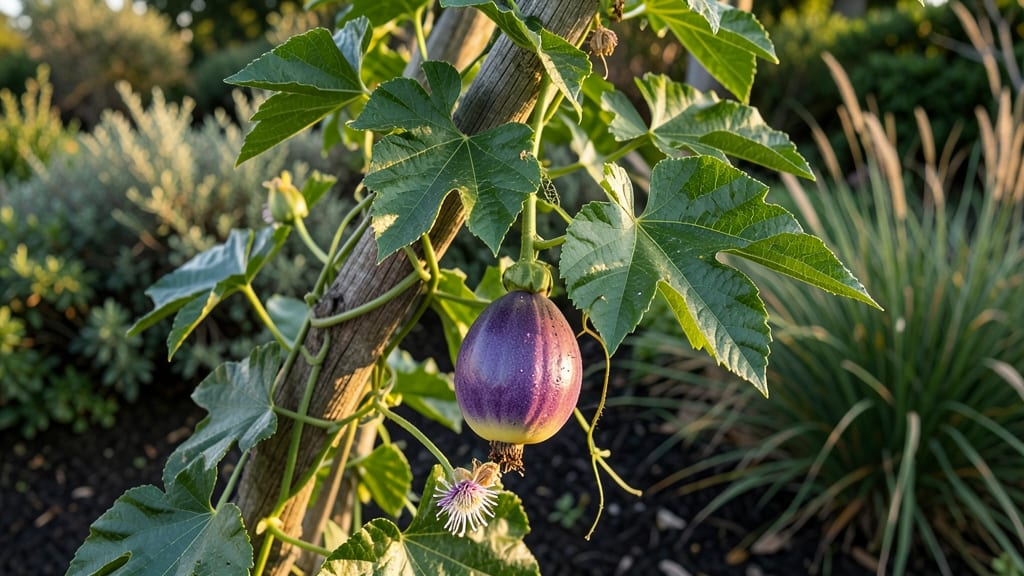
A passion fruit plant size can stretch 20 to 30 feet in ideal conditions 🍈, transforming your garden into a tropical jungle if left unchecked.
If you’re dreaming of homegrown passion fruit but wondering how much space those sprawling vines will need, you’re not alone—many gardeners underestimate their growth potential.
Understanding the vine growth stages and space requirements is the key to keeping your harvest bountiful without sacrificing your garden layout.
In this guide, I’ll break down how fast passion fruit vines grow, the best support systems to use, and how to train them for maximum fruit production—whether you’re working with 10 feet of trellis or a sprawling backyard.

How big does a passion fruit vine grow? Stages of vine expansion
Passion fruit vines are among the most vigorous tropical plants, capable of reaching 20 to 30 feet in ideal conditions. Their growth isn’t just vertical—these vines sprawl horizontally, creating a dense canopy that can spread 15 to 20 feet wide if unchecked.
Understanding their growth stages helps you plan for space, support, and productivity from the start.
Growth begins as a delicate seedling stage, where vines grow just 1 to 2 feet in their first few months. By year one, you’ll see rapid expansion, with vines climbing 5 to 10 feet and producing tendrils that cling to any available support.
This early growth sets the foundation for their mature size, which can double or triple in subsequent years.
Purple passion fruit (Passiflora edulis) and yellow passion fruit (Passiflora edulis flavicarpa) are the most common varieties, but their growth habits differ slightly. Purple varieties tend to grow slightly taller and more aggressively, while yellow varieties often produce longer, more sprawling vines. Both, however, require similar space and support.
Here’s a breakdown of their growth stages and space requirements to help you visualize their expansion:
| Growth Stage | Height (Ft) | Spread (Ft) | Timeframe | Notes |
|---|---|---|---|---|
| Seedling | 0.5-1 | 0.5-1 | 0-3 months | Delicate; needs support |
| Year 1 | 5-10 | 3-6 | 3-6 months | Rapid vertical growth |
| Year 2 | 15-20 | 10-15 | 6-12 months | Horizontal spread accelerates |
| Mature | 20-30 | 15-20 | 2+ years | Full productivity begins |
| Purple Variety | 20-25 | 12-15 | Mature | Taller, denser canopy |
Space requirements for passion fruit vines: training and support systemsPassion fruit vines are aggressive growers, capable of stretching 20-30 feet in ideal conditions. Without proper training and support, they’ll sprawl uncontrollably, competing with other plants for sunlight and nutrients. The key to managing their size lies in vertical training—using trellises, arbors, or sturdy stakes to guide their growth upward, saving precious garden real estate. For in-ground planting, allocate at least 6-8 feet of horizontal space around the base to accommodate lateral branches. However, with a strong trellis system, you can reduce this footprint by 50% or more. Vertical growth also makes harvesting easier, as fruit ripens along the upper vines where it’s more accessible. Pruning plays a critical role in controlling vine size. Regularly trim back excessive lateral shoots to encourage upward growth and improve air circulation. I recommend pruning twice a year: once in early spring to shape the vine and again after harvest to remove dead or overcrowded branches. This not only keeps the plant manageable but also boosts fruit production by directing energy toward new growth. If you’re growing in containers, choose a large pot (15+ gallons) with drainage holes and pair it with a vertical trellis to maximize space efficiency. Containers dry out faster, so monitor soil moisture closely and water deeply every 2-3 days during hot weather. This method is ideal for small gardens or urban balconies, where space is limited but you still want a bountiful harvest. For small gardens, consider a pyramid-shaped trellis or a wall-mounted trellis to save space while providing ample support. These designs allow vines to climb vertically without encroaching on your lawn or flower beds. Just ensure the trellis is buried 12 inches deep or anchored securely to withstand the vine’s weight as it matures. Remember, passion fruit vines thrive on structure. Without proper support, they’ll flop onto the ground, making fruit harvesting difficult and increasing the risk of rot or pest damage. Invest in a durable trellis system** upfront—it’s the best way to enjoy homegrown passion fruit without sacrificing your garden’s layout. 🌱 |