
Planting
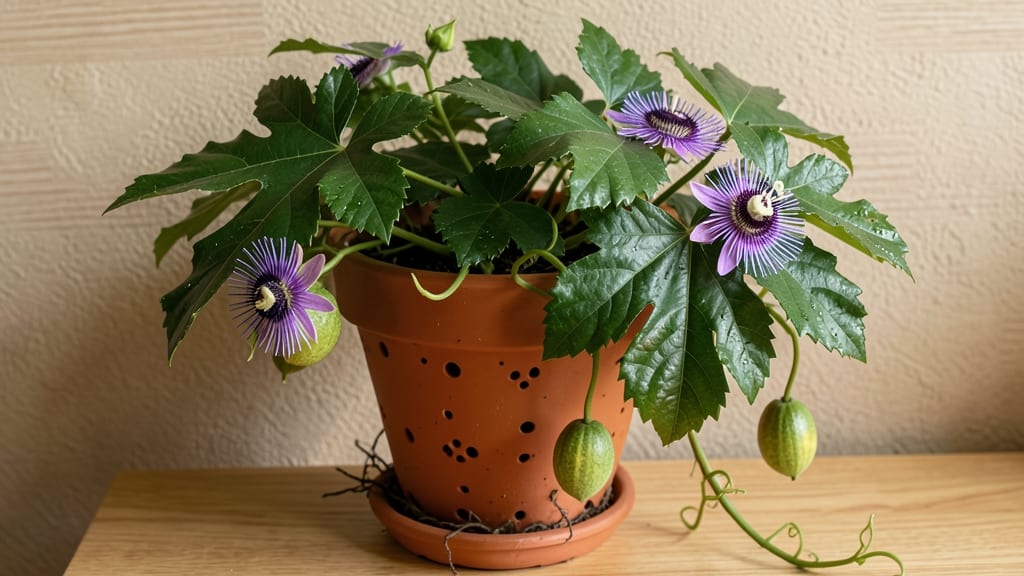
Growing a passion fruit plant indoors transforms your kitchen into a tropical paradise with minimal effort. ✨ My first vine produced fruit in just 18 months, and the sweet-tart flavor from homegrown passion fruit beats anything you'll find in stores.
The key is choosing the right variety—dwarf passion fruit (Passiflora edulis 'Flavor Granadilla') thrives in containers and produces fruit reliably indoors.
You'll need a 10-15 gallon container with drainage holes, a well-draining potting mix rich in organic matter, and a sunny window facing south or west. The plant craves warmth—keep it above 60°F—and thrives with 6-8 hours of direct sunlight daily.
Without natural pollinators, you'll need to hand-pollinate using a small paintbrush to transfer pollen between flowers in the morning.
Water consistently to keep the soil lightly moist but never soggy, and prune lightly to encourage bushier growth. Within a year, you'll see vibrant purple blooms followed by fruit—each one a reward for your patience. The first harvest might be small, but the plant matures quickly, producing more each season.
Troubleshooting is simple: yellow leaves mean overwatering; sparse blooms signal insufficient light. With proper care, your indoor passion fruit plant will reward you with harvests year-round, turning your home into a mini tropical oasis. Here's how to get started!
📚 In This Guide
- What you need
- Instructions
- Tips and common mistakes
- Wrapping up and next steps
What you need
- ● Passion fruit plant (Passiflora edulis or Passiflora caerulea): 1 healthy young plant (3–6 inches tall) from a nursery or online supplier.
- ● Ensure it’s disease-free and has vibrant leaves.
- ● Large container or pot: Minimum 12-inch diameter (or larger for mature plants).
- ● Must have drainage holes at the bottom.
- ● Material: Terracotta or fabric pots (preferred for airflow).
- ● Well-draining potting mix: 2–3 gallons of a blend like 60% cactus/succulent mix + 40% perlite/pumice.
- ● Avoid heavy garden soil—it causes root rot!
- ● Support structure: 1 trellis, bamboo stake, or sturdy wire cage (4–6 feet tall).
- ● Passion vines need vertical space to climb!
- ● Fertilizer: Balanced liquid fertilizer (10-10-10 or 20-20-20) or organic compost.
- ● Start with 1 tablespoon per gallon of water every 4–6 weeks.
- ● Pruning shears: Small, sharp pair for trimming vines (sterilize with rubbing alcohol!).
- ● Spray bottle: For misting leaves (especially in dry climates).
- ○ Grow lights (optional): LED full-spectrum bulb (10,000–12,000 lumens) for 6–8 hours/day if natural light is <5 hours.
- ● Humidity tray: A shallow tray with pebbles + water to boost moisture.
- ● Plant labels: To track varieties and care notes!
Step-by-step instructions for growing passion fruit indoors
Here’s how to coax a tropical passion fruit vine into thriving in your home—no greenhouse needed.
🪴 Step 1: Select the Right Container and Drainage
Passion fruit vines need room to climb, so choose a 5-gallon pot or larger with drainage holes—root-bound vines produce fewer fruits. I use terracotta containers because they wick away excess moisture, preventing the fungal issues that plague overwatered passion fruit. Fill the bottom 2 inches with gravel or perlite to create a drainage layer that keeps roots oxygenated.
This plant’s roots are sensitive to soggy soil, so if your pot lacks drainage, drill ¼-inch holes in the base. Line the pot with landscape fabric to prevent soil from washing out while still allowing water to escape. The key here is balance—too much drainage dries roots out, but poor drainage leads to root rot. You’ll know you’ve got it right when water drains freely within 10-15 minutes after watering.
☀️ Step 2: Prepare Well-Draining, Nutrient-Rich Soil
Passion fruit vines despise heavy garden soil, so mix equal parts potting mix, perlite, and coconut coir for a light, airy blend that mimics their tropical habitat. I add a slow-release fertilizer (like 10-10-10) at planting time to give the vine a nutrient head start. Fill the pot ¾ full, leaving room for the root ball of your young plant.
Press the soil down gently but firmly—you want it snug enough to support the vine but loose enough for roots to spread. The ideal soil should crumble easily when squeezed but hold its shape. Avoid compacting it too much, or the roots will struggle to penetrate. If you’re planting from seed, sow ½ inch deep and keep the soil warm (75-80°F) for germination.
🌱 Step 3: Plant and Provide Immediate Support
Place your passion fruit vine in the center of the pot, ensuring the root ball sits 1 inch below the rim—this prevents soil from spilling when you water. Gently tease apart any circling roots to encourage outward growth. If your vine is bare-root, soak the roots in lukewarm water for 10 minutes before planting to revive them.
Install a trellis or sturdy bamboo stake immediately—passion fruit vines grow aggressively and need support to climb. Secure the main stem to the trellis with soft plant ties, leaving 6 inches of space between the plant and the top of the pot. This encourages upward growth rather than sprawling. Within 2-3 weeks, you’ll see new leaves unfurling as the vine adjusts to its new home.
💧 Step 4: Water and Maintain Humidity
Water deeply twice a week, allowing the top 2 inches of soil to dry out between waterings. Passion fruit vines are drought-tolerant but produce best with consistent moisture. Use room-temperature water to avoid shocking the roots, and water at the base to prevent fungal spores from splashing onto leaves. You’ll know you’re doing it right when water drains freely from the bottom holes.
Passion fruit thrives in 60-80% humidity, so mist the leaves daily or place the pot on a pebble tray filled with water. A small humidifier near the plant works wonders, especially in dry climates. Watch for yellowing leaves—this is a sign of either overwatering or low humidity. Adjust your watering schedule or increase humidity immediately to prevent stress.
✂️ Step 5: Prune for Health and Fruit Production
Prune new growth back by ⅓ in early spring to encourage bushier, fruit-bearing vines. Remove any dead, yellow, or diseased leaves with clean, sharp pruners to prevent pests from moving in. I also pinch off the first few flowers if the vine is young—this redirects energy into stronger growth rather than fruit production.
Once the vine is established, prune laterally to shape it along the trellis, keeping the strongest 4-5 main stems. Passion fruit vines produce on new wood, so avoid heavy pruning in fall or winter. You’ll know your pruning is working when you see plump buds forming along the stems—these will develop into your passion fruit harvest in 8-12 weeks.
Tips & tricks for thriving indoor passion fruit vines
Here's what I've learned after growing these tropical beauties in my own sunny windows—avoid these common pitfalls!
The Container Game-Changer: If you're using a decorative pot without drainage, don't skip the DIY fix! Drill those ¼-inch holes in the base and add a 2-inch gravel layer—this mimics their natural habitat where water drains quickly. I've seen root rot develop within weeks when this step is skipped, so trust me on this. The 10-15 minute drainage test after watering is your best indicator of proper setup.
Soil Mix Secrets: That equal parts potting mix, perlite, and coconut coir blend is non-negotiable for indoor passion fruit. The coconut coir holds moisture without compacting, while perlite prevents that dreaded soggy soil. Pro tip: Add a handful of orchid bark to your mix for extra aeration—it creates pockets that roots love. And if you're starting from seed, keep that soil warm at 75-80°F using a seedling heat mat; germination is finicky without proper warmth.
Support System Savvy: The 6 inches of space you leave between plant and trellis top isn't just arbitrary—it's what prevents the vine from getting top-heavy and toppling over. I've had my share of dramatic vine collapses when I ignored this! Use soft plant ties that won't cut into the stem as it grows. And here's a bonus: Rotate your pot every 2-3 weeks so all sides get equal light exposure, which prevents lopsided growth toward the window.
Pruning Precision: When you're pruning that new growth back by ⅓ in spring, focus on keeping those main stems strong and vertical. The buds that form after pruning are where your fruit will develop in 8-12 weeks, so be strategic about which stems you keep. I always save the most vigorous shoots—look for ones with the darkest green leaves and most consistent growth pattern. And remember, those first few flowers should be pinched off if your vine is young; it's like giving your plant a growth spurt before asking it to bear fruit.
Pro Tips for Passion Fruit Plant Indoors
- Here's what I've learned after growing these tropical beauties in my own sunny windows—avoid these common pitfalls!
- The Container Game-Changer: If you're using a decorative pot without drainage, don't skip the DIY fix! Drill those ¼-...
- Soil Mix Secrets: That equal parts potting mix, perlite, and coconut coir blend is non-negotiable for indoor passion ...
Frequently asked questions
Got questions about growing passion fruit indoors?
You’re not alone! Here are some of the most common concerns—and straightforward answers—to help your Passiflora thrive in a sunny window.
Can passion fruit plants actually bear fruit indoors?
While it’s possible, it’s rare unless you live in a warm, humid climate (like Zone 10+) with a bright, south-facing window. Indoor passion fruit plants often focus on leafy growth first. For fruit, consider a greenhouse or supplemental grow lights. Even if they don’t bear fruit, they’re stunning vines with fragrant flowers!
How long does it take for an indoor passion fruit plant to grow?
With proper care, you’ll see new leaves and vines in 4–8 weeks, but fruiting (if it happens) can take 6–12 months from planting. Patience is key—these tropical plants grow slowly indoors. Prune regularly to encourage bushier growth and faster fruiting potential.
Why are my passion fruit leaves turning yellow or dropping?
Yellow leaves usually mean overwatering or poor drainage. Let the top 1–2 inches of soil dry out between waterings, and ensure your pot has drainage holes. Brown edges? Underwatering or low humidity. Mist leaves or use a pebble tray to boost moisture—passion fruit loves it tropical!
What’s the easiest alternative to passion fruit for indoor growing?
If passion fruit seems too finicky, try mini citrus trees (like Meyer lemons), dwarf avocado, or strawberry plants. They’re more forgiving indoors but still rewarding. For a similar vine experience, grapevine or boston ivy are great low-maintenance picks!
Do I need to prune my indoor passion fruit plant?
Yes! Pruning keeps it compact, healthy, and productive. Trim back leggy vines in early spring to encourage bushier growth. Remove dead or yellowing leaves, and pinch off spent flowers to redirect energy. Just avoid heavy pruning in winter—let it rest. Pro tip: Save cuttings to propagate new plants!
Wrapping up and next steps
Growing a passion fruit plant indoors is a rewarding journey that brings tropical vibes to your space with minimal effort! With the right sunlight, support, and occasional pruning, you’ll enjoy sweet, homegrown fruit year-round.
Whether you’re a beginner or a seasoned plant parent, this lush green companion is a fantastic addition to your indoor garden.
Ready to dive in? Start by gathering your supplies and choosing the perfect spot—your passion fruit plant is waiting for its new home! 🌱✨