
Picking
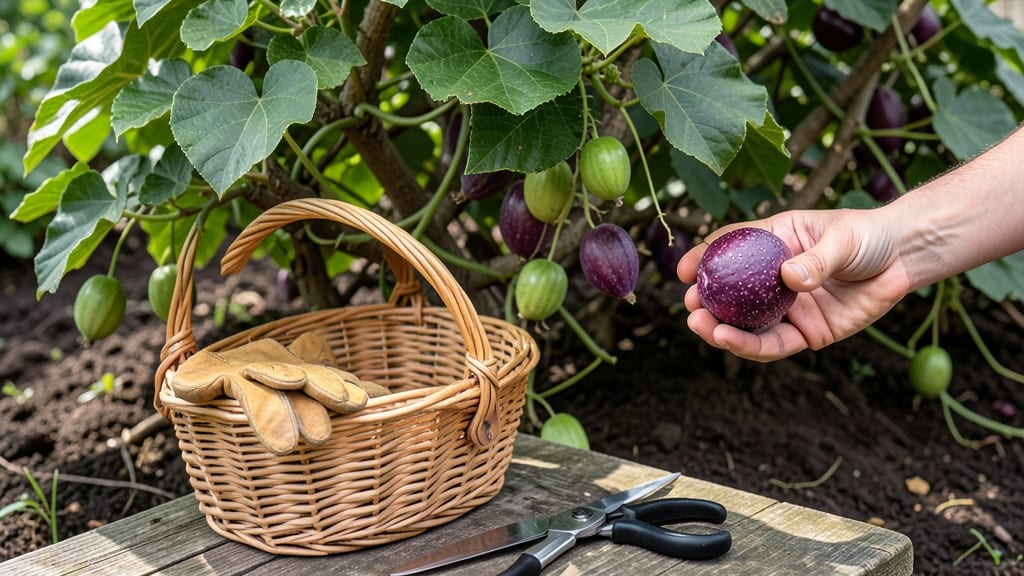
Timing your passion fruit harvest correctly means the difference between sweet, juicy fruit and bitter disappointment — and it all starts with knowing the exact weeks to ripeness by variety.
Picture this: you’ve nurtured your 🍈 passion fruit vines for months, watching them climb and bloom, only to pick a fruit that’s still sour or mealy. That’s happened to every gardener at some point, and the fix is simpler than you think.
Different passion fruit varieties ripen at completely different rates—purple varieties take 8-9 months, while yellow ones mature in just 6-7 months. Throw in climate zones from 10-12 to protected 9b-10a, and you’ve got a recipe for confusion.
In this guide, I’ll break down the precise harvest windows for your vines, how to spot ripe fruit (and avoid the common mistakes), and how to maximize your yield—so you’re picking perfect passion fruit all season long.

Exact weeks to passion fruit ripeness by top 5 varieties
Timing your passion fruit harvest correctly transforms sweet, flavorful rewards from bitter disappointments. Each variety has a unique ripening timeline, influenced by your climate zone and growing conditions. In tropical regions like Hawaii or Florida, vines mature faster than in subtropical zones like Southern California or Australia's Gold Coast.
For purple passion fruit (Passiflora edulis), the most common variety, expect 8-9 months from planting to harvest. Meanwhile, yellow passion fruit (Passiflora edulis flavicarpa) typically ripens in 6-7 months. These differences mean planning your harvest window carefully ensures you don’t miss peak flavor or waste underripe fruit.
Below is a variety-specific timeline with visual cues to help you identify perfect ripeness. Whether you're growing in USDA Zone 10+ or a subtropical microclimate, these guidelines will keep your harvest on track.
| Variety | Ripening Time (Weeks) | Tropical Climate | Subtropical Climate | Harvest Cues |
|---|---|---|---|---|
| Purple Passion Fruit | 32-36 | 8-9 months | 9-10 months | Deep purple skin, slight softness, stem darkens |
| Yellow Passion Fruit | 24-28 | 6-7 months | 7-8 months | Bright yellow skin, firm but yielding, stem dries |
| Granadilla (Sweet Granadilla) | 36-40 | 9-10 months | 10-12 months | Green-yellow skin, sweet aroma, softens gradually |
| Banana Passion Fruit | 30-34 | 7-8 months | 8-9 months | Banana-shaped, golden skin, slightly wrinkled |
| Giant Granadilla | 40-48 | 10-12 months | 12-14 months | Large, green-yellow, firm but yielding |
If you're growing purple passion fruit in Zone 11, you’ll likely see fruit ready by late summer or early fall. In contrast, yellow varieties in Zone 10a may ripen as early as mid-summer. For <
How to tell when passion fruit is Truly Ripe (Not Overripe or Underripe)
Passion fruit ripeness isn’t just about color—it’s a multi-sensory check that combines visual cues, physical tests, and even internal seed development. Many gardeners rush to pick fruit too early, ending up with bitter, underripe passion fruits or letting them rot on the vine.
The key is knowing the three-stage ripeness test that separates perfect fruit from wasted effort.
First, let’s address the biggest mistake I see: assuming color alone means ripeness. While deep purple (for purple varieties) or golden yellow (for yellow varieties) is a start, it’s only 30% of the equation.
The real magic happens when you combine color shifts, fruit weight, and stem separation. Skipping any of these steps often leads to premature harvesting or fruit that never reaches its full sweet potential.
⚠️ Harvest Too Early = Bitter Fruit
Passion fruit continues ripening off the vine, but only if picked at the right stage. Harvesting too soon locks in underdeveloped sugars and seeds, while waiting too long risks overripening and pest attraction. The 3-day window between perfect ripeness and overripeness is critical—miss it, and you’re left with sour or mushy fruit.
Start with the color test: mature passion fruit should be uniformly colored—no green patches for purple varieties, and no pale yellow for golden types. But here’s the trick: squeeze gently—ripe fruit will yield slightly (like a soft tennis ball) while still feeling firm.
If it’s rock-hard, it’s unripe; if it’s mushy, it’s overripe. This firm-yield test is your first line of defense against mistakes.
Next, check the stem separation. A truly ripe passion fruit’s stem should dry and darken at the attachment point, almost like a paper-thin crust. Twist gently—if the fruit detaches easily with just a slight turn, it’s ready.
But if the stem resists or pulls away cleanly (like a green stem), it’s not ripe yet. This is where 90% of gardeners fail: they assume the fruit is ready just because it’s colored, but the stem test reveals the real maturity.
For the final verification, cut open a sample fruit (if you’re unsure). Look for fully developed seeds that are plump and dark—not shriveled or pale. The pulp should be vibrant, not watery or fermented-smelling.
This internal check is your last resort but is invaluable when dealing with unpredictable climates or new varieties. Pro tip: If the pulp smells sweetly tropical (like a mix of citrus and pineapple), it’s ready.
Timing your harvest right means avoiding these 3 common pitfalls: 1. Harvesting by color only (leads to bitter fruit) 2. Ignoring stem separation (misses the ripest window) 3. Waiting for "perfect" ripeness (fruit can overripen quickly in heat) Master these checks, and you’ll double your harvest success while enjoying peak-flavor passion fruit every time. 🍈