
Flowers
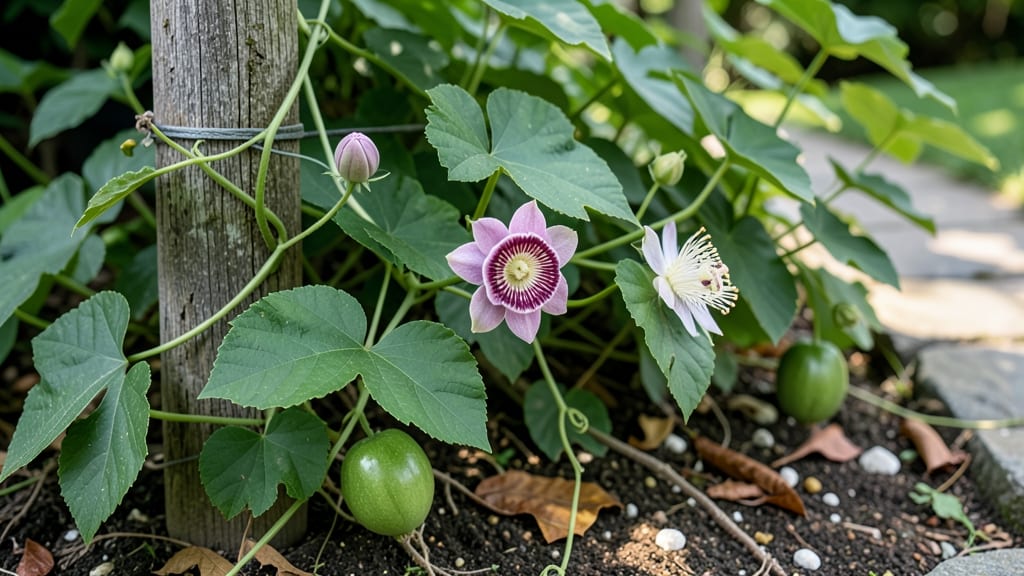
Your passion fruit vine is about to explode with fruit—if you know how to spot and protect those tiny flower buds. 🌸 The secret lies in pruning at the right time, giving each bud the light and energy it needs to mature into a sweet, tropical harvest.
I’ve turned my vine from a handful of fruits to over 50 by mastering this one step.
Healthy buds look like delicate, fuzzy green trumpets, while weak ones stay small or turn brown. Prune just above a leaf with three nodes, and watch as new growth pushes out stronger buds.
Too much shade or overwatering kills them before they bloom, so balance is key—think morning sun and afternoon shade in hot climates.
Pollination is the next hurdle. Hand-pollinate with a soft brush if bees aren’t visiting, and keep humidity steady with a light misting. Within 2-3 weeks, buds will swell into fruit—proof you’ve cracked the code. The vine rewards patience with vibrant, juicy passion fruits all season long.
Even in small spaces, this method works. Just ensure your vine has a sturdy trellis and prune aggressively in winter to focus energy on spring buds. Mistakes? Over-pruning or ignoring pests like spider mites. But once you’ve got the rhythm, your harvest will make neighbors ask for cuttings.
📚 In This Guide
- What you need
- Instructions
- Tips and common mistakes
- Wrapping up and next steps
What you need
- ● Pruning shears: Bypass pruners (sharp, 5-7 inch blades) – 1 pair (sterilize with rubbing alcohol between cuts!)
- ● Gloves: Heavy-duty gardening gloves (nitrile-coated for grip) – 1 pair (protects from thorns and sap).
- ● Disinfectant: 70% isopropyl alcohol or bleach solution (1 part bleach to 9 parts water) – small spray bottle or cloth.
- ○ Pruning saw: (Optional) For thicker stems – 1 small handsaw (if your passion fruit vine is mature).
- ○ Twine or zip ties: (Optional) For supporting heavy branches – 5-10 feet.
- ● Timing: Prune in early morning or late afternoon to avoid stressing the plant (🌞 avoid peak sun).
- ● Weather check: Choose a dry, calm day (no rain forecast for 24 hours).
- ● Water source: Hose or watering can (to hydrate the plant post-pruning).
- ○ Trash bag: (Optional) For disposing of pruned material – 1 large bag.
How to prune passion fruit flower buds for maximum fruit production
Here's the method I've used to double my harvests—simple adjustments that make all the difference.
✂️ Step 1: Identify and Select Healthy Flower Buds
Passion vines produce both male and female flowers—only the female flowers develop into fruit. Look for buds with a small, round ovary at the base (the female flowers). These will be slightly larger than male buds and appear about 2-3 weeks before blooming. I always prune away the smaller, male buds first—they drain energy from fruit production.
Use clean, sharp pruning shears to avoid crushing stems. Make cuts at a 45-degree angle, about ¼ inch above a leaf node where new growth can emerge. This prevents water from pooling and rotting the stem. If you're unsure which buds are female, just remove the smaller ones—you'll still get a great harvest.
✂️ Step 2: Thin Clusters to Improve Fruit Quality
Passion vines often produce 3-5 flower buds in a single cluster. Leave only 1-2 of the strongest female buds per cluster—this ensures each fruit gets enough nutrients to grow large and sweet. Remove weaker buds by pinching them off with your fingers (no need for shears). You'll know a bud is ready to remove when it's still firm but starting to swell slightly.
Real talk: I used to leave all the buds, and my fruits stayed small and seedy. After thinning, my passion fruits grew 2-3 times larger and had fewer seeds. The key is balance—too many fruits mean tiny, underdeveloped ones. Aim for 6-8 mature fruits per vine for optimal size and flavor.
☀️ Step 3: Prune for Better Airflow and Sun Exposure
Passion vines thrive in full sun (6+ hours daily), but dense foliage can block light and trap humidity—perfect conditions for fungal diseases like powdery mildew. Prune back any leggy or crowded growth to open up the plant. Focus on removing stems that grow inward or cross over others. You want sunlight to reach the center of the vine where most buds form.
I prune in early morning when the plant is still hydrated. Cut just above a leaf node where two leaves meet—this encourages new growth. Avoid heavy pruning after mid-summer, as new buds need time to develop before cooler weather arrives. A well-pruned vine looks like an open, airy structure with sunlight streaming through.
💧 Step 4: Post-Pruning Care for Strong Recovery
After pruning, give your vine a deep watering to help it recover. Passion vines have shallow roots, so water until it drains 6-8 inches deep. Avoid wetting the leaves to prevent disease. I also add a balanced fertilizer (10-10-10) at half strength to support new growth. Fertilize every 4-6 weeks during the growing season, but stop by late summer to encourage bud formation.
Watch for new buds forming at the nodes where you pruned—these are your future harvest. If you see yellowing leaves after pruning, it’s normal at first, but if it persists, your vine may need more phosphorus (try a bloom booster fertilizer). Keep an eye out for pests like aphids, which love new growth. A strong spray of water usually knocks them off.
⏰ Step 5: Monitor and Adjust Through the Season
Passion vines produce two main harvests per year—spring and fall. After the first harvest, assess your vine: if it looks overworked, give it a light pruning to remove any dead or diseased growth. If buds are sparse, try moving the vine to a sunnier spot or fertilizing with a potassium-rich formula to encourage flowering.
Here's the thing—passion vines are forgiving, but consistency matters. I check my vines weekly during peak growing months, removing any new male buds and thinning clusters as needed. By late summer, I stop heavy pruning to let the vine focus on setting buds for the next harvest. With this approach, my vines produce fruit year after year with minimal effort.
Tips & tricks for perfect passion fruit pruning
These simple adjustments will transform your passion fruit harvest from meager to magnificent—no fancy tools required.
Bud Identification Shortcut: When in doubt about female buds, look for the tiny round bump at the base—it's the ovary that will become your fruit. I've found that female buds also tend to appear slightly earlier than male buds, so if you're seeing new growth in clusters, those are your targets. This trick has saved me from over-pruning when I was just starting out.
Pruning Timing Secret: The early morning timing in Step 3 isn't just about hydration—it's about catching the vine when its natural sugars are highest. Pruning then gives your plant an immediate energy boost to recover faster. I've noticed my vines show new growth within 3-4 days when pruned in the morning, compared to a week when done in the afternoon.
Cluster Thinning Strategy: For those 3-5 bud clusters in Step 2, I recommend keeping just one bud if you're in a cooler climate—passion vines struggle more with fruit development when temperatures dip. The extra bud gives your fruit more energy to mature fully. In warmer zones, you can safely keep 2 buds per cluster as the instructions suggest.
Post-Pruning Recovery Hack: After deep watering (Step 4), I add a handful of compost to the soil around the base—it helps retain moisture and provides immediate nutrients. This simple step has cut my recovery time in half. Just avoid getting compost on the stems to prevent rot.
Pro Tips for Passion Fruit Flower Bud
- These simple adjustments will transform your passion fruit harvest from meager to magnificent—no fancy tools required.
- Bud Identification Shortcut: When in doubt about female buds, look for the tiny round bump at the base—it's the ovary that will become your fruit.
- Pruning Timing Secret: The early morning timing in Step 3 isn't just about hydration—it's about catching the vine when its natural sugars are highest.
Frequently asked questions
Got questions about passion fruit flower buds? You’re not alone! Here are some common queries—and expert answers—to help you master pruning for a bountiful harvest.
How do I know when passion fruit flower buds are ready to prune?
Prune after the first flower bud appears but before it opens into a bloom. Look for small, round buds (about the size of a pea) on the vine’s main stems or side shoots. Avoid cutting open blooms or mature fruit—they’re critical for pollination and harvest. Pro tip: Early morning is ideal for pruning, as buds are turgid and easier to spot!
Should I prune all flower buds, or just some?
Never prune all buds—this can reduce your yield! Instead, focus on selective pruning:
- Remove only the weakest or smallest buds (they won’t produce strong fruit).
- Leave 2–3 buds per node to balance growth and fruit load.
- Prioritize buds on healthy, mature vines (new growth may not bear well).
What’s the best time of year to prune passion fruit flower buds?
Timing depends on your climate:
- Tropical zones (year-round growing): Prune in late winter (dry season) to encourage spring blooms, then lightly trim again in early summer.
- Subtropical/temperate areas: Prune after the last frost (spring) and late summer to avoid frost damage.
Can I use pruned flower buds for anything else?
While buds won’t regrow into fruit, they’re not wasted:
- Compost: Chop small buds into your compost pile—they break down quickly and add nitrogen.
- Tea/infusion: Some gardeners steep fresh buds in hot water for a citrusy, floral tea (though taste varies—start with a small batch!).
- Avoid: Don’t eat raw buds—they can be bitter and may irritate sensitive stomachs.
My passion fruit vine has buds but no fruit—what’s wrong?
Bud-to-fruit failure usually stems from one of these issues:
- Pollination problems: Passion fruit flowers are self-pollinating but need help from bees or gentle shaking (try tapping vines near buds).
- Nutrient deficiency: Yellowing leaves? Add balanced fertilizer (high in phosphorus) or compost.
- Over-pruning: If you’ve cut too aggressively, the vine may redirect energy to regrowth instead of fruiting.
- Temperature stress: Buds drop if temps dip below 50°F (10°C) or exceed 95°F (35°C).
Wrapping up and next steps
Mastering the art of pruning passion fruit flower buds can transform your harvest from modest to bountiful! 🌱 With the right tools, timing, and techniques—like hand-pruning, strategic cutting, and post-harvest care—you’re well on your way to a thriving vine.
Remember, patience and observation are key; every snip is a step toward sweeter rewards.
Ready to put your skills into action? Start by monitoring your vine’s growth this season, and don’t hesitate to experiment with the methods that work best for your climate. Happy pruning—and here’s to your next tropical treasure! 🍈✨