
Pruning
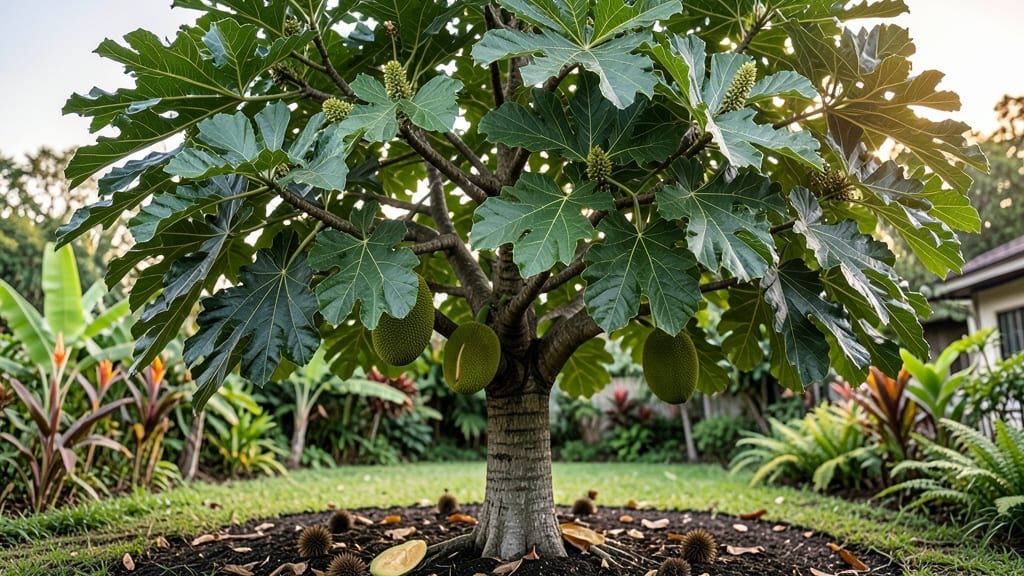
The Spanish name for jackfruit is jacote or fruta de pan in most Latin American regions, though panapén or panapén de Castilla are also used in Central America and the Caribbean. Pronunciation varies regionally, with jacote sounding like 'ha-KOH-teh' and panapén as 'pa-na-PEN.'
Understanding these regional terms reveals how jackfruit's cultural journey spans centuries. Jacote became widespread through Spanish colonial trade, while panapén reflects indigenous roots in Caribbean and Central American dialects. 🌎 The fruit's versatility—used in everything from sweet desserts to savory stews—helps explain why its names vary so widely across the continent.
For example, in Mexico, jacote is the standard term, while Puerto Rican markets might label it panapén de Castilla to honor its historical ties to Spanish explorers.
What's fascinating is how pronunciation shifts even within the same country. A Mexican chef might say jacote with a soft 'j' sound, while a Colombian vendor could emphasize the 'teh' ending.
These nuances matter if you're ordering jackfruit in different regions—mispronouncing panapén could lead to confused looks in a Costa Rican market!
💡 In This Article
- Regional Spanish Names for Jackfruit Across Latin America
- Pronunciation Guide: How to Say Jackfruit’s Spanish Names Correctly
Regional Spanish names for jackfruit across latin America
The Spanish name for jackfruit reflects centuries of cultural exchange and adaptation. In Mexico, jacote is the most common term, derived from the Nahuatl word xacotl, which originally described the fruit's sweet, bread-like texture when cooked.
This name spread throughout Central Mexico during the colonial era and became the standard in regions like Oaxaca and Veracruz, where jackfruit is used in traditional dishes like tamales and mole. 🌱 Meanwhile, in South America, fruta de pan (literally "bread fruit") dominates, particularly in Colombia and Venezuela, where the fruit's starchy, potato-like consistency aligns with its culinary uses.
Central America and the Caribbean tell a different story. Here, panapén or panapén de Castilla are the preferred terms, reflecting a blend of indigenous Taíno and Spanish influences. The suffix de Castilla honors its historical ties to Spanish explorers who brought the fruit from the Philippines during the 16th century.
In Puerto Rico, for example, you’ll often hear panapén pronounced with a rolled 'r' sound, while in Costa Rica, the emphasis shifts to the second syllable—pa-na-PEN—to distinguish it from other tropical fruits.
This regional variation isn’t just linguistic; it’s tied to how jackfruit is prepared locally, from sweet pasteles in Puerto Rico to savory stews in Panama.
What’s fascinating is how these names reveal jackfruit’s dual identity—as both a native and introduced species. In regions like Honduras and Nicaragua, jacote and panapén coexist, showing how linguistic borders don’t always match geographical ones.
For instance, a market in Tegucigalpa might sell jackfruit labeled as jacote in one stall and panapén in another, depending on the vendor’s heritage. This overlap highlights the fruit’s adaptability and its deep integration into local cuisines, where it’s prized for its versatility in both sweet and savory dishes.
The choice of name often depends on the fruit’s role in daily life. In Mexico, where jackfruit is frequently used in sweet desserts, jacote emphasizes its dessert-friendly qualities, while fruta de pan in Colombia underscores its starchy, bread-like properties for heartier meals.
Even the way vendors describe the fruit varies: In Peru, you might hear jacote paired with terms like dulce (sweet) or fibroso (fibrous), while in Cuba, panapén is often linked to tropical or exótico (exotic) due to its Caribbean origins.
Historically, these names also reflect colonial trade routes. The term jacote spread via Spanish merchants traveling north from Central America, while panapén persisted in the Caribbean due to its Taíno roots.
Today, you’ll find that younger generations in urban areas—like Mexico City or San Juan—might use both terms interchangeably, blending old-world traditions with modern culinary trends. This linguistic fluidity mirrors how jackfruit itself has evolved from a niche colonial import to a staple in Latin American kitchens.
If you’re traveling or cooking with jackfruit in Spanish-speaking regions, paying attention to these names can help you connect with local traditions.
For example, asking for jacote in a Mexican market will yield ripe, sweet fruit perfect for desserts, while panapén in a Puerto Rican bodega might lead you to younger, firmer fruit used in savory dishes.
The key is listening to how locals use the terms—and trusting that both names refer to the same incredible, versatile fruit. 🌎