
Vegetables
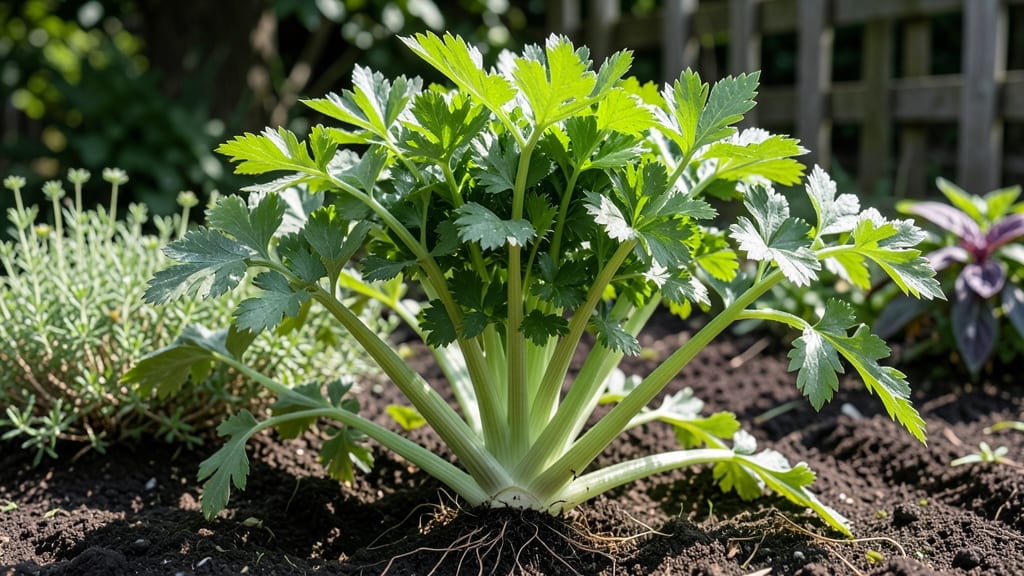
Celery is botanically classified as a vegetable because its edible parts are stems, not seeds or fruit. However, it develops from a flowering plant, making it a unique hybrid in culinary and scientific categorization.
Here's the twist: while celery grows from a flower and produces seeds, its edible stalks are actually stem tissue, not the plant's reproductive parts. 🌱 This is why botanists and chefs often disagree—science says it's technically a fruit, but the kitchen treats it as a vegetable.
The confusion comes from how we define "fruit" (seed-bearing) versus "vegetable" (any edible plant part). Even the U.S. Supreme Court ruled in 1893 that tomatoes are vegetables, proving this debate isn't new!
What makes this even more interesting is how celery's structure works. The plant's umbel flower clusters develop at the top, but the thick, fibrous stalks we eat are modified stems that store water and nutrients.
This dual nature is why celery bridges both categories—it's a vegetable in your salad bowl but botanically a fruit in a lab setting. The next time someone asks, you can confidently say it's "both and neither" depending on who you're talking to!
💡 In This Article
- Botanical Classification of Celery: Stem vs Fruit Definitions
- Culinary Uses of Celery: Why It’s Treated as a Vegetable in Cooking
Botanical classification of celery: stem vs fruit definitions
Celery’s botanical classification stems from a fundamental distinction: fruits develop from flowers and contain seeds, while vegetables refer to any other edible plant part. Here’s where celery gets tricky—its umbel flower clusters produce seeds, technically qualifying it as a fruit under botanical definitions.
However, the part we eat (those crisp, fibrous stalks) is actually modified stems called petioles, which store water and nutrients for the plant.
The confusion arises because celery’s flowering structure follows the same reproductive process as other fruits. When you see those tiny brown seeds in the center of a celery stalk, that’s the plant’s way of producing its next generation—just like an apple or tomato.
Yet, the 95% of celery we consume is the stem tissue, not the reproductive parts. This duality is why botanists classify celery as a fruit, while culinary traditions treat it as a vegetable.
Think of it this way: a tomato is botanically a fruit (it develops from a flower and contains seeds), but legally and culturally, it’s treated as a vegetable. Celery follows the same pattern—its reproductive biology says fruit, but its culinary role says vegetable.
The U.S. Supreme Court’s 1893 Nix v. Hedden ruling on tomatoes set a precedent: if a plant is used as a vegetable in cooking, it’s a vegetable, regardless of botany.
Celery’s stems also exhibit unique adaptations. The thick, fibrous texture comes from vascular bundles that transport water and nutrients, a characteristic of stems, not fruits.
These bundles create the signature crunch and make celery a staple in low-calorie diets—each stalk contains only about 6 calories per 100 grams but packs 10% of your daily vitamin K.
The plant’s ability to store water in its stems is why it thrives in cool climates and why those stalks stay crisp for days.
Even the seeds play a role in classification. Celery belongs to the Apiaceae family, which includes other fruits like carrots and parsley. However, while these relatives are eaten for their roots or leaves, celery’s edible stems dominate its culinary use.
This practical distinction is why chefs and nutritionists universally categorize celery as a vegetable, despite its botanical quirks.
Here’s the kicker: if you were to eat the seeds of celery (which some cultures do in small amounts), you’d technically be consuming a fruit. But since we rarely eat them, the focus remains on those crunchy, nutrient-rich stems that define celery’s place in the vegetable aisle. 🌱