
Planting
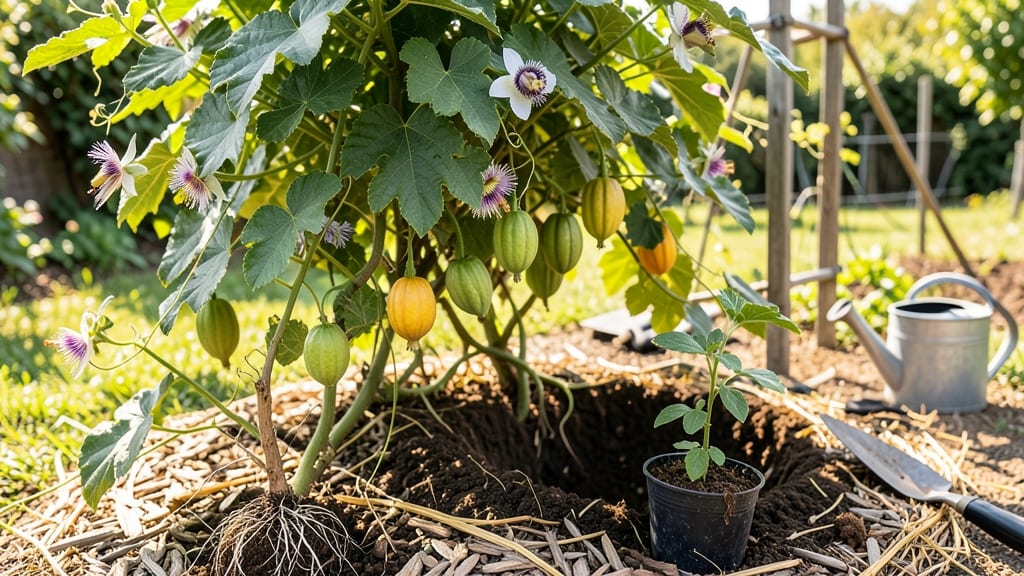
Planting passionfruit from seed gives you fast germination—sometimes in just 10-14 days—if you follow the right steps. 🌱 I’ve grown these vines for years, and the secret to success starts with warm soil, patience, and a sturdy trellis to guide their explosive growth.
Most people rush the process, but taking time to prep the soil and choose the right location makes all the difference.
The first thing you’ll need is a well-draining soil mix—passionfruit hates soggy roots—and a spot with at least 6-8 hours of sunlight daily. If you’re in a cooler climate, opt for cold-hardy varieties like Passiflora edulis ‘Panama Red’ and plant near a south-facing wall for extra warmth.
For tropical regions, almost any variety thrives, but all passionfruit vines need something to climb, whether it’s a sturdy trellis, arbor, or even a chain-link fence.
By the time your seeds sprout (or cuttings root), you’ll be setting up a support system that’ll keep the vines growing vertically instead of sprawling.
The first harvest might take a year, but with consistent watering and occasional feeding, you’ll end up with vibrant, fragrant flowers and sweet, tropical fruit by next season. The key is keeping the soil moist but not waterlogged—these vines are thirsty but hate wet feet.
Once established, passionfruit vines are surprisingly low-maintenance, but early care is everything. Prune aggressively in late winter to encourage new growth, and watch for pests like aphids or spider mites—neem oil works wonders if they appear.
Whether you’re growing in a greenhouse, container, or open ground, the payoff is worth the effort: homegrown passionfruit straight from the vine.
📚 In This Guide
- What you need
- Instructions
- Tips and common mistakes
- Wrapping up and next steps
What you need
- ● Passionfruit seeds or cuttings: 3–5 fresh, viable seeds (from organic fruit) or 1–2 healthy vine cuttings (4–6 inches long, with at least 2–3 nodes).
- ● Well-draining potting mix: 1–2 bags (look for a blend labeled for tropical plants or cacti/succulents).
- ● Containers or garden space: For seeds: 4–6-inch pots (1 per seed) or a seed tray with drainage holes.
- ● For cuttings: 1–2 gallon pots or a raised bed (if planting directly in the ground).
- ● Drainage materials: Perlite, coarse sand, or small pebbles (1 cup per pot).
- ● Watering can or spray bottle: With a gentle misting nozzle for seedlings.
- ● Fertilizer: Balanced organic fertilizer (e.g., 10-10-10 or compost tea) for transplanting.
- ○ Support structure (optional but recommended): A trellis, stakes, or wire mesh (3–6 feet tall) for climbing vines.
- ● Pruning shears or sharp knife: For trimming cuttings (sterilized with rubbing alcohol).
- ● Trowel or small shovel: For transplanting seedlings or cuttings.
- ○ Gloves (optional): To protect hands from thorns (passionfruit vines can be prickly!).
- ○ pH testing kit (optional): To check soil acidity (ideal range: 6.0–7.5).
- ● Warm climate or greenhouse: Passionfruit thrives in USDA zones 8–11. If you’re in a cooler zone, start seeds indoors 8–10 weeks before the last frost.
- ● Sunlight: At least 6–8 hours of direct sunlight daily (south-facing windows or outdoor space).
- ● Patience: Seeds take 30–60 days to germinate; cuttings root in 2–4 weeks.
Step-by-step instructions for planting passionfruit vines
Here's how I get passionfruit seeds sprouting in just 7-10 days—no waiting months for germination.
🌱 Step 1: Scarify Seeds for Faster Germination
Passionfruit seeds have a tough outer shell that slows germination. I soak them in warm water for 24 hours first, then rub the outer coating gently with sandpaper until it feels slightly rough. This mimics natural weathering and tricks the seed into thinking it's ready to grow.
Place the scarified seeds between damp paper towels in a sealed plastic bag. Store them in a warm spot (75-80°F) and check daily. You'll see the first sprouts within 3-5 days—that's when you know the process worked. Real talk: Skipping this step means waiting 30+ days for germination.
🪴 Step 2: Plant Sprouted Seeds in Well-Draining Soil
Use a lightweight seed-starting mix with perlite or vermiculite to ensure drainage—passionfruit roots rot easily. Fill small pots (3-4 inches deep) halfway, then place each sprouted seed with the root pointing downward. Cover with ½ inch of soil and pat gently to secure.
Water lightly from the bottom by placing the pot in ½ inch of water for 10 minutes. This prevents disturbing the delicate roots while ensuring even moisture. Keep the soil consistently damp (not soggy) until the first true leaves appear. Here's the thing—overwatering now leads to damping-off, where seedlings collapse overnight.
☀️ Step 3: Provide Warmth and Indirect Light
Passionfruit seedlings need warmth to grow strong. Place the pots in a spot with 70-80°F temperatures and bright, indirect light. A south-facing window works, but direct sun can scorch young leaves. If your space is cooler, use a seedling heat mat to maintain consistent warmth.
Rotate the pots quarter-turn daily so seedlings grow straight instead of leaning toward the light. You'll notice new leaves emerging within 10-14 days—that's your signal to start fertilizing lightly with a diluted balanced liquid fertilizer (10-10-10). Don't skip this; weak seedlings won't support the heavy vines to come.
🌿 Step 4: Transplant to Larger Containers or Ground
When seedlings reach 6-8 inches tall with 4-5 true leaves, transplant them to 5-gallon containers or directly into the ground. Passionfruit vines need deep roots, so choose a spot with at least 18 inches of loose, well-draining soil. If planting in containers, use a mix of potting soil, compost, and perlite.
Dig a hole twice as wide as the root ball and mix in 1 cup of compost to enrich the soil. Place the seedling in the hole, backfill with soil, and water deeply. Mulch around the base with 2-3 inches of organic mulch to retain moisture and regulate soil temperature. Here's where it gets fun—the vines will start climbing within weeks.
⏰ Step 5: Train Vines and Support Growth
Passionfruit vines grow aggressively, so install a 6-8 foot trellis or fence nearby. As new growth appears, gently weave the vines through the support structure. Prune leggy growth to encourage bushier, fruit-bearing branches. I pinch back the tips of new shoots when they reach 12 inches long—this redirects energy to root and fruit development.
Water deeply 2-3 times per week during the first year, keeping the soil evenly moist but not waterlogged. You'll see the first flowers in 6-12 months, followed by fruit in 12-18 months. The key is patience—rushing fertilization or watering leads to weak vines that struggle to support the heavy fruit.
Tips & tricks for planting passionfruit vines
These game-changing tips will help you skip the months-long wait and get your passionfruit vines thriving in record time.
Scarification Secret: The 24-hour soak is non-negotiable for breaking that tough seed coat, but here's what nobody tells you—use lukewarm water (not boiling) to avoid damaging the delicate seed structure. After sanding, rinse seeds thoroughly to remove any dust, which can cause irritation. I also recommend using fine-grit sandpaper (220-grit) to avoid over-scratching the seed surface.
Germination Environment: That warm spot you're storing your seeds needs to stay consistently between 75-80°F. If your home runs cooler, place the sealed bag on top of your fridge (not inside) or use a small seedling heat mat. Pro move: Place a small bowl of water near the bag to maintain humidity—condensation on the bag is a good sign! Watch for sprouts appearing from the thicker end of the seed, which confirms proper orientation.
Soil Science: When planting your sprouted seeds, the ½ inch of soil coverage is crucial—too little exposes the seed to drying, too much suffocates it. I use a mix of 50% seed-starting mix and 50% perlite for that perfect air-to-moisture balance. The bottom-watering method prevents root disturbance, but here's the trick: Use room-temperature water to avoid shocking the delicate roots.
Transplant Timing: Wait until you see 4-5 true leaves (not just the initial seed leaves) before transplanting—this ensures the seedling has developed a strong enough root system. The 6-8 inch height guideline is just a starting point; focus on the leaf count and root development. When transplanting to containers, use pots with drainage holes and elevate them on saucers to prevent waterlogging.
Pro Tips for Plant Passionfruit
- These game-changing tips will help you skip the months-long wait and get your passionfruit vines thriving in record time.
- Scarification Secret: The 24-hour soak is non-negotiable for breaking that tough seed coat, but here's what nobody tells you—use lukewarm water (not boiling) to avoid damaging the delicate seed structure.
- Germination Environment: That warm spot you're storing your seeds needs to stay consistently between 75-80°F.
Frequently asked questions
Got questions about growing your own passionfruit vine? You’re not alone! Here are answers to the most common queries—from timing to troubleshooting—to help you cultivate a thriving harvest.
What’s the best time of year to plant passionfruit?
Passionfruit thrives in warm climates (USDA Zones 8-11) and should be planted when soil temps stay above 60°F (15°C). In cooler regions, start seeds indoors 8-10 weeks before the last frost, then transplant after danger of frost has passed. For tropical zones, plant year-round—but avoid heavy rains to prevent rot.
How long does it take for passionfruit vines to bear fruit?
With ideal conditions, vines can produce fruit in 12-18 months, but patience is key! Early blooms may drop off—focus on establishing a strong vine first. Prune aggressively in the first year to encourage bushier growth. Pro tip: Use a trellis early to support rapid climbing (up to 20 feet!).
Can I grow passionfruit from store-bought fruit?
Yes! Save seeds from ripe passionfruit, rinse them thoroughly, and dry for 24 hours. Plant ½ inch deep in moist soil. However, store-bought seeds may not be true to the parent plant’s traits. For faster, more reliable results, buy certified seeds from a nursery. Warning: Some hybrid varieties (like ‘Panama Yellow’) won’t reproduce faithfully from seeds.
Why aren’t my passionfruit vines flowering?
Common culprits include insufficient sunlight (vines need 6+ hours daily), nutrient deficiencies (add compost or a balanced fertilizer), or temperature stress (below 50°F/10°C halts blooming). Check for pests like aphids or spider mites, which can stress plants. If your vine is young (<1 year), it may still be maturing—be patient!
Are passionfruit vines invasive? Should I worry about them spreading?
Passionfruit vines are not invasive like kudzu, but they can spread aggressively in warm climates via runners. Contain them with barriers or pruning to prevent unwanted colonization. If you’re in a humid area, monitor for fungal diseases (like powdery mildew) and space vines 6-8 feet apart for airflow.
How do I protect passionfruit from heavy rain or frost?
Passionfruit hates cold—cover vines with frost cloth if temps dip below 32°F (0°C). For rain, ensure proper drainage and elevate containers if needed. Mulch heavily to insulate roots. In tropical storms, prune excess foliage to reduce wind damage. Bonus: Dwarf varieties (like ‘Sweet Granadilla’) tolerate cooler microclimates better.
Wrapping up and next steps
Growing your own passionfruit is a rewarding journey that brings vibrant vines, fragrant flowers, and delicious, tropical fruit right to your doorstep! 🌱 With the right soil, sunlight, and a little patience, you’ll soon enjoy a bountiful harvest.
Start small—whether in containers or your garden—and watch your passionfruit plants thrive year after year.
Ready to take the next step? Plant your seeds or seedlings today and give your passionfruit vines the love they deserve. Before you know it, you’ll be savoring homegrown passionfruit in smoothies, desserts, or straight from the vine—that’s the sweet taste of success!