
Propagation
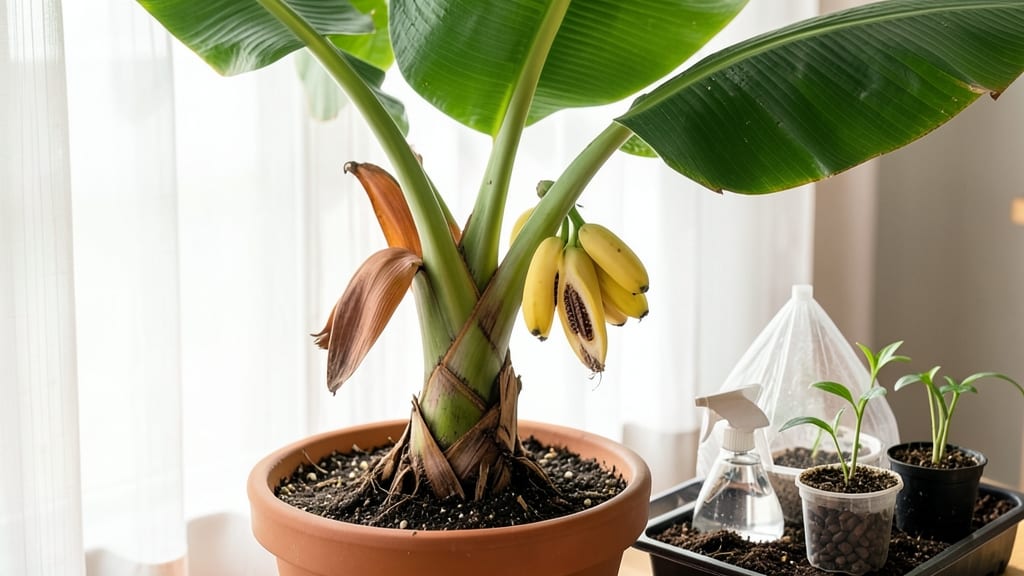
Growing bananas from fruit is like unlocking a mini tropical paradise in your home. 🌿 The secret starts with that mushy peel you toss—it holds a hidden treasure: the plant itself.
I've turned grocery-store bananas into thriving plants with just a few simple steps, and you can too, even if you live outside the tropics.
The process begins with selecting the right fruit—look for organic bananas with the least amount of pesticide residue. Cut off both ends, peel back the skin, and you'll find the magic: the brown core.
This is where the plant's potential lies. You can either plant it directly in soil or root it in water first, whichever feels more exciting to you.
Within 2-4 weeks, you'll see roots sprouting, and by 6-8 weeks, you'll have a tiny banana plant ready to transfer to a pot. The best part?
It's not just a fun experiment—it's a living reminder that growth can start from something as simple as a fruit peel you'd normally throw away.
This method works beautifully for indoor gardeners in warm climates or as a fun project for kids. Just keep it in bright, indirect light, and watch as your banana plant grows—maybe even producing fruit of its own someday. Here's how to get started without the guesswork!
📚 In This Guide
- What you need
- Instructions
- Tips and common mistakes
- Wrapping up and next steps
What you need
- ● Ripe banana (preferably organic, with a thick peel—cavendish varieties work best) 🍌
- ● Sharp knife or scissors (sterilized to avoid contamination)
- ● Small container or cup (4–6 oz capacity, with drainage holes)
- ● Well-draining potting mix (cactus or succulent mix works well; avoid heavy garden soil)
- ● Watering can or spray bottle (for gentle hydration)
- ● Plastic wrap or clear lid (to create a humidity dome)
- ● Bright, indirect sunlight location (e.g., a sunny windowsill or grow light setup)
- ● Patience and care! (banana propagation takes time—weeks to months)
- ● Rooting hormone (speeds up root development)
- ● Fertilizer (balanced, diluted) (once the plant is established)
- ● Heat mat or warm spot (to encourage faster growth in cooler climates)
- ● Larger pot (6–8 inches) (for transplanting once roots form)
Step-by-step instructions for growing bananas from fruit
Turn that grocery store peel into a thriving plant with these simple steps.
🌱 Step 1: Select and Prepare a Ripe Banana Peel
Start with a ripe banana—the spottier, the better. The fruit’s natural sugars and enzymes kickstart root growth. Peel it carefully, leaving the stem intact. You’ll want a 2-3 inch section including the base where the fruit attached. This is your propagation piece.
Rinse the peel under cool water to remove any fruit residue, then pat it dry with a paper towel. The cleaner the surface, the less chance of rot or mold. Place the peel stem-side down in a shallow dish of lukewarm water (about 1 inch deep). The stem should float freely—if it sinks, trim a bit more to lighten it.
💧 Step 2: Wait for Roots to Emerge
Set the dish in a bright, indirect light spot—think kitchen counter near a window, but not in direct sun. Roots should appear in 2-4 weeks, depending on your home’s warmth. You’ll notice tiny white nubs forming along the submerged stem. These are your future roots!
Change the water every 3-4 days to prevent bacterial growth. Use a spray bottle to mist the top of the peel lightly—this keeps the stem from drying out while the roots develop. If the water gets cloudy or smells funky, dump it and refresh immediately. Patience is key here; don’t rush the process.
☀️ Step 3: Transition to Soil
Once roots reach 2-3 inches long, it’s time to plant. Fill a 4-6 inch pot with well-draining potting mix (avoid garden soil—it’s too dense). Make a small hole in the center and gently place your rooted peel stem-side down, covering the roots with soil. Press lightly to secure but don’t compact.
Water thoroughly until water drains from the bottom, then place the pot in a warm, humid spot (ideally 70-80°F). A bathroom with a shower curtain or a greenhouse setup works great. Keep the soil evenly moist—not soggy, but never bone-dry. You’ll see new leaves sprouting from the top of the peel in 4-6 weeks.
🌿 Step 4: Care for Your Banana Plant
Once your banana plant has 4-5 leaves, it’s ready for a 6-8 inch pot with fresh potting mix. Place it in bright, indirect light—direct sun can scorch tender leaves. Rotate the pot weekly so the plant grows straight. Water when the top inch of soil feels dry, but avoid letting it sit in water.
Fertilize lightly every 2 months with a balanced houseplant fertilizer (half-strength). Banana plants love humidity, so mist the leaves or place the pot on a tray of pebbles with water. In 1-2 years, you’ll get flowers and—with patience—fruit. Yes, it takes time, but it’s worth it!
Tips & tricks for growing bananas from fruit
Real talk: I’ve watched banana peels turn into thriving plants—and here’s what nobody tells you about making it work.
Root Growth Secret: The 2-4 week window for roots to appear can feel like forever, but here’s the trick: place your peel in a spot where it gets bright, indirect light for at least 6 hours a day. I keep mine on my kitchen counter near the window, but not in direct sun—it’s the perfect balance. If you notice the peel turning yellow or mushy, it’s getting too much light or water. Trim any discolored parts and refresh the water immediately.
Water Quality Matters: Use lukewarm water (not cold or hot) to mimic natural conditions. Tap water with chlorine can slow root growth, so let it sit out for 24 hours before using. I’ve also had success with filtered or rainwater—just avoid distilled water, which lacks minerals. Change the water every 3-4 days as instructed, but if you see roots growing faster, you can extend to 5 days to slow bacterial growth.
Soil Transition Hack: When your roots hit 2-3 inches, don’t rush planting! Let them grow another 1-2 inches in water for extra strength. Before transferring to soil, give the roots a quick rinse to remove any chlorine buildup. I fill my 4-6 inch pot with a mix of well-draining potting soil and a handful of perlite (about 10% of the mix) to improve drainage—this prevents soggy soil that can rot delicate roots.
Humidity Boost: Banana plants love humidity, and your bathroom isn’t the only option. If you don’t have a shower curtain setup, try placing a tray of pebbles under the pot and filling it with water (but keep the pot above the waterline). You can also group your banana plant with other houseplants—like ferns or peace lilies—to create a mini humid microclimate. Aim for 60-70% humidity to mimic tropical conditions.
Pro Tips for Grow Bananas From Fruit
- Real talk: I’ve watched banana peels turn into thriving plants—and here’s what nobody tells you about making it work.
- Root Growth Secret: The 2-4 week window for roots to appear can feel like forever, but here’s the trick: place your peel in a spot where it gets bright, indirect light for at least 6 hours a day.
- Water Quality Matters: Use lukewarm water (not cold or hot) to mimic natural conditions.
Frequently asked questions
Got questions about growing bananas from fruit? You’re not alone—this method is fun but can feel tricky at first! Below, we’ve rounded up the most common queries to help you navigate the process like a pro.
Can I grow a banana plant from any banana I buy at the store?
Most store-bought bananas are sterile hybrids (like Cavendish) and won’t sprout roots. Look for organic, seed-bearing varieties like Musa acuminata or Musa balbisiana, often sold in specialty grocers or online. If unsure, try the peel method anyway—it’s a fun experiment!
How long does it take for banana roots to grow from the peel?
Patience is key! With the peel method, roots may take 2–4 weeks to appear, while the full fruit method can take 4–8 weeks. Keep the setup warm (70–80°F), moist, and in indirect light. If nothing happens after 6 weeks, the banana may not have been viable.
Do banana plants need a greenhouse, or can I grow them indoors?
Banana plants thrive in warm, humid climates (Zones 10–12), but you can grow them indoors near a sunny window or under grow lights. Use a pot with drainage, and move it outside during summer if possible. Just avoid cold drafts—they’re tropical divas!
Why are my banana plant leaves turning yellow or brown?
Yellowing leaves often signal overwatering or root rot, while brown tips can mean low humidity or fluoride in tap water. Check drainage, reduce watering, and mist leaves regularly. If the soil smells sour, repot in fresh, well-draining mix.
Can I grow bananas in a pot, or do they need to be planted in the ground?
Yes! Bananas grow well in large containers (15+ gallons) as long as they have drainage and room for roots. Use a mix of potting soil, compost, and perlite. If outdoors, bury the pot slightly to stabilize the plant. Just know: container-grown bananas may produce smaller fruit.
Wrapping up and next steps
Growing bananas from store-bought fruit is a rewarding journey that combines patience, care, and a little creativity! 🌱 By following these steps—from rooting peels to transplanting your new plant—you’ve unlocked the magic of propagation.
Whether you’re a seasoned gardener or a curious beginner, this process proves that even the simplest materials can yield big results.
Now that you’re ready to nurture your banana plant, why not take the next step? Try experimenting with other fruit propagations, like citrus or avocado pits, or share your newfound skills with fellow plant lovers. Your green thumb is growing—keep it up! 🌟