
Planting
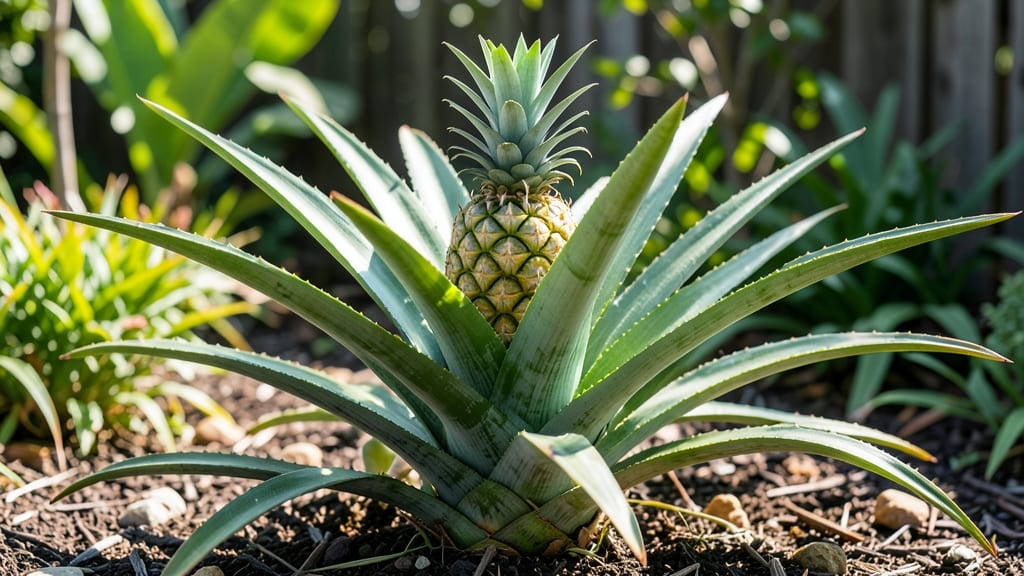
A pineapple plant produces only one fruit per stalk during its natural lifecycle, though it may develop multiple side shoots (pups) that can each grow into new plants yielding their own single pineapples. The main harvest occurs after 18-24 months of growth.
A pineapple plant's single-fruit cycle is all about energy conservation. 🌱 The plant focuses its resources on developing one large, nutrient-dense fruit rather than spreading energy across multiple smaller ones.
This is why you'll often see commercial growers harvest pups—those side shoots—to create multiple new plants, each capable of producing its own single pineapple over time.
What's fascinating is how this compares to other tropical fruits.
Unlike bananas, which grow in clusters, or figs that produce multiple fruits per tree, pineapples prioritize quality over quantity. 💫 This means your one pineapple will be larger and sweeter, but it also explains why patience is key—those 18-24 months of growth are essential for that perfect harvest.
💡 In This Article
- Why Pineapple Plants Yield Just One Fruit at a Time
- Maximizing Pineapple Harvests: Pups, Care Tips, and Second-Generation Fruits
Why pineapple plants yield just one fruit at a time
The pineapple's single-fruit habit stems from its unique flowering mechanism. Unlike many tropical plants, pineapples produce just one inflorescence—a central flowering stalk—from which all fruit development originates.
This single flower cluster, called a "crown," develops into the pineapple we know, with each tiny flower contributing to the fruit's structure. 🌺 The plant's energy isn't divided among multiple flowers because its reproductive strategy prioritizes growing one large, nutrient-dense fruit rather than several smaller ones.
This botanical quirk is tied to the plant's energy allocation system. A mature pineapple can weigh between 3-10 pounds, and producing such a large fruit requires significant resources.
The plant's metabolism shifts entirely toward fruit development during the 18-24 month growth cycle, diverting nutrients away from other potential fruit production. Compare this to banana plants, which produce multiple fruits simultaneously from different branches, or fig trees that bear numerous fruits on a single trunk.
The single-fruit approach also reflects the pineapple's evolutionary adaptation. In the wild, larger fruits contain more seeds and are more likely to attract animals for dispersal. 🌿 The plant's strategy ensures that each pineapple has the best chance of successful seed propagation.
This is why commercial growers focus on maximizing the size and quality of each pineapple rather than quantity. The trade-off is clear: one exceptional fruit per plant rather than several mediocre ones.
What's particularly interesting is how this compares to other bromeliads (the pineapple family). Most bromeliads produce multiple flowers, but pineapples have evolved to specialize in this single-fruit approach.
The plant's leaves form a tight spiral pattern that funnels water and nutrients directly to the developing fruit, creating an efficient growing system. This focused energy results in the pineapple's signature sweetness and texture—qualities that make it stand out among tropical fruits.
The flowering process itself is triggered by hormonal changes after about 12-18 months of growth. Once the flower appears, the plant's entire focus shifts to fruit development, leaving no energy for additional flowers.
This is why you'll never see multiple pineapples growing on a single plant simultaneously—it's biologically impossible under normal conditions. 🌱 Understanding this mechanism helps explain why patience is essential when growing pineapples from seed or even from pups.
For those curious about exceptions, some hybrid varieties or experimental crosses might produce multiple fruits, but these are rare and not commercially viable. The natural pineapple plant remains steadfast in its single-fruit production, making each harvest a special event that requires careful nurturing over nearly two years of growth.