
Blooming
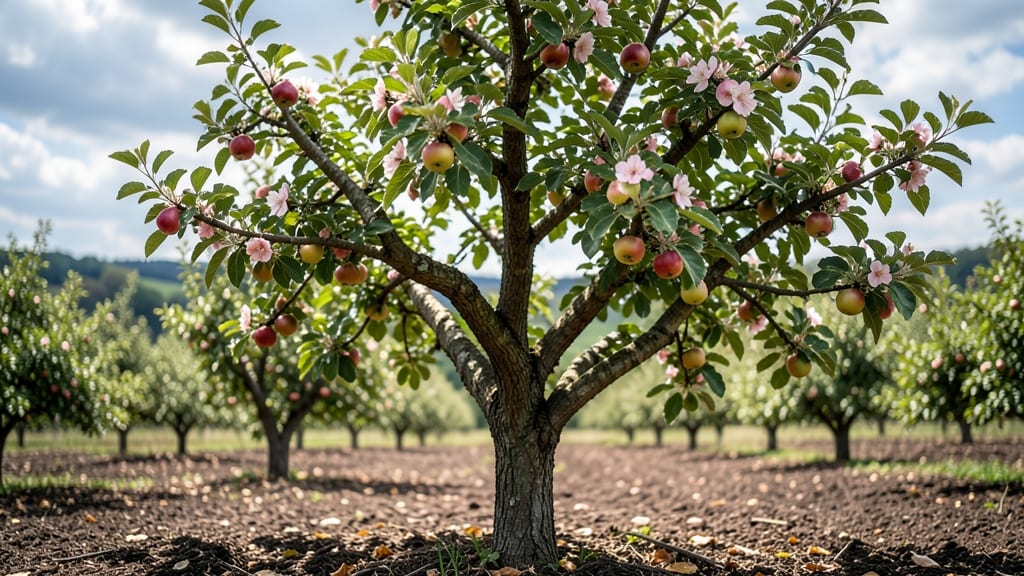
Apple trees take 3 to 5 years to bear fruit after planting, though dwarf varieties may produce fruit in 2 years, while larger standard trees can take 5 to 7 years. Variety, chill hours, and proper care determine when you'll see your first harvest.
Knowing when your apple tree will fruit depends on more than just age—it's about the right variety and climate conditions. 🍎 Most homeowners start seeing fruit within 3-5 years, but early-bearing types like 'Anna' or 'Dorsett Golden' can surprise you with apples in just 2 years.
The key factor is chill hours: apple trees need 200–1,000+ hours below 45°F (7°C) annually to set buds properly. If you live in a warmer zone, choose low-chill varieties like 'Anna' or 'Haralson' to avoid disappointment.
💡 In This Article
- Factors Affecting Apple Tree Fruit Production Timelines
- Fastest-Fruiting Apple Tree Varieties for Home Gardens
Factors affecting apple tree fruit production timelines
The most critical factor in determining how quickly an apple tree bears fruit is its chill hour requirement. These are the cumulative hours below 45°F (7°C) the tree needs annually to trigger flowering.
For example, the popular 'Honeycrisp' variety requires 600-800 chill hours, while the low-chill 'Anna' only needs 200-300 hours. If you're in a warm climate like Southern California, planting a high-chill variety like 'Fuji' (800-1,000 hours) would be a mistake—it might never fruit properly. 🍏
Another key variable is the rootstock used for grafting. Dwarf trees on M.9 rootstock typically fruit in 2 years and produce smaller, more manageable trees, while standard trees on seedling rootstock may take 5-7 years.
The rootstock influences not just size but also vigor—stronger root systems can accelerate fruiting by 1-2 years in ideal conditions. Seasonal planting also matters: trees planted in early spring (when soil is cool but workable) often establish faster than those planted in late spring or fall.
Your local climate zone plays an equally important role. In USDA Zone 5 (where winters are cold), most apple varieties thrive and fruit reliably within 3-4 years. However, in Zone 8 or 9, even low-chill varieties may struggle without proper winter chilling.
Microclimates matter too—trees planted in sheltered spots with less wind exposure often fruit 6-12 months earlier than those in exposed areas. This is why many urban gardeners see faster results when planting near buildings or fences.
Proper care accelerates fruiting timelines significantly. Young trees need 1-2 inches of water weekly during their first two years, and balanced fertilization (especially with nitrogen in early spring) promotes strong growth.
Pruning to an open-center shape in the first year can reduce fruiting time by up to 18 months by improving air circulation and sunlight penetration. Without these practices, trees may take 2-3 extra years to bear fruit. 🌱
One often-overlooked factor is pollination. Most apple varieties require cross-pollination from a different variety blooming at the same time. If you plant only one tree, it may take an additional 1-2 years before successful pollination occurs.
Pairing complementary varieties (like 'Gala' with 'Golden Delicious') can cut this delay in half. Even in ideal conditions, some trees produce only 5-10 pounds of fruit in their first harvest year—patience is key as yields typically double each subsequent year.
For those in tropical or subtropical zones, consider everbearing apple varieties like 'Dorsett Golden' or 'Tropic Sweet', which can produce two harvests annually with proper care. These varieties often fruit in 1-2 years when planted in containers with winter chilling provided through refrigeration or controlled environments.
The trade-off? Their fruit is typically smaller and less flavorful than traditional varieties, but the speed of production makes them ideal for small spaces. 🌿