
Blooming
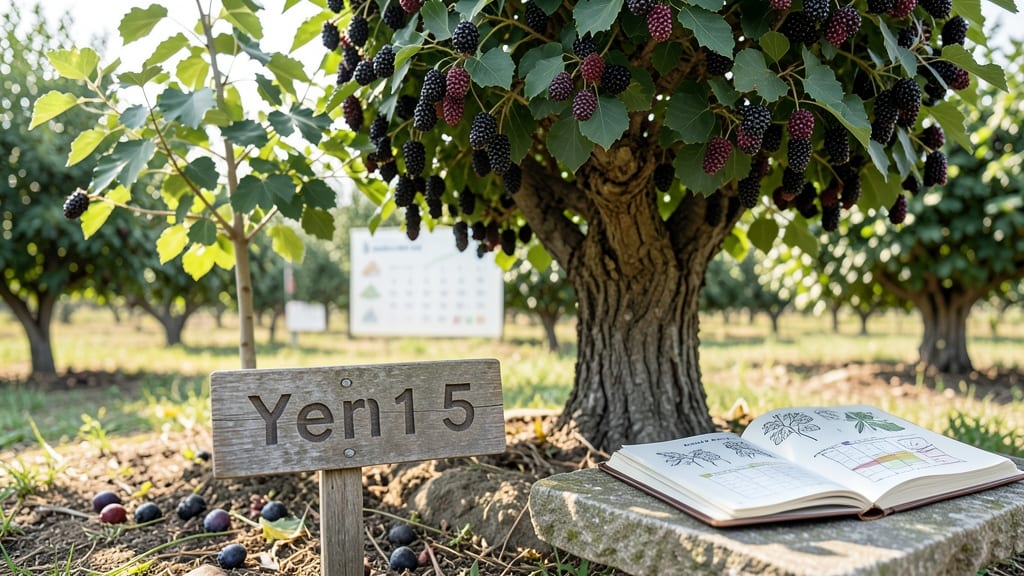
Mulberry trees produce fruit for decades once established, but the wait for that first harvest can feel like forever if you don’t know what to expect 🌳.
Picture this: You’ve planted your sapling in April, watered it religiously, and now you’re staring at a 20-foot tree with zero berries. Where did the promise go?
The truth is, most mulberries take 3 to 7 years to bear fruit—unless you take a few key steps to speed things up.
Here’s the good news: With the right care—like proper pruning, balanced fertilization, and protecting young trees from pests—you can shave years off that timeline. And once they hit their stride, a single mulberry tree can feed your family for decades, with peak production often lasting 20+ years.
In this guide, I’ll break down the exact timeline for different varieties, how to tell if your tree is on track (or stalled), and the simple maintenance tricks that keep fruit production strong for years to come.
Mulberry tree fruit production timeline: when to expect first harvests
Mulberry trees are one of nature’s fastest fruit producers, but their timeline to first harvest varies dramatically based on variety, climate, and early care. While some gardeners see fruit as early as 2 years, most mulberries take 3-7 years to bear meaningful harvests.
Understanding these stages helps you set realistic expectations and optimize your tree’s potential.
The journey begins with seedling growth. In their first year, mulberry trees focus on root and trunk development rather than fruiting. By year two, you’ll notice first flowering—small, insignificant blooms that signal the tree’s readiness to produce fruit. This is when proper care becomes critical to accelerate fruiting.
Here’s a quick breakdown of when to expect fruit by mulberry variety:
| Variety | First Flowering | First Fruit | Peak Production | Notes |
|---|---|---|---|---|
| White Mulberry | Year 2 | Year 3-4 | Years 5-15 | Fastest to fruit; thrives in cooler climates |
| Red Mulberry | Year 3 | Year 4-5 | Years 6-20 | Disease-resistant; needs warm summers |
| Black Mulberry | Year 2-3 | Year 3-7 | Years 7-30+ | Largest fruit; slowest to mature but most productive |
Climate plays a huge role in fruiting timelines. Mulberries thrive in USDA Zones 5-9, where warm summers and mild winters encourage consistent flowering. In cooler regions, trees may take 1-2 extra years to fruit, while hotter climates can accelerate early harvests.
For example, a black mulberry in Zone 8 might produce fruit by year 4, while the same tree in Zone 6 could wait until year 6.
Soil quality is another critical factor. Mulberries prefer well-draining, slightly acidic soil (pH 6.0-7.0) rich in organic matter. Amend heavy clay soils with compost or sand to improve drainage.
A balanced fertilizer (10-10-10 NPK) applied in early spring can also boost fruiting by providing essential nutrients like phosphorus for root development and potassium for fruit production.
Early care tips can cut years off your mulberry’s fruiting timeline. Start by planting in full sun (6+ hours daily) and watering deeply once a week during the first growing season. Mulch around the base with 2-3 inches of organic mulch to retain moisture and suppress weeds.
Avoid over-pruning young trees, as aggressive cuts can delay fruiting by redirecting energy to new growth instead of flowers.
Pruning should focus on removing dead or crossing branches in late winter or early spring. This encourages an open canopy, which improves air circulation and reduces disease risk—both of which support healthier fruit production.
By year 3, you can start light structural pruning to shape the tree while preserving its natural form.
Patience is key, but active care pays off. With the right conditions, your mulberry tree could surprise you with first harvests by year 3. Keep an eye out for small, green berries in late spring, which will ripen to deep purple or black by mid-summer.
Once you see fruit, protect it from birds with netting if needed—your patience will soon be rewarded with a bounty of sweet, juicy mulberries!
Peak fruit production years: how long mulberry trees stay productive
Once your mulberry tree finally bears fruit, you might wonder how long this bounty will last. The good news is that with proper care, mulberry trees can produce fruit for 30 to 50+ years, though their most productive phase typically spans years 5 through 20.
This window offers gardeners a reliable harvest of 100 to 500 pounds of fruit annually from a mature tree, depending on variety and growing conditions.
Understanding this timeline helps you plan for long-term yields while preparing for gradual declines in later years. The key to maximizing fruit production lies in pruning strategies, nutrient management, and recognizing early signs of aging.
Let’s break down what to expect at each stage of your mulberry tree’s life.
During the peak production phase (years 5-20), your mulberry tree will deliver its most abundant harvests. A well-maintained tree can yield 300-500 pounds of fruit per year, especially if you’ve chosen a high-yielding variety like Illinois Everbearing or Texas Red.
This phase rewards gardeners with consistent crops, making it the most rewarding period for fruit lovers.
To extend this high-yield phase, focus on annual pruning to remove dead or overcrowded branches and balanced fertilization with a 10-10-10 NPK ratio in early spring. Prune during late winter or early spring to encourage vigorous new growth, which directly impacts fruit production.
Avoid heavy pruning in summer, as this can stress the tree and reduce yields.
Signs of declining productivity typically appear after year 20, though some trees maintain decent yields into their 30s or beyond. Watch for thinner fruit clusters, smaller berries, or fewer flowers in spring.
These are natural indicators that your tree is aging. However, with strategic pruning to open the canopy and improve airflow, you can sometimes revitalize production for several more years.
Even in later years, mulberry trees remain valuable for their ornamental qualities, shade, and wildlife benefits. If fruit production dwindles significantly, consider replacing the tree with a younger sapling to ensure a continuous supply of mulberries for decades to come.
With the right care, your mulberry tree can remain a productive and beautiful addition to your landscape for generations.