
Plants
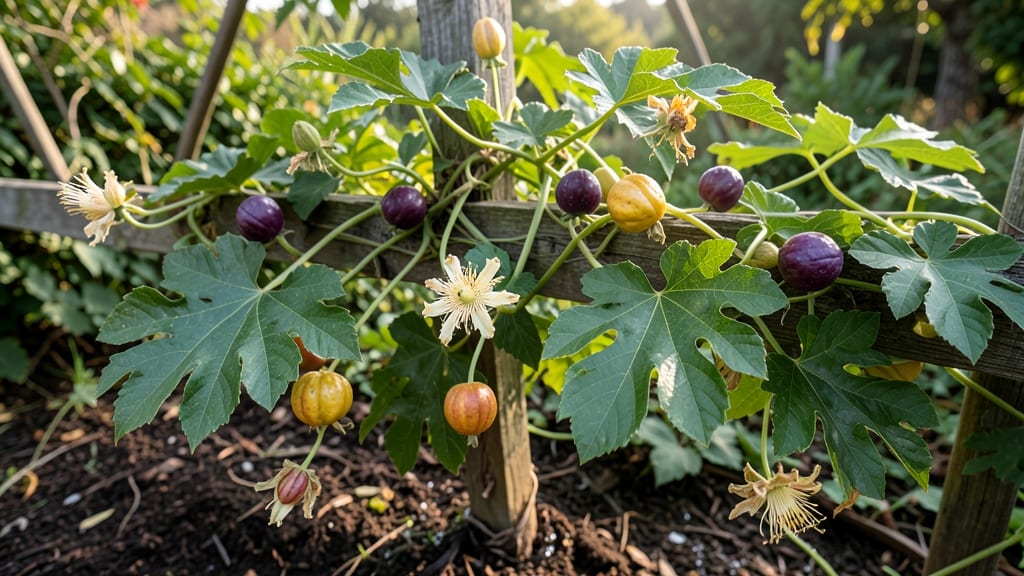
Growing a fruiting passionfruit vine in containers unlocks tropical bounty on your patio—no greenhouse needed. 🌿 I’ve watched mine produce dozens of sweet, purple fruits in just one season, and the secret lies in the right setup: sturdy pots, well-draining soil, and a little winter TLC.
The vine’s vigorous growth makes it perfect for balconies or sunny porches, but it’s the fruiting that steals the show.
Start with a healthy vine (rooted cuttings work best) and a container at least 10 gallons—passionfruit vines need room to sprawl. Amend your soil with compost for nutrients, and place the pot where it gets 6+ hours of direct sun daily.
Water deeply when the top inch dries out, but avoid soggy soil. Fertilize monthly with a balanced organic fertilizer during growing season, and you’ll see those iconic tropical blooms (and later, fruit) within months.
The real magic happens when you prune strategically: trim back leggy growth after fruiting to encourage bushier, more productive vines. Hand-pollinate flowers with a small brush if bees are scarce—just dab the pollen from male flowers onto female blooms.
With the right care, you’ll harvest fruit year after year, turning your container into a self-sustaining tropical oasis.
Even in cooler climates, passionfruit vines thrive in containers—just move them indoors or to a sheltered spot when temperatures dip below 40°F**. The key is consistency: sun, water, and a little patience.
Before you know it, you’ll be sharing bowls of fresh passionfruit with neighbors who can’t believe you grew them at home.
📚 In This Guide
- What you need
- Instructions
- Tips and common mistakes
- Wrapping up and next steps
What you need
- ● Passionfruit Vine: Choose a healthy Passiflora edulis (purple) or Passiflora ligularis (yellow) cutting or young plant (1-2 years old).
- ● Container: A 5-gallon or larger pot (18"+ deep) with drainage holes. Terra cotta or fabric pots work best.
- ● Potting Mix: A well-draining blend: 60% coco coir or peat moss, 30% perlite or pumice, and 10% compost (avoid heavy garden soil).
- ● Support Structure: A trellis, obelisk, or sturdy bamboo stake (6-8 feet tall) for vertical growth.
- ● Fertilizer: Balanced organic fertilizer (e.g., 10-10-10 or fish emulsion) for planting, plus citrus-specific fertilizer (high in iron/zinc) monthly during fruiting.
- ● Mulch: 2-3 inches of wood chips or straw to retain moisture and regulate soil temp.
- ● Pruners: Sharp, sterilized bypass pruners for trimming.
- ● pH Test Kit: To monitor soil pH (ideal: 6.0–7.0).
- ● Drip Irrigation or Spray Bottle: For gentle watering (avoid soggy roots!).
- ● Hand Gloves: Protect your hands from thorns.
- ○ Epsom Salt: (Optional) 1 tbsp/month for magnesium boost in older plants.
- ● Shade Cloth (30-50%): For hot climates to prevent leaf scorch.
How to grow a thriving fruiting passionfruit vine in containers
Here’s the straightforward approach I’ve used to coax lush, productive passionfruit vines into small spaces—no greenhouse needed.
🌱 Step 1: Select the Right Container and Site
Passionfruit vines need 5-gallon minimum containers with drainage holes—larger pots (10+ gallons) produce more fruit. Choose a sun-drenched spot receiving 6-8 hours of direct light daily, as passionfruit vines are tropical sun-worshippers. If your space only offers partial sun, opt for the yellow passionfruit variety, which tolerates 4-6 hours better than purple varieties.
Fill the container with well-draining potting mix (avoid garden soil—it compacts and rots roots). I blend 50% premium potting mix with 50% coconut coir or perlite to improve aeration. The mix should feel like a damp sponge, not a soggy brick. Test by squeezing: if water drips out, it’s too wet.
☀️ Step 2: Plant and Provide Immediate Support
Plant your bare-root passionfruit cutting or young vine 1 inch deeper than its original soil line—this encourages root development. Gently spread roots outward before covering with soil to prevent air pockets. Water deeply right after planting to settle the mix around roots.
Install a 5-6 foot trellis or sturdy wire frame immediately—passionfruit vines grow 10-20 feet annually and need support from day one. I use galvanized metal trellises because they resist rust in humid conditions. Secure the vine with soft plant ties (never wire) to avoid damaging tender stems as it grows.
💧 Step 3: Water and Fertilize for Maximum Fruit Set
Water when the top 2 inches of soil feel dry—passionfruit vines hate soggy roots but also wilts under drought stress. In summer heat, this means every 2-3 days; in cooler months, stretch to every 5-7 days. Water at the base, not overhead, to prevent fungal diseases like powdery mildew that thrive in tropical humidity.
Feed with a balanced liquid fertilizer (10-10-10) every 2 weeks during spring and summer, then switch to a low-nitrogen, high-phosphorus formula (5-10-10) when flowers appear. Passionfruit vines are heavy feeders, but too much nitrogen produces lush foliage at the expense of fruit. I also mix in 1 tablespoon of Epsom salt monthly to boost magnesium—deficiency causes yellowing leaves and poor fruit development.
✂️ Step 4: Prune for Airflow and Fruit Production
Prune new growth back by ⅓ in early spring to encourage bushier, more productive vines. Remove weak or crossing branches to improve airflow—this prevents fungal diseases and helps bees pollinate those tiny, fragrant flowers. Always prune just above a leaf node (where leaves grow) to stimulate new growth.
After harvest, give your vine a light pruning in late fall to remove dead or diseased wood. Never prune into winter—passionfruit vines are semi-tender and need time to harden off before cold snaps. I also trim overly long vines to keep them manageable on trellises, but never cut more than 20% of the plant at once.
🌿 Step 5: Overwinter and Prepare for Next Season
If you’re in a USDA Zone 9 or colder, move containers to a bright, frost-free space (like a garage with windows) when temperatures drop below 40°F. Reduce watering to every 10-14 days and stop fertilizing entirely—vines enter a natural dormancy. Check soil moisture with your finger: it should stay barely damp, not wet.
In late winter, resume watering and apply a layer of mulch (2-3 inches) around the base to insulate roots. When new growth appears, resume fertilizing and gradually reintroduce the vine to outdoor conditions over 1-2 weeks to avoid shock. This yearly reset keeps vines vigorous and productive for years.
Tips & tricks for thriving container-grown passionfruit vines
A few strategic tweaks will transform your container passionfruit vine from struggling survivor to prolific fruit producer—here's what I wish I'd known sooner.
Container Size Matters: That 5-gallon minimum isn't just about roots—it's about heat retention. Passionfruit vines in smaller containers dry out faster and overheat more easily. I've seen 10-gallon pots produce 30% more fruit because they maintain more consistent moisture and temperature. If you're in a hot climate, consider black containers—they absorb heat and warm the roots slightly, which can help with fruit set in cooler months.
Support System Secrets: The 5-6 foot trellis recommendation is non-negotiable, but here's the part nobody tells you: passionfruit vines grow in a spiral pattern. Install your trellis with a slight spiral design or use flexible wire that you can gently twist as the vine grows. This prevents the vine from getting tangled and creates better airflow around the fruit clusters. I also add a secondary support wire at about 3 feet up to catch any early fruit before it pulls the vine down.
Watering Wisdom: The "top 2 inches dry" rule works, but timing is everything. Water in the early morning so the foliage dries completely by evening—this prevents fungal diseases that thrive in tropical humidity. I've found that using a moisture meter (around $20) eliminates guesswork. Aim for 40-50% moisture in the root zone during active growth. Overwatering is the silent killer—passionfruit roots rot faster than they wilt, and you won't see symptoms until it's too late.
Fertilizer Timing: The switch from 10-10-10 to 5-10-10 when flowers appear is crucial, but here's the pro move: start the 5-10-10 formula a week before you see flowers. This gives your vine a phosphorus boost when it needs it most for fruit development. I also mix in a teaspoon of kelp meal with each fertilizer application—it contains natural growth regulators that improve fruit set and size. The Epsom salt should be dissolved in water before applying to prevent salt buildup in the soil.
Pro Tips for Fruiting Passionfruit Vine
- A few strategic tweaks will transform your container passionfruit vine from struggling survivor to prolific fruit producer—here's what I wish I'd known sooner.
- Container Size Matters: That 5-gallon minimum isn't just about roots—it's about heat retention.
- Support System Secrets: The 5-6 foot trellis recommendation is non-negotiable, but here's the part nobody tells you: passionfruit vines grow in a spiral pattern.
Frequently asked questions
How long does it take for a passionfruit vine to fruit after planting?
A healthy passionfruit vine typically takes 6 to 12 months to produce its first fruit, depending on climate, variety, and care. Purple passionfruit (Passiflora edulis) often fruits faster (6–9 months), while granadilla (Passiflora ligularis) may take longer. Patience pays off—consistent warmth, sunlight, and support speed up the process!
Can passionfruit vines survive winter, or do I need to protect them?
Passionfruit vines are tropical and struggle in frost (<32°F/0°C). In colder zones, move potted vines indoors or to a greenhouse before temperatures drop. For in-ground plants, mulch heavily and wrap the base with burlap. If you lose leaves, don’t worry—the vine often regrows in spring!
Why aren’t my passionfruit vines fruiting? Troubleshooting tips.
No fruit? Check these common culprits:
- Not enough sunlight: Passionfruit needs 6+ hours of direct sun daily. Move to a sunnier spot or supplement with grow lights.
- Lack of pollinators: Hand-pollinate with a soft brush if bees are scarce, especially in containers.
- Over-fertilizing: Too much nitrogen = leafy growth, no fruit. Use a balanced fertilizer (10-10-10) and reduce doses in summer.
- Young plant: Vines under 1 year old may not fruit yet—be patient!
Can I grow passionfruit in containers? What size pot is best?
Containers are ideal for small spaces. Use a 15–20 gallon pot (minimum 18" deep) with drainage holes. Ensure it’s large enough for roots to spread—crowded roots = stunted growth. Add a trellis or cage for support, and repot every 2–3 years to refresh soil.
Do passionfruit vines need cross-pollination to produce fruit?
Most passionfruit varieties are self-pollinating, but cross-pollination (by bees, butterflies, or wind) often increases yield. If growing in a screened or enclosed space, gently brush flowers with a soft paintbrush to transfer pollen. Morning is the best time for manual pollination!
Pro Tip: Boost fruiting with these tricks!
| Action | Why It Works |
|---|---|
| Prune leggy growth in early spring | Encourages bushier, fruit-bearing vines. |
| Fertilize with phosphorus-rich food (like bone meal) in spring | Promotes flowering and fruiting. |
| Water deeply but avoid soggy soil | Prevents root rot, which stresses the plant. |
Wrapping up and next steps
Growing a fruiting passionfruit vine in containers is a rewarding journey that brings tropical abundance to your space with minimal fuss! Whether you're a beginner or a seasoned gardener, this vine thrives with simple care—sunlight, support, and occasional pruning are all it needs to flourish.
The sweet, fragrant fruit it produces is well worth the effort, offering a taste of the tropics right at your doorstep.
Now that you’re armed with the how-to, why not take the next step? Start with a cutting or seedling, set up your container, and watch as your vine climbs, blooms, and bursts with vibrant fruit. Happy growing—your future harvest awaits! 🌱🍈