
Pruning
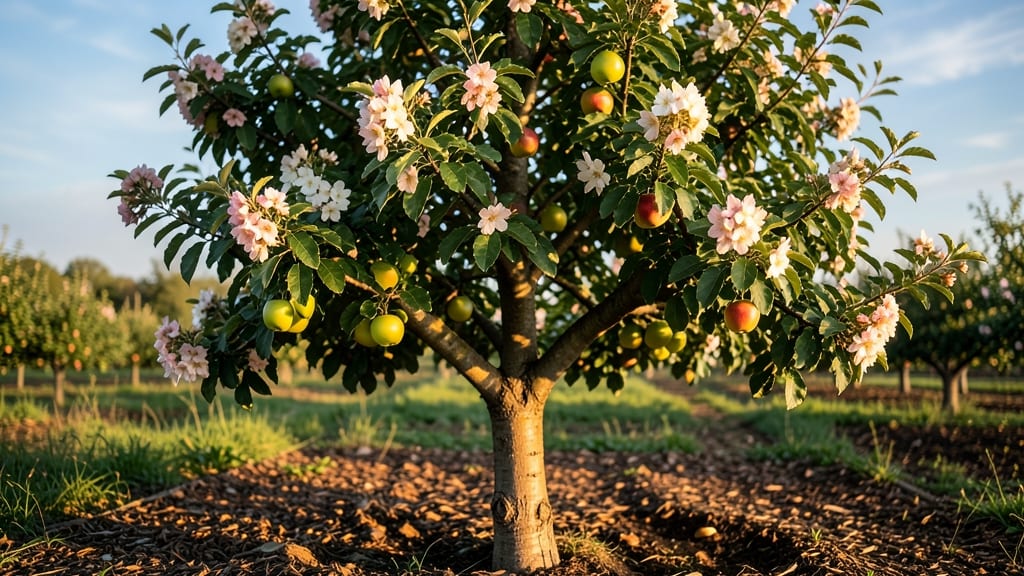
Fruit tree soil pH should stay between 6.0 and 7.0 for best growth, with citrus trees doing best at 6.0–7.0 and berries like slightly acidic soil (5.5–6.5). Keeping the pH balanced helps roots absorb nutrients and prevents stress.
Soil pH directly impacts which nutrients your fruit trees can access—think of it as the key to unlocking their full potential. 🌱 For example, iron and manganese become unavailable when soil is too alkaline, leading to yellow leaves even when you're fertilizing regularly.
I've seen peach trees suffer from blossom end rot simply because the calcium wasn't accessible due to high pH levels. The good news? Testing your soil every 2–3 years and making small adjustments with organic amendments can work wonders for tree health and fruit production.
Most gardeners focus on nitrogen, phosphorus, and potassium, but the real game-changer is often the pH balance.
A simple soil test kit (around $15) can reveal whether your soil is leaning too acidic or alkaline, and from there, you can add elemental sulfur to lower pH or crushed limestone to raise it.
The key is patience—changing pH takes time, so plan your amendments 3–6 months before planting new trees.
💡 In This Article
- How Soil pH Affects Fruit Tree Nutrient Uptake
- Adjusting pH for Different Fruit Trees: A Gardener’s Guide
How soil pH affects fruit tree nutrient uptake
Soil pH acts like a chemical gatekeeper, controlling which nutrients your fruit trees can absorb. At the microscopic level, roots release hydrogen ions to acidify their immediate environment, dissolving minerals like phosphorus and zinc.
However, when soil pH strays from the ideal 6.0–7.0 range, these minerals either become locked away or toxic elements like aluminum and manganese flood the root zone.
For instance, at pH 7.5, iron becomes nearly inaccessible, causing chlorosis (yellowing leaves) even when iron is present in the soil. 🌿 The root hairs, which are the primary sites for nutrient uptake, also shrink in alkaline conditions, reducing surface area by up to 40%.
Each nutrient has its own pH sweet spot. Calcium, crucial for cell wall strength, thrives at 6.5–7.0, while nitrogen—essential for leaf growth—becomes more available as pH drops toward 6.0.
This explains why peach trees with blossom end rot (a calcium deficiency) often show symptoms when soil pH exceeds 7.2. The root's ability to transport nutrients also slows in extreme pH conditions, as the energy required to pump ions across cell membranes spikes.
For example, at pH 5.0, aluminum toxicity can damage root tips, stunting growth and reducing water absorption.
Flowering and fruiting cycles are particularly sensitive to pH imbalances. Citrus trees, which prefer 6.0–7.0, may drop blossoms if manganese becomes unavailable in alkaline soil, while blueberries (thriving at 4.5–5.5) suffer from phosphorus deficiency above 6.0. The disruption isn't just about missing nutrients—it's also about hormonal signals.
Auxin, a plant hormone regulating growth, functions poorly in high-pH soils, leading to weak branches and poor fruit set. This is why a 0.5 pH shift can mean the difference between a bountiful harvest and sparse yields.
Seasonal changes further complicate pH dynamics. Rainfall naturally lowers soil pH by 0.2–0.5 units annually, while evaporation in summer concentrates alkaline minerals near the surface. Young trees are especially vulnerable because their root systems are shallow and haven't yet established the mycorrhizal fungi that help buffer pH extremes.
For example, a newly planted apple tree might show stunted growth in spring if winter rains dropped the pH below 5.5, even if the soil tested ideal in fall. 🌱
Visual clues can help diagnose pH-related issues. Yellowing between leaf veins (interveinal chlorosis) often signals iron deficiency in alkaline soil, while purple stems or undersides of leaves indicate phosphorus stress in acidic conditions.
The texture of the soil also matters—clay soils hold pH changes longer than sandy soils, which drain quickly but require more frequent amendments.
For instance, a 1-inch layer of sulfur can lower pH by 1 unit in sandy soil within 2–3 months, while the same amount might take 6 months in clay.
What most gardeners overlook is how pH affects soil biology. Beneficial microbes, like those in mycorrhizal networks, thrive at 6.0–7.0 and help trees access nutrients. At pH 5.0, these microbes decline by 50%, weakening the tree's resilience.
The interplay between chemistry and biology is why a simple pH test is one of the most powerful tools in your gardening arsenal—it reveals not just what's missing, but why the tree can't access it. 💡