
Picking
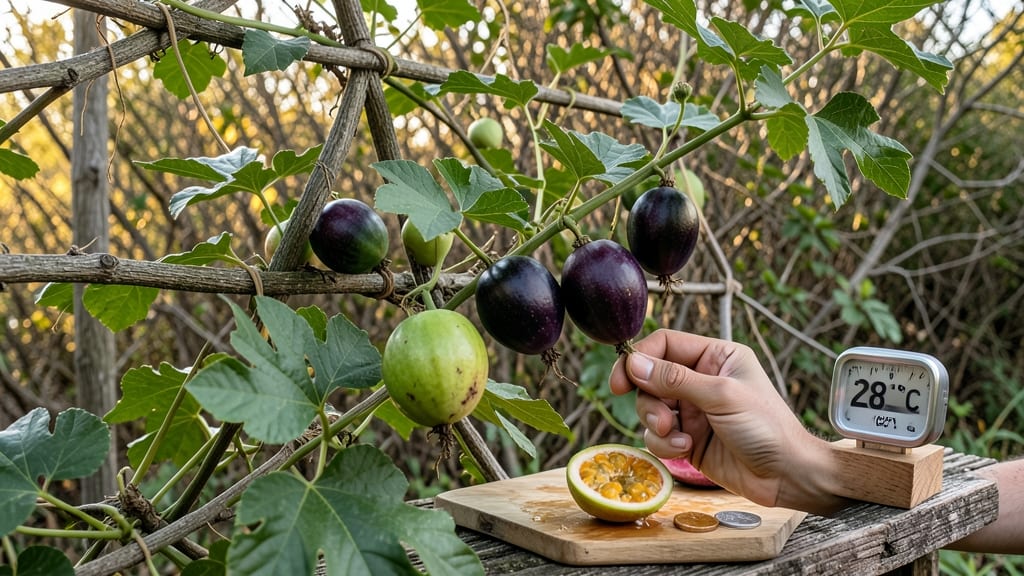
Passionfruit do not ripen off the vine—they require the plant’s natural ethylene production to fully develop sweetness and flavor. Harvest when firm but yielding, then store at room temperature for 1-2 days before refrigeration to slow softening. Overripe passionfruit turn mushy and lose quality quickly.
Unlike many fruits that ripen after picking, passionfruit need their vine connection to trigger full flavor development.
The plant’s ethylene gas—produced when fruit detaches—kicks off sugar conversion, which is why vine-ripened passionfruit taste sweeter and more aromatic. 🌱 Once harvested, keep them at room temperature (around 65-70°F) for 1-2 days to let residual ethylene work its magic before moving to the fridge.
This short "room-temperature cure" helps preserve texture and prevents premature mushiness.
Pro tip: Look for deep yellow-orange skin and a slight give when gently squeezed—these are your best indicators of readiness.
If you find passionfruit still firm and green, they won’t ripen properly once picked, so give them time on the vine or try storing them in a paper bag with a banana (ethylene producer) to speed up the process.
💡 In This Article
- How Passionfruit Ripening Works on the Plant
- Optimal Harvesting and Storage for Peak Passionfruit Flavor
How passionfruit ripening works on the plant
Passionfruit ripening is a complex biochemical process that begins while still attached to the vine. The plant produces ethylene gas, a natural plant hormone that triggers the conversion of starches into sugars—this is what transforms the fruit’s tartness into sweetness.
Unlike climacteric fruits (like bananas or apples), passionfruit rely heavily on this vine connection to maintain ethylene production after harvest. When you pick them too early, the ethylene levels drop sharply, halting sugar development and leaving the fruit flavorless.
The ripening process also involves chlorophyll breakdown, which is why passionfruit change from green to vibrant yellow-orange. This color shift isn’t just visual—it signals the fruit’s internal chemistry shifting from acidic to sweet.
The pulp’s gelatinous texture also develops during this phase due to pectin breakdown, a process that requires continuous ethylene exposure. Without the vine, this transformation stalls, leaving the fruit hard and bland, even if stored for weeks.
Here’s the science: Ethylene binds to receptors in the fruit’s cells, activating enzymes like polygalacturonase that soften cell walls and amylase that converts starches to sugars. At room temperature (65-70°F), these reactions proceed optimally.
Below 50°F, enzyme activity slows to a crawl, while above 80°F, the fruit’s cell membranes degrade too quickly, causing mushiness. 🔥 This is why passionfruit need that brief room-temperature "cure" after harvest.
What most people don’t realize is that passionfruit also produce their own ethylene after detachment—but only in small amounts. The vine’s ethylene supply is the dominant factor.
This is why vine-ripened passionfruit often taste 20-30% sweeter than store-bought ones, which are typically picked green for shipping and never fully develop their potential flavor profile.
Consider this comparison: A passionfruit left on the vine until fully colored and fragrant will have 12-15% sugar content, while an off-vine fruit might only reach 8-10%**. The difference isn’t just about taste—it’s about the fruit’s ability to activate its full biochemical potential.
Even with ethylene tricks (like banana storage), you’ll never fully replicate vine ripening.