
Vegetables
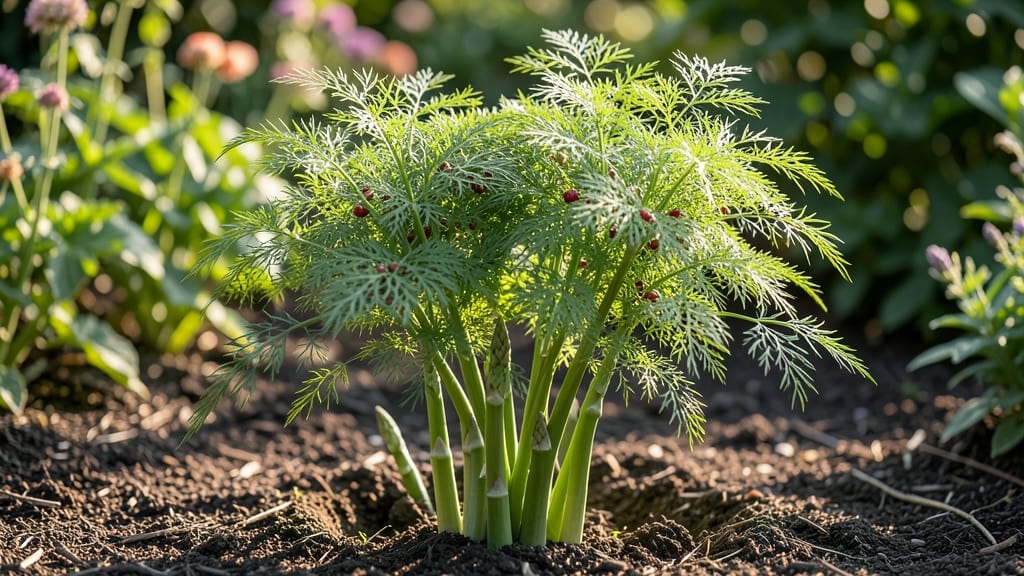
Asparagus is classified as a vegetable in culinary terms but botanically functions as a flower bud, not a fruit. Its classification stems from its edible, non-reproductive parts, which are harvested before blooming.
When you hear "asparagus," you're likely thinking of a vegetable, and that's correct in the kitchen—but botanically, it's a fascinating exception. 🌱 The confusion comes from how we define fruits and vegetables: fruits develop from flowers and contain seeds, while vegetables are other edible plant parts.
Asparagus spears are actually immature flower shoots, harvested before they bloom or produce seeds, which is why scientists classify them as a flower bud.
This distinction matters in gardening, where knowing its botanical nature helps you grow it properly, and in cooking, where pairing it with other vegetables makes more sense than with fruits.
What's interesting is how this classification affects how we use asparagus.
In the garden, you'll want to harvest spears before they reach 8-12 inches tall, as they become tougher and more fibrous. 🌿 In the kitchen, its mild, slightly sweet flavor pairs better with savory dishes like eggs or roasted meats than with sweet fruits. The key takeaway?
While asparagus is a vegetable in everyday language, its botanical roots reveal a more complex story about how plants grow and how we categorize them.
💡 In This Article
- Botanical Classification: Why Asparagus Isn’t a Fruit
- Culinary and Gardening Uses of Asparagus
Botanical classification: why asparagus isn’t a fruit
The confusion around asparagus stems from how botanists define fruits versus vegetables. Fruits develop from the ovary of a flower and contain seeds, like tomatoes or peppers. Asparagus, however, is a flower bud—the immature shoot that will eventually bloom into a flower.
When harvested, these spears are just 10-20 centimeters tall and haven't yet developed reproductive structures. This is why botanically, asparagus is classified as a vegetable, despite its floral origins.
The key difference lies in asparagus's anatomy. Each spear is a cluster of tightly packed leaves (called cladophylls) that haven't yet unfurled into their mature form. These leaves are modified to store nutrients, similar to how bulbs or tubers function.
The plant's energy is focused on growing the spear rather than producing seeds. 🌱 What makes this fascinating is that asparagus belongs to the lily family (Liliaceae), which includes other edible flower buds like onions and garlic—further proof of its botanical uniqueness.
This classification has practical implications for gardeners. Asparagus plants produce male and female flowers on separate stalks, but the edible part is always the immature shoot. Female plants yield thicker spears but require more energy to produce berries after flowering, while male plants focus all their energy on growing spears.
This is why gardeners often prefer male asparagus crowns—they produce spears for 3-5 years longer before needing to be harvested.
In cooking, this botanical distinction explains why asparagus pairs better with savory ingredients than sweet ones. Its mild, slightly grassy flavor comes from compounds like asparagusic acid, which breaks down during cooking to release sulfur-containing aromas.
These compounds are more compatible with herbs like thyme or garlic than with fruits like strawberries, despite asparagus's floral ancestry.
What's often overlooked is how asparagus's classification affects its growth cycle. The plant goes through three distinct phases: establishment (first 2-3 years), peak production (years 3-5), and decline (after year 10).
During peak production, a single crown can yield 1-3 pounds of spears annually, proving how efficient this "flower bud" vegetable is at converting sunlight into edible biomass.
The takeaway? Asparagus challenges our simple fruit-versus-vegetable divide by being both botanically and culinary a fascinating hybrid. Its status as a flower bud explains why it grows in such distinct cycles and why it's harvested at specific stages—making it a perfect example of how plant science intersects with our kitchens.