
How To
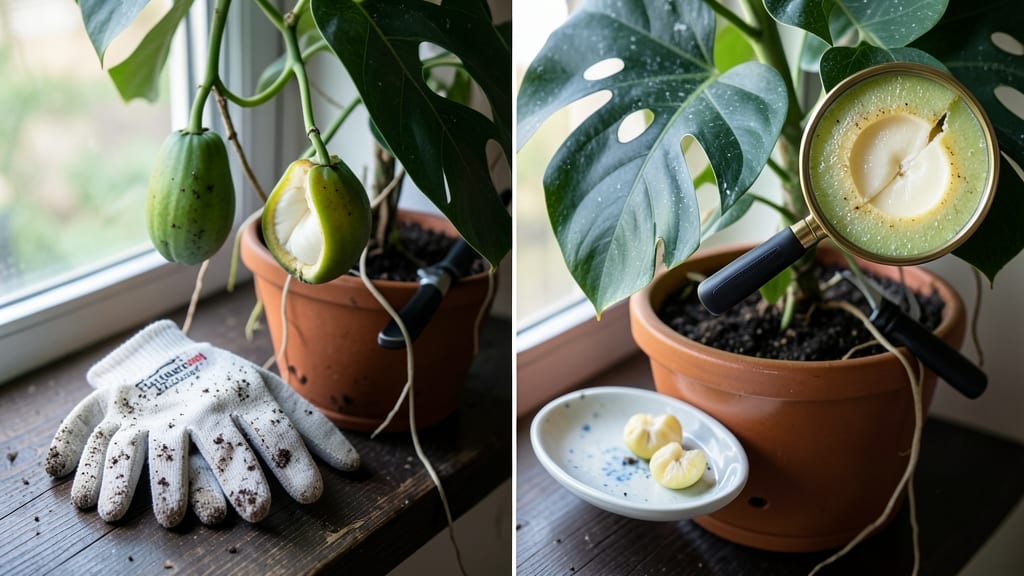
To pick monstera fruit at the perfect ripeness, wait until the fruit turns from green to speckled yellow 🍈—a sign it’s ready to harvest in 12-18 months after flowering.
Harvesting too early means bland, underripe fruit, while waiting too long risks overripeness and a mushy texture. The difference between sweet, juicy perfection and a disappointing bite comes down to knowing the exact cues.
In tropical regions, monstera fruit ripens year-round, but indoor plants may take longer due to lower humidity. I’ll walk you through the visual and scent signals that guarantee a harvest you’ll love.
You’ll learn how to test for softness, recognize the sweet aroma, and even troubleshoot if your fruit isn’t ripening properly—so you can enjoy the reward of your hard work.


Visual and physical ripeness cues for monstera fruit picking
Picking Monstera deliciosa fruit at the right time transforms your patience into a sweet, tropical reward. Unlike many fruits, monstera fruit doesn’t ripen on the vine like bananas—it needs careful monitoring for four key ripeness cues that tell you when to harvest.
Miss these signs, and you might end up with a mealy, flavorless fruit that’s past its prime.
Start by observing the fruit’s color change, the most obvious clue that ripening is underway. Young monstera fruit starts as a vibrant green, but as it matures, you’ll notice yellow speckles appearing on the skin.
Think of it like a sunburn pattern—the more yellow, the riper the fruit. This shift typically takes 12-18 months after flowering, so don’t rush it!
Next, pay attention to the texture shift. When fully ripe, the fruit should yield slightly to gentle pressure—like pressing your thumb into a ripe avocado. If it feels rock-hard, it’s not ready, and if it’s mushy, it’s overripe.
This test is crucial because monstera fruit never softens like a peach; it stays firm but develops a subtle give.
Scent plays a surprisingly big role in determining ripeness. A ripe monstera fruit releases a sweet, pineapple-like aroma when you hold it near your nose. If you detect no smell or a faint, sour note, the fruit needs more time. Pro tip: Sniff near the stem end, where the scent is strongest.
Finally, test the stem separation. Gently twist the fruit at its base—if it detaches cleanly with minimal resistance, it’s ready for harvest. If the stem snaps or resists, wait a few more days.
This is your final green light, as forcing the fruit off too early can damage the plant’s energy flow.
| Ripeness Cue | What to Look For | Action to Take |
|---|---|---|
| Color Change | Green to speckled yellow (like a sun-dappled leaf) | Wait until 50% yellow coverage |
| Texture | Slightly soft (not mushy) when pressed gently | Harvest when it yields like a ripe avocado |
| Scent | Sweet, tropical (pineapple-like) aroma near stem | Pick when scent is strong and pleasant |
| Stem Test | Fruit detaches easily with gentle twist | Harvest immediately if it separates cleanly |
Indoor growers should also watch for seasonal slowdowns. If your monstera is in a cooler room during winter, ripening may stall. Move it to a warmer spot (65-80°F) and increase humidity to 60% or higher to speed up the process.
A humidity tray or misting can help mimic its tropical origins.
One common mistake is assuming all fruit on a plant ripens at once. In reality, monstera fruit ripens in waves, with some staying green while others turn yellow.
Focus on the oldest-looking fruit first—these are usually the first to ripen. If you’re unsure which is oldest, check for smaller size or more mature leaves nearby.
Once you’ve confirmed all four ripeness cues, harvest by twisting gently at the base. Avoid cutting the stem, as this can introduce bacteria.
Store ripe fruit in a paper bag at room temperature for 1-2 days to enhance sweetness, or refrigerate for up to a week if you’re not ready to eat it.
Remember, monstera fruit is highly perishable once ripe, so don’t wait too long after spotting these signs. The window between perfect ripeness and overripeness is narrow—often just 24-48 hours.
With practice, you’ll develop an eye for spotting the ideal moment, turning your monstera’s harvest into a rewarding (and delicious) gardening achievement.
Monstera fruit harvest timeline: seasonal and growth-stage guide
Tracking your Monstera deliciosa fruit’s development is key to harvesting at peak ripeness. Unlike its decorative cousin, fruiting monstera takes 12-18 months from flowering to harvest—so patience is essential. Understanding seasonal cues helps you adjust expectations based on whether your plant thrives indoors or outdoors in USDA zones 10-12.
Indoor monstera fruit typically ripens more slowly due to lower humidity and artificial lighting, while outdoor plants in tropical climates may mature faster. The harvest window spans year-round indoors but peaks in spring and summer outdoors when temperatures stay warm.
Let’s break down the stages so you never miss the perfect moment.
- 1 Flowering Stage (Month 0-3): White spathe flowers appear, signaling fruit formation. No harvest yet—this is just the start!
- 2 Green Fruit Phase (Months 4-9): Fruits grow green and hard. Not edible yet—wait for color changes!
- 3 Speckled Yellow Stage (Months 10-14): Fruits develop yellow speckles. Gently squeeze—if slightly soft, it’s nearing ripeness!
- 4 Full Yellow Ripeness (Months 15-18): Fruits turn bright yellow and emit a sweet tropical scent. Twist gently—if it detaches easily, it’s ready!
- 5 Post-Harvest Handling: Once picked, store fruit at room temperature for 1-2 days or refrigerate to slow ripening. Overripe fruit turns brown and loses sweetness!
Climate plays a huge role in timing. Outdoor monstera in tropical zones may ripen 2-3 months faster than indoor plants due to higher humidity and natural sunlight. If your indoor monstera isn’t progressing, consider supplementing with a humidifier or grow lights to mimic tropical conditions.
Pro tip: Mark your calendar when flowers appear—this sets your 12-18 month countdown. For indoor plants, spring and summer are the best months for fruit development, while outdoor plants can fruit year-round in warm climates. Adjust your watering schedule too: reduce slightly as fruits mature to avoid splitting.
Never rush the harvest! Underripe fruit is bitter and tough, while overripe fruit becomes mushy and seedy. With patience and these seasonal cues, you’ll enjoy sweet, juicy monstera fruit at its peak—just like a tropical treasure! 🌿