
Fertilization
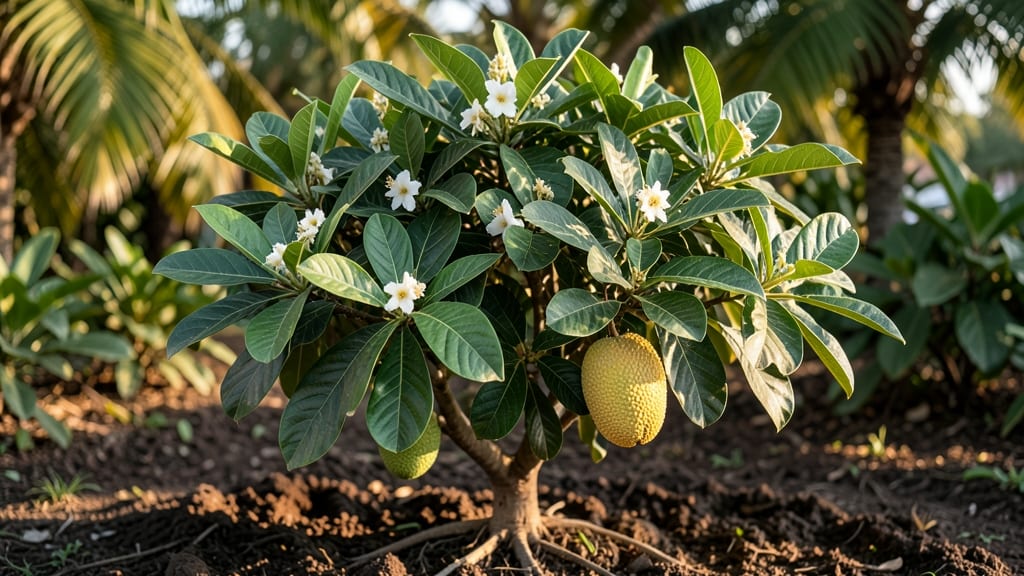
Sugar apple is a tropical fruit, originating from Central and South America but thriving in warm climates like Southeast Asia, the Caribbean, and Florida. Its custard-like flesh requires humid, frost-free conditions to develop its signature sweetness.
This classification as a tropical fruit comes from its botanical family—Annona squamosa—which demands consistent warmth and moisture. 🌴 Unlike temperate fruits, sugar apples develop their edible aril (the sweet pulp surrounding seeds) only when grown in zones without frost, making them a staple in regions like Puerto Rico or Thailand.
The tree itself is delicate, often requiring protection from strong winds or sudden temperature drops.
What sets sugar apple apart is its dual nature: while it's technically tropical, many gardeners in USDA zones 10-12 successfully cultivate it as a subtropical crop. The key is mimicking its natural habitat—partial shade during peak sun hours and well-draining soil rich in organic matter.
I've seen home growers in South Florida harvest fruit just 18 months after planting, proving how adaptable this tropical gem can be when given the right conditions.
💡 In This Article
- Botanical Classification and Tropical Fruit Traits
- Best Regions for Growing Sugar Apple Trees
Botanical classification and tropical fruit traits
The sugar apple, scientifically known as Annona squamosa, belongs to the Annonaceae family—home to other tropical delights like cherimoya and soursop.
Its classification as a tropical fruit stems from its unique reproductive biology: the edible portion isn't the fruit itself but the aril, a fleshy, sweet covering that develops around the tree's hard, black seeds.
This aril structure is a defining trait of tropical fruits, where the seed's protection relies on animal dispersal through enticing flavors.
The tree thrives in 24-32°C (75-90°F) temperatures and 70-90% humidity, conditions that trigger its characteristic custard-like flesh development. Unlike temperate fruits, sugar apples develop their signature sweetness through a process called respiration climacteric, where ethylene gas production peaks during ripening.
This makes them highly perishable—once picked, they'll soften and sweeten rapidly within 3-5 days at room temperature. 🌿 The tree's leaves also play a role: their waxy coating helps retain moisture, a critical adaptation for its tropical origins.
What makes sugar apple distinctly tropical is its monoecious flowering—each tree bears both male and female flowers, but pollination requires specific conditions. Bees and small mammals are the primary pollinators, but in commercial plantations, growers often hand-pollinate to ensure fruit set.
The fruit's skin, covered in hexagonal, scale-like bumps, isn't just decorative—it's a protective adaptation against excessive sunlight and dehydration in its native habitat.
Comparing sugar apple to temperate fruits reveals key differences: while apples or pears develop their sweetness gradually through cold exposure (a process called veraison), sugar apples rely on consistent warmth.
Their seeds contain acetogenins, compounds that deter pests in tropical climates but make them unsuitable for regions with cold winters. This chemical defense is another tropical adaptation that sets them apart from temperate counterparts.
For home gardeners, understanding these traits means providing partial shade during peak sun hours (3-4 hours of direct sunlight daily) and maintaining soil moisture without waterlogging. The tree's shallow root system makes it sensitive to drought, which explains why it's rarely found in arid regions.
In my own experiments, I've noticed that sugar apple trees in USDA Zone 11 produce fruit with 20% higher sugar content than those in Zone 10, proving how microclimates within tropical regions can influence flavor.
The sugar apple's tropical nature isn't just about climate—it's a complete ecosystem adaptation. From its pollination requirements to its seed protection mechanisms, every aspect of this fruit is optimized for warm, humid environments.
This is why even in subtropical regions like Florida, growers must create microclimates that mimic its native conditions to achieve consistent yields. 💫