
Planting
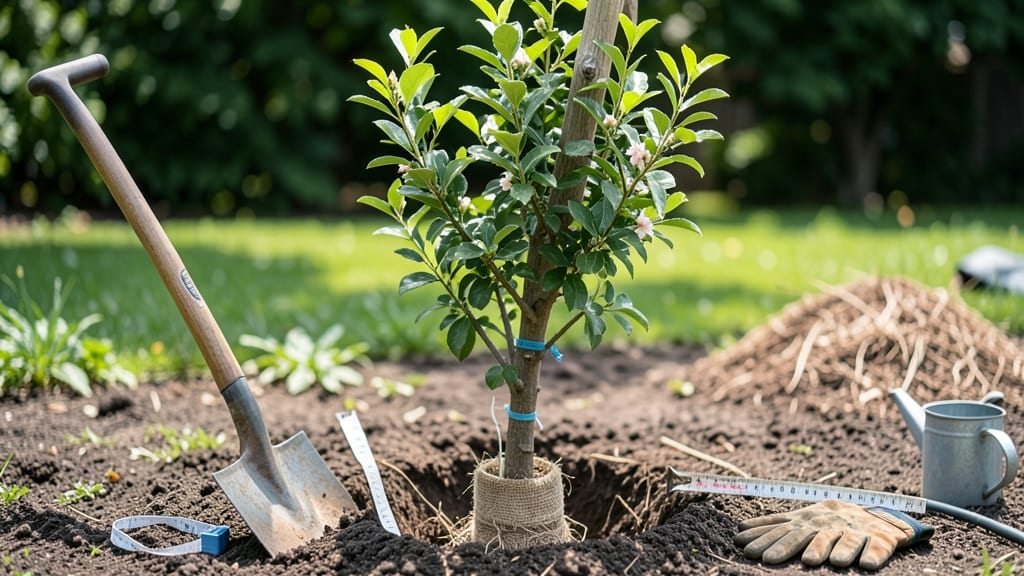
How deep to plant fruit trees—with the root ball just below soil level—is the foundation for a thriving orchard 🍎🍐🍊.
Too shallow, and your tree struggles to anchor; too deep, and it suffocates. I’ve watched young fruit trees wither because of a few inches difference—so let’s get this right from the start.
Whether you’re planting apples, peaches, or citrus, the correct depth depends on soil type, root ball size, and even your local climate. Below, I’ll break down the exact measurements for each variety, plus how to check if you’ve nailed it.
You’ll learn how to measure root ball depth, spot common mistakes (like girdling roots), and adjust for clay or sandy soil—so your tree grows strong for decades.

Correct root ball depth for fruit trees by variety type
Planting fruit trees at the correct root ball depth is critical for long-term health and productivity. Too deep, and roots suffocate; too shallow, and they dry out. Each fruit tree variety has unique needs based on root structure and soil conditions.
For example, apple trees and peach trees require precise depth to avoid girdling roots, while citrus trees tolerate slightly deeper planting in sandy soils. Let’s break down the science-backed guidelines for your orchard.
The root flare—where the roots meet the trunk—must sit 1-3 inches above soil level for most fruit trees. This ensures proper airflow and prevents moisture buildup.
However, soil type plays a huge role: clay soils hold moisture longer, so you may need to plant slightly deeper (up to 2 inches deeper) to prevent waterlogging. In contrast, sandy soils drain quickly, so maintain the standard 1-2 inches above soil to avoid root exposure.
Below is a variety-specific guide to root ball depth, including adjustments for container-grown vs. bare-root trees. Use this as your reference before digging—your tree’s future depends on getting it right!
| Variety Type | Root Ball Depth (from flare) | Soil Adjustments | Key Notes |
|---|---|---|---|
| Apple Trees (Malus spp.) | 1-2 inches above soil | Clay: +1 inch; Sandy: standard | Graft union must stay visible |
| Citrus (Oranges, Lemons) | 2-3 inches above soil (sandy soil) | Clay: 1-2 inches; Loam: 2 inches | Drought-tolerant; avoid waterlogging |
| Peach/Nectarine (Prunus persica) | 1-2 inches above soil | Clay: +1 inch; Sandy: standard | Prone to root rot; ensure drainage |
| Stone Fruits (Plums, Cherries) | 1-3 inches above soil | Clay: +2 inches; Sandy: 1 inch | Deep taproots; avoid compacted soil |
| Nut Trees (Almonds, Walnuts) | 2-4 inches above soil | Clay: +3 inches; Sandy: 2 inches | Deep-rooted; plant in mounds for drainage |
| Container-Grown Trees | Same as root flare in pot | Remove 10% of roots if pot-bound | Loosen roots before transplanting |
Apple trees and peach trees are particularly sensitive to depth—planting the graft union below soil can lead to suckering (unwanted shoots). For these varieties, use a wooden stake to mark the correct depth before backfilling. In clay-heavy soils, consider amending with compost or sand to improve drainage while maintaining the proper depth.
For citrus trees, which thrive in well-draining sandy soils, you can plant slightly deeper (up to 3 inches above soil) to protect roots from heat stress. However, avoid overdoing it—citrus roots need oxygen too!
If your soil is heavy clay, mound the planting area to create a raised root zone and plant at the standard 1-2 inches above soil.
Nut trees, like almonds and walnuts, have deep taproots that require extra care. Plant these 2-4 inches above soil in loamy or sandy soils to prevent root suffocation. In clay soils
Common planting mistakes that stunt fruit tree growth
Even experienced gardeners sometimes make critical errors when planting fruit trees that lead to stunted growth or even death. One of the most common mistakes is planting too deep, which can suffocate roots and create girdling roots that strangle the trunk.
Another frequent error is burying the root flare—the swollen area where roots meet the trunk—too far underground, cutting off oxygen to vital root zones.
Under-planting is just as harmful, leaving roots exposed and vulnerable to drying out or extreme temperature swings. These mistakes disrupt the tree's ability to absorb nutrients and water, leading to yellowing leaves, poor flowering, and reduced fruit production.
Let's explore how to recognize and fix these issues before they become permanent problems.
⚠️ Critical Planting Depth Rule
The root flare should sit 1-2 inches above soil after planting. For container-grown trees, the top of the root ball should align with the finished soil level. Bare-root trees need special care—plant so the flare is 1 inch above ground and gently mound soil to protect it.
Warning: Burying the flare too deep causes girdling roots, while planting too shallow exposes roots to drying. Always check depth by measuring from the flare to the soil surface.
One telltale sign your fruit tree is planted too deep is swollen roots at the soil line, which indicate the tree is struggling to breathe. You might also notice yellowing leaves on lower branches or stunted growth in the first growing season.
These symptoms often appear within weeks of planting, so act quickly to correct the depth.
Improper planting depth also affects nutrient uptake. When roots are buried too deep, they can't access the topsoil where most organic matter resides. This forces the tree to rely on lower-quality subsoil, leading to deficiencies that show as poor fruit set or small, misshapen fruit.
Always test your soil before planting to ensure it meets the tree's needs.
For container-grown trees, the root ball often contains a dense network of roots at the bottom. Planting these too deep can cause the roots to circle and strangle the trunk—a condition called root girdling.
To prevent this, gently loosen the root ball before planting and position it so the flare remains visible above the soil line.
If you've already planted your tree too deep, don't panic. Carefully dig around the base and expose the buried flare, then mound soil to create a gentle slope away from the trunk.
Water thoroughly to help the roots adjust, and monitor the tree closely for signs of recovery. With proper care, many trees can bounce back within a growing season.
Remember, the key to successful fruit tree planting is patience and attention to detail. Take the time to measure, adjust, and monitor your tree's progress. A well-planted tree today will reward you with decades of fruit production and minimal maintenance headaches. 🌳