
Planting
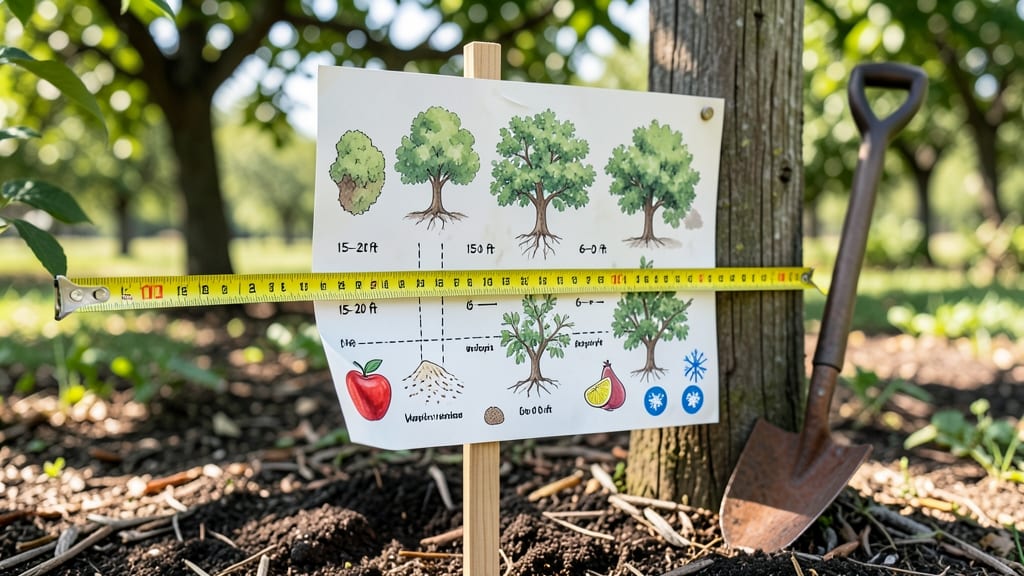
A fruit tree spacing chart provides exact planting distances to maximize sunlight exposure, airflow, and root development, with dwarf trees requiring 6-10 feet of space, standard varieties needing 15-30 feet, and large orchard trees spanning 30-50 feet apart. Local soil quality and climate conditions further refine these guidelines for peak fruit production.
A fruit tree spacing chart isn't just about preventing overcrowding—it's about creating an ecosystem where each tree thrives. 🌳 The right spacing prevents disease by reducing humidity in the canopy, while also allowing sunlight to reach lower branches for even ripening.
I've seen orchards where trees were planted too close struggle with stunted growth and poor fruit quality, even with otherwise ideal conditions.
For example, peach trees need more space than apples because their canopies spread wider, while citrus trees benefit from slightly tighter spacing in warmer climates where they grow more compactly.
When planning your orchard, consider both the mature size of your trees and how they'll interact with each other. Windbreaks or drip irrigation systems might allow you to adjust spacing slightly, but never compromise below the minimum recommendations.
And remember—these are guidelines, not rules. Your local extension office can provide soil-specific adjustments that make all the difference in long-term success.
💡 In This Article
- How Tree Size and Growth Habits Affect Spacing Needs
- Best Spacing Practices for Common Fruit Trees (Apple, Citrus, Peach, etc.)
How tree size and growth habits affect spacing needs
The science behind proper fruit tree spacing starts with understanding how trees compete for resources. Each tree develops a root zone that spreads outward 2-3 times wider than its canopy. For example, an apple tree with a 15-foot canopy at maturity will have roots extending 30-45 feet in all directions.
When trees are planted too close, their root systems overlap, leading to competition for water and nutrients that weakens both plants.
Canopy spread is another critical factor—some varieties like peach trees develop wide, rounded shapes that need 18-25 feet of space, while columnar apple trees (grown on dwarfing rootstock) stay narrow and only require 6-8 feet.
The growth habit also affects sunlight penetration: dense canopies create shaded areas where moisture lingers, promoting fungal diseases like powdery mildew. Proper spacing ensures air circulates through the orchard, keeping humidity levels in check.
Dwarfing rootstocks change the equation entirely. These genetically modified or grafted root systems restrict top growth, allowing trees to produce fruit earlier and in tighter spaces. A dwarf apple tree on M.9 rootstock might only reach 8-10 feet tall but still needs 8-12 feet between plants to prevent root competition.
The trade-off? These trees require more frequent pruning to maintain their compact shape and often have shorter productive lifespans (about 15-20 years vs 30+ years for standard trees).
Fast-growing varieties like fig trees or persimmon need more space because they quickly outgrow their neighbors, while slow-growing cherry trees can tolerate closer spacing if properly pruned.
Climate plays a role too—trees in hot, dry regions often grow more slowly due to water stress, allowing for slightly tighter spacing than in lush, temperate climates where growth is rapid. The key is matching spacing to the tree's natural growth rate and your local conditions.
Consider this real-world example: In California's Central Valley, citrus trees are often planted 12-15 feet apart in rows 20-25 feet wide because the warm climate keeps them compact. But in the Pacific Northwest, the same varieties might need 20-25 feet between trees due to faster growth rates.
The difference comes down to photosynthesis rates—warmer climates mean more efficient energy production, leading to denser canopies that require more space.
One often-overlooked factor is the soil's water-holding capacity. Sandy soils drain quickly, forcing roots to spread wider in search of moisture, while clay soils retain water longer, allowing roots to stay more concentrated.
This is why spacing guidelines often vary by region—what works in well-drained loam might fail in heavy clay without adjustments. Always check your local agricultural extension service for soil-specific recommendations.