
Vegetables
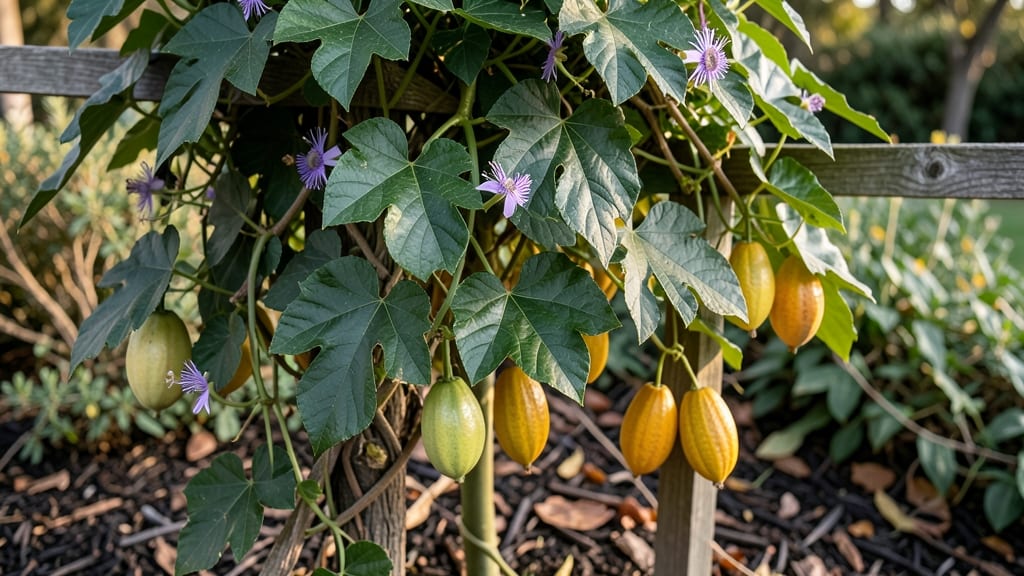
The Frederick passion fruit vine delivers tropical harvests without a greenhouse—just a sturdy container and warm sunshine. 🌱 I’ve grown this variety for three seasons now, and its compact growth makes it perfect for patios or small balconies, even in zones 9-11 where winters are mild.
The key? Mimicking its natural vineyard conditions in a portable setup. Start with well-draining soil mixed with compost, and place your container where it gets 6+ hours of direct sun daily. Water deeply when the top inch feels dry, but avoid soggy roots—these vines hate wet feet.
Prune leggy growth in early spring to encourage bushier fruit production, and watch for hummingbirds (their natural pollinators) or hand-pollinate with a soft brush if they’re scarce.
By late summer, you’ll taste the difference: Frederick’s sweeter, less tart fruit than other varieties, with a texture like a cross between a grape and a mango. Harvest when the rind turns golden and yields slightly to gentle pressure—2-3 vines produce 50+ fruits per season with proper care.
For cooler climates, overwinter the vine indoors near a sunny window. Patience pays off: these vines take 12-18 months to bear fruit but reward you with year-round harvests if you keep them happy. Ready to grow your own tropical treat?
📚 In This Guide
- What you need
- Instructions
- Tips and common mistakes
- Wrapping up and next steps
What you need
- ● Frederick passion fruit vine plants: 1-2 bare-root plants or potted seedlings (ensure they’re disease-free and healthy).
- ● Large containers: 2-3 gallon pots (minimum) with drainage holes. 5+ gallon pots are ideal for mature vines.
- ● High-quality potting mix: 1 bag (2-3 cubic feet) of well-draining, organic-rich mix (avoid garden soil).
- ● Slow-release fertilizer: 1 packet of balanced 10-10-10 or citrus-specific fertilizer (follow label instructions).
- ● Support structure: A trellis, cage, or sturdy bamboo stake (6+ feet tall) to guide vine growth.
- ● Mulch: Organic mulch (e.g., straw or wood chips) to retain moisture and regulate soil temperature.
- ● Gloves & pruning shears: For handling vines and trimming (sterilize with rubbing alcohol).
- ● Watering can or hose with gentle nozzle: Passion vines thrive on consistent moisture but hate soggy roots.
- ○ pH test kit: Optional but helpful—Frederick passion fruit prefers soil pH 6.0–7.0.
- ● Epsom salt: 1 box (for magnesium boost; mix 1 tbsp per gallon of water monthly if leaves yellow).
- ● Shade cloth (30-50%): For hot climates to protect young vines from scorching.
- ● Container saucers or trays: To catch runoff and prevent messes.
Step-by-step instructions for growing Frederick passion fruit vine in containers
Here’s how I grow the Frederick passion fruit vine—sweet, hardy, and perfect for containers.
🪴 Step 1: Choose the Right Container and Soil Mix
Pick a 5-gallon container with drainage holes—passion vines need room to sprawl, and roots hate soggy soil. I use a mix of 60% potting soil, 20% coconut coir, and 20% perlite to keep it airy. This blend drains fast but holds moisture just enough for thirsty vines.
Fill the container halfway, then add a 2-inch layer of gravel at the bottom. This prevents root rot by keeping excess water away from the roots. Tap the container gently to settle the mix before planting—this removes air pockets that could suffocate young roots.
🌱 Step 2: Plant Your Vine and Provide Support
Dig a hole in the center of the container, just deep enough to bury the vine’s root ball without bending the stem. If you’re starting from a cutting, dip the end in rooting hormone first—this doubles your success rate. Place the vine so the top of the root ball sits 1 inch below the soil line.
Passion vines are climbers, so install a trellis or sturdy stakes right away. I use a 6-foot wooden trellis for mine—it’s lightweight but strong enough to support the weight of fruit. Gently weave the main stem through the trellis as it grows to encourage upward growth.
☀️ Step 3: Position for Sun and Water Deeply
Frederick passion fruit loves full sun—at least 6-8 hours daily. A south-facing spot works best, but if you’re in a hot climate, afternoon shade prevents leaf scorch. I notice the leaves turn a deeper green when they’re getting enough light—it’s a great visual cue.
Water deeply 2-3 times a week, letting the soil dry out slightly between waterings. Stick your finger 2 inches into the soil—if it feels dry, it’s time to water. Overwatering is the fastest way to kill these vines, so I always check before adding more moisture.
✂️ Step 4: Prune and Fertilize for Bigger Harvests
Once your vine reaches 3-4 feet tall, start pruning to encourage bushier growth. Cut back one-third of the oldest stems in early spring—this redirects energy to new, fruit-bearing branches. I also pinch off the first few flowers to help the plant focus on establishing roots before fruiting.
Feed with a balanced 10-10-10 fertilizer every 4-6 weeks during growing season. You’ll see new leaves and tendrils within a week—that’s your sign the vine is thriving. In winter, cut back fertilization to once every 8 weeks to mimic the vine’s natural dormancy.
🍈 Step 5: Harvest and Overwinter for Next Year
Frederick passion fruit turns a vibrant yellow-orange when ripe—don’t wait until it’s fully soft, or the fruit will split. Twist gently to harvest; if it resists, it’s not ready. I start harvesting in late summer, and with proper care, my vine keeps producing until frost.
Before winter, bring the container indoors or wrap it in burlap to protect from freezing temps. Reduce watering to once a week, and place it in a bright, cool spot (around 50-60°F). In spring, prune back any dead growth and repot if roots are circling the container.
Tips & tricks for growing Frederick passion fruit vine in containers
Here's what I've learned after growing these vines for years—these small tweaks make all the difference.
Container Size Matters: While a 5-gallon container works, consider upgrading to 7-10 gallons as your vine matures. I started with 5 gallons but had to repot after just two years when roots began circling. The extra space gives roots room to spread and prevents stress during fruiting season.
Rooting Hormone Hack: If you're propagating from cuttings, I've found that using a small amount of cinnamon powder instead of commercial rooting hormone works just as well. It's natural, antimicrobial, and prevents rot—plus, it's what I keep in my pantry anyway. Just dip the cut end and plant immediately.
Sunlight Strategy: For those with limited sun exposure, place your container on a rolling plant stand or balcony. I rotate mine every few days to ensure even sunlight distribution, which prevents lopsided growth. In winter, supplement with a grow light for 4-6 hours daily if natural light drops below 4 hours.
Pruning Precision: When pruning in Step 4, always cut just above a leaf node (the bump where leaves grow). This encourages new growth from that exact spot. I mark my pruning spots with a pencil first—it helps visualize where new branches will emerge and prevents accidental cuts in the wrong place.
Pro Tips for Frederick Passion Fruit Vine
- Here's what I've learned after growing these vines for years—these small tweaks make all the difference.
- Container Size Matters: While a 5-gallon container works, consider upgrading to 7-10 gallons as your vine matures.
- Rooting Hormone Hack: If you're propagating from cuttings, I've found that using a small amount of cinnamon powder instead of commercial rooting hormone works just as well.
Frequently asked questions
Got questions about growing Frederick passion fruit vines in containers? You’re not alone!
Here are answers to the most common queries—from planting to troubleshooting—to help you grow a thriving vine and enjoy year-round harvests.
How fast does a Frederick passion fruit vine grow in a container?
A healthy Frederick passion fruit vine can grow 10–20 feet per year in ideal conditions (warmth, sunlight, and proper care). In containers, growth may slow slightly but expect 3–5 feet annually with regular pruning to manage size. Use a 5-gallon pot or larger to support vigorous growth and prevent root binding.
When will my Frederick passion fruit vine produce fruit?
With proper care, you’ll see first flowers in 6–12 months and fruit 6–12 months after flowering. In containers, timing may extend slightly due to slower establishment. Key tips:
- Ensure full sun (6+ hours daily).
- Fertilize monthly with a balanced citrus/passion fruit blend (e.g., 10-10-10).
- Prune aggressively in early spring to encourage fruiting.
Can Frederick passion fruit vines survive winter in containers?
Frederick passion fruit vines are tender perennials and cannot tolerate frost (below 25°F/-4°C). For year-round growth:
- Move pots indoors (bright, cool spot like a garage or sunroom) when temps drop below 50°F (10°C).
- Reduce watering and stop fertilizing in winter.
- Resume outdoor placement in spring after last frost.
What are the best alternatives if Frederick passion fruit is too tricky?
If you love tropical flavors but want easier container-friendly options, try:
- Passion fruit hybrids (e.g., Panama Sweet or Golden Giant): Hardier and faster-growing.
- Citrus varieties (e.g., Meyer lemon or Calamondin orange): Thrives in containers and produces fruit year-round.
- Strawberries or grapes: Both grow well in pots and offer sweet rewards with less fuss.
Why are my Frederick passion fruit leaves turning yellow or dropping?
Yellow leaves or leaf drop usually signal overwatering, nutrient deficiency, or pests. Here’s how to fix it:
Issue
Solution
Yellow edges + crispy leaves
Too much sun or underwatering. Move to partial shade and water deeply 2–3x/week.
Yellow patches + wilting
Overwatering or root rot. Let soil dry between waterings; repot if roots smell sour.
Holes in leaves + webbing
Spider mites. Spray with neem oil or insecticidal soap; increase humidity.
Curling leaves + sticky residue
Aphids or scale insects. Wipe leaves with soapy water or introduce ladybugs.
Wrapping up and next steps
Growing a Frederick passion fruit vine in containers isn’t just rewarding—it’s a delicious adventure! 🌱 With the right soil, sunlight, and care, you’ll enjoy year-round harvests of sweet, tropical fruit right from your balcony or patio.
Whether you’re a seasoned gardener or a beginner, this vine brings flavor and beauty to your space.
Ready to take the next step? Start by planting your vine this weekend and watch it thrive. Share your progress with fellow gardeners or experiment with recipes using your homegrown passion fruit—your taste buds (and Instagram feed) will thank you! 🍈✨