
Companion Plants
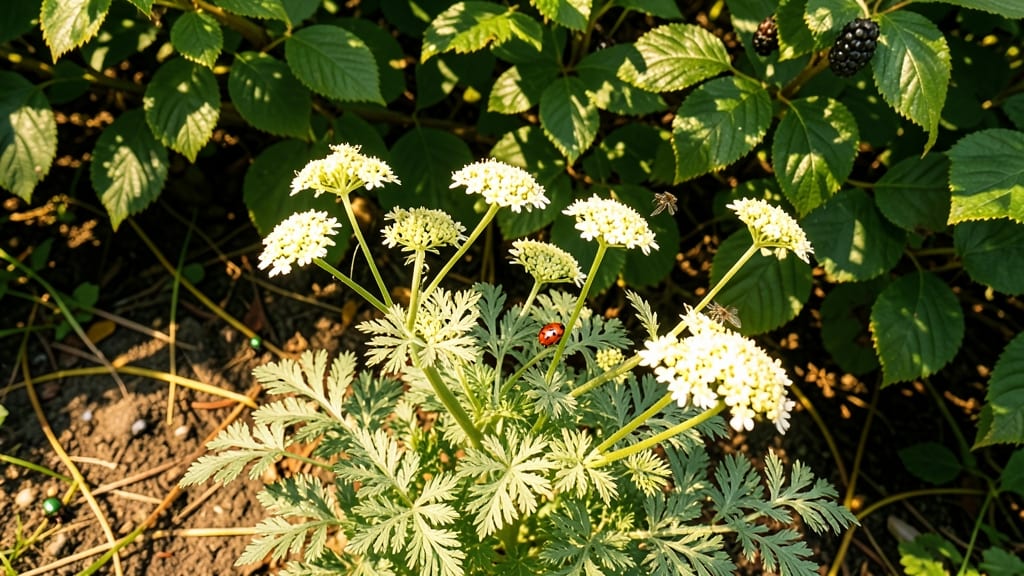
Struggling with poor fruit yields or pest problems in your orchard? Companion planting with these 10 strategic plants can dramatically improve fruit tree health, deter pests, and even enhance flavor—all while creating a thriving ecosystem in your garden.
Garlic Around Apple Trees
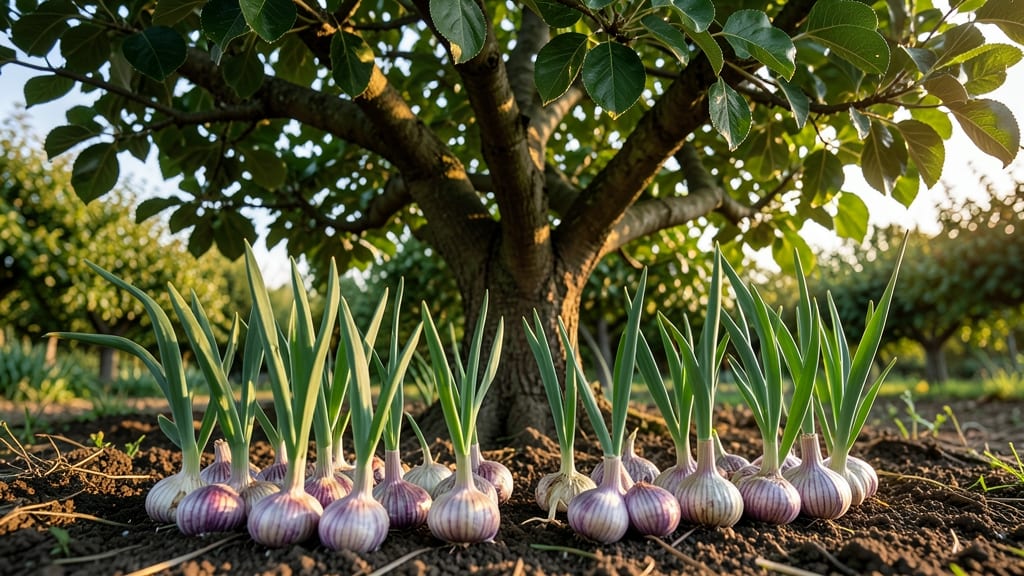
Tired of chemical sprays ruining your organic apple harvest? Planting garlic around your apple trees creates a natural pest barrier that works year-round. The strong scent deters codling moths and apple maggots, two of the most destructive pests, while also improving soil health through its natural antifungal properties.
For best results, plant hardneck garlic varieties like Rocambole or Purple Stripe in early fall, about 6 inches from the tree's drip line. The cloves should be 2-3 inches deep in well-draining soil. As the garlic grows, it releases compounds that suppress fungal diseases like apple scab, creating healthier trees overall. Plus, you'll get a bonus harvest of flavorful bulbs in late summer!
This method is especially valuable for organic growers or those with small backyard orchards who want to avoid synthetic pesticides. The garlic's pest-repelling effects last through the growing season, giving you peace of mind while your trees thrive. 🌱
Nasturtiums Near Peach Trees
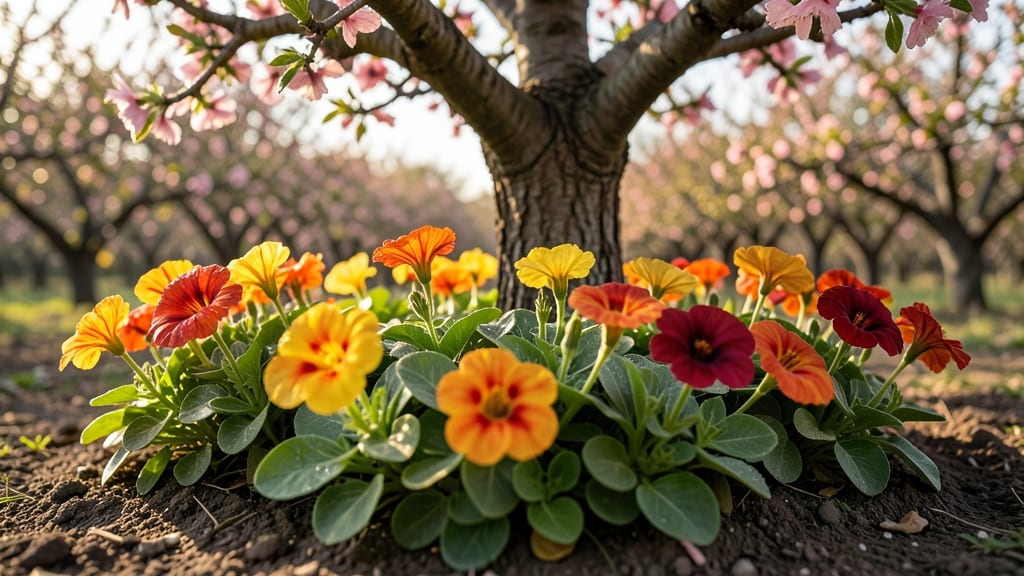
If your peach tree is battling aphids or other soft-bodied pests, nasturtiums are your secret weapon. These vibrant annuals act as a natural trap crop, luring pests away from peach blossoms while their edible flowers add a stunning splash of color to your orchard.
Plant nasturtiums in a ring around your peach tree’s base or train them up a nearby trellis to create a pest barrier. They thrive in full sun to partial shade and tolerate poor soil, making them low-maintenance allies. Plus, their peppery leaves and flowers are safe to eat—add them to salads for a tangy twist!
This companion pairing is perfect for home gardeners who want to reduce chemical sprays while keeping their orchard both productive and beautiful. 🌻
Basil Under Citrus Trees
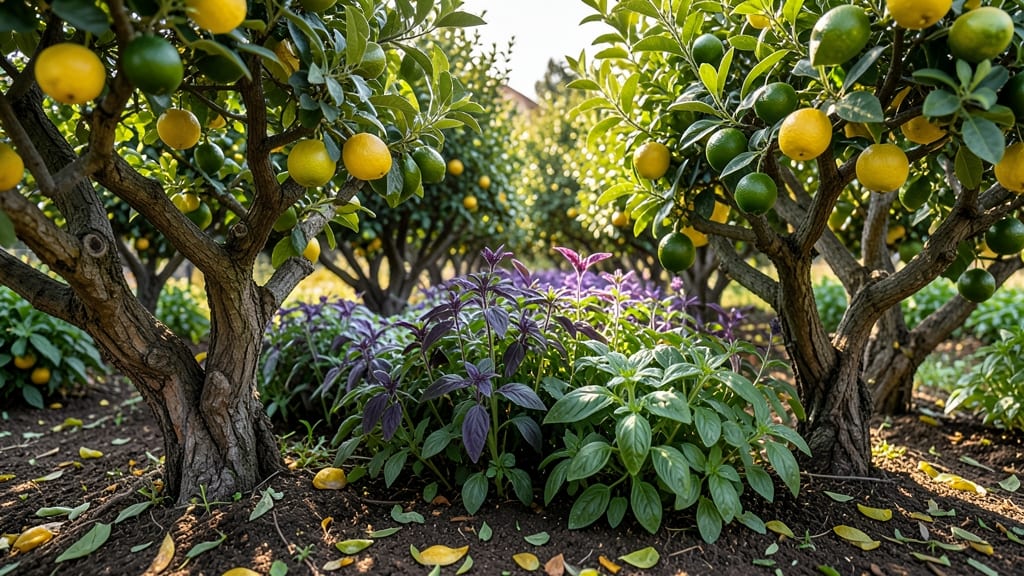
Want juicier lemons and limes without extra effort? Planting basil under your citrus trees does more than just deter pests—it actually boosts flavor in your fruit while keeping roots cool and moist.
The aromatic oils in basil repel whiteflies, a common citrus pest, while the lush foliage provides shade that reduces moisture loss from the soil. For Mediterranean climates or container citrus, this combo works especially well—just keep basil pruned to avoid competing with the tree's roots. Harvest leaves regularly to encourage bushier growth and more pest protection.
Urban gardeners with container citrus will love this pairing: the basil thrives in the same well-draining soil and adds fresh herbs to your kitchen. 💚
Clover Under Fruit Trees
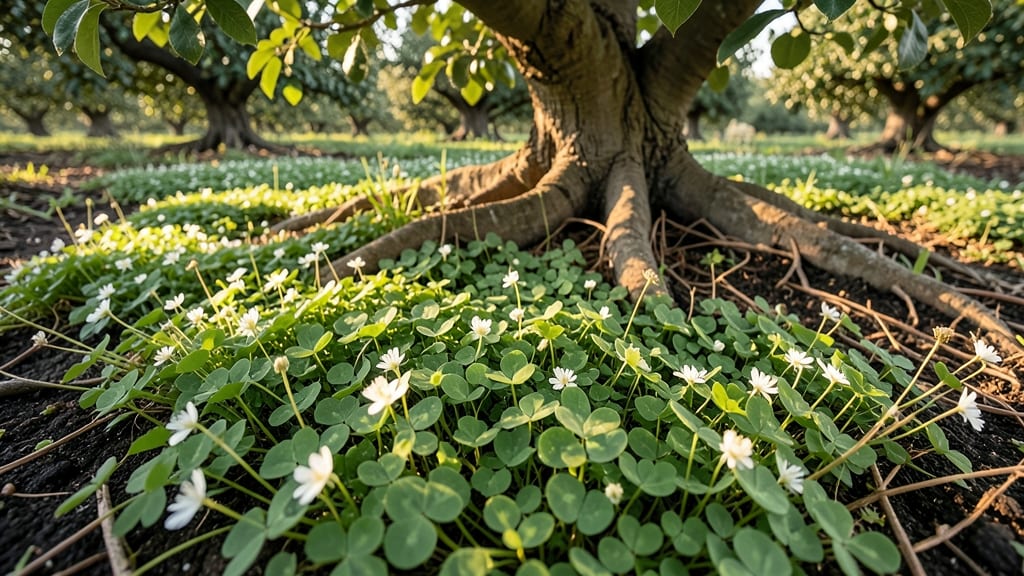
Tired of battling weeds and poor soil in your orchard? White Dutch clover is the unsung hero that works tirelessly beneath your fruit trees, transforming bare ground into a living mulch that benefits both soil and pollinators.
This hardy, nitrogen-fixing plant forms a dense mat that smothers weeds while adding 20-30 pounds of nitrogen per 1,000 square feet annually. Its shallow roots also improve soil structure, and its delicate white flowers attract bees and hoverflies that pollinate fruit blossoms. Plant clover in early spring or fall, keeping it 3-4 inches tall to avoid competing with tree roots.
Perfect for organic growers, permaculture practitioners, and anyone managing large orchards, clover turns maintenance headaches into a self-sustaining ecosystem. 🌱
Marigolds Near Cherry Trees
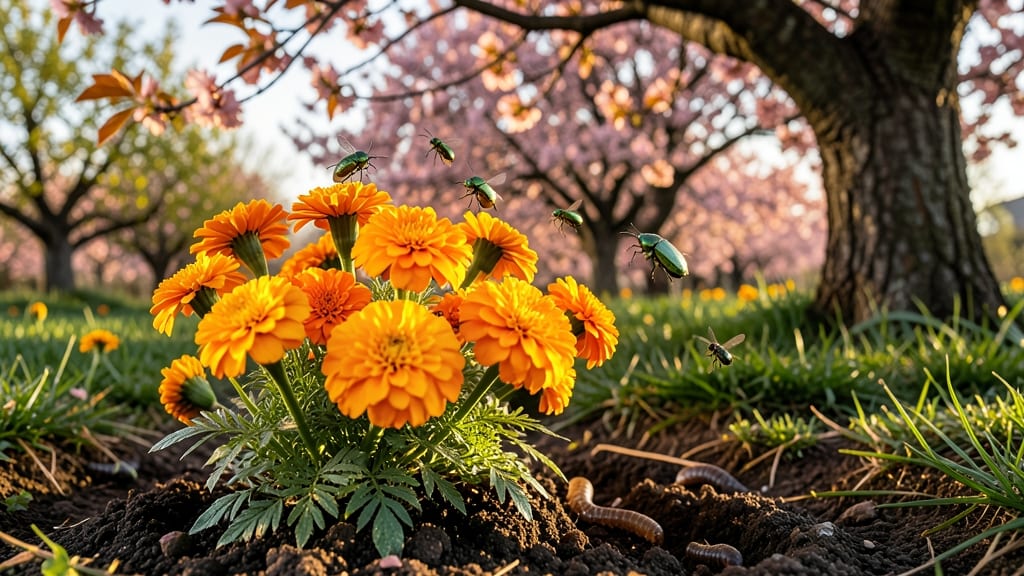
If your cherry trees are struggling with Japanese beetles or soil-dwelling nematodes, marigolds are your secret weapon. These bright bloomers release natural compounds that repel pests while attracting beneficial insects, making them perfect for small orchards where space is limited.
Plant French marigolds (tagetes patula) or African marigolds (tagetes erecta) in a 12-inch-wide band around the tree’s drip line. Their deep roots also help break up compacted soil, improving drainage. For maximum impact, interplant with chives or garlic to create a multi-layered pest defense.
Urban gardeners and small-space growers will love how marigolds add year-round color while keeping pests at bay—no chemicals required. 🌻
Thyme Along Pear Tree Bases
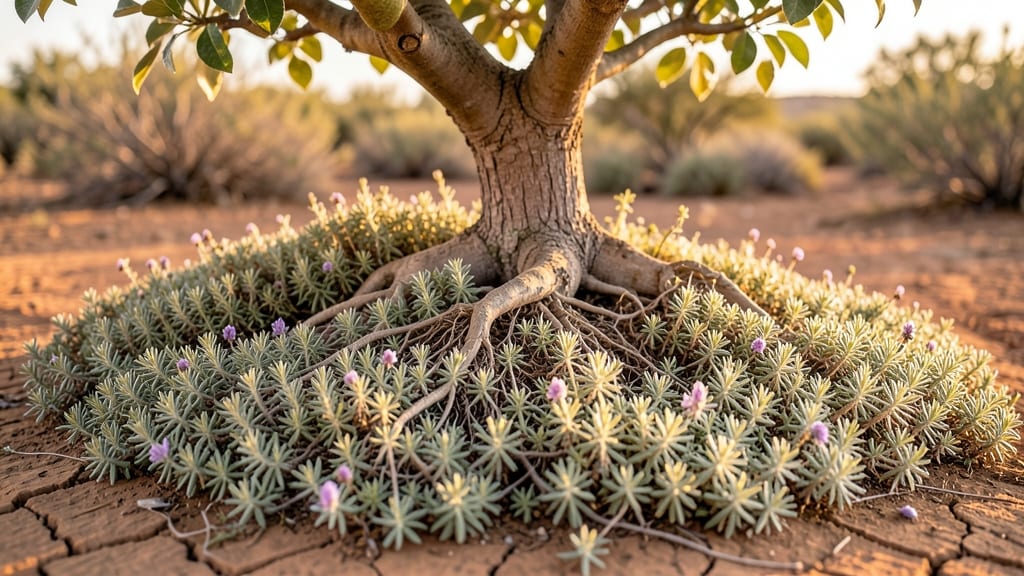
If you're battling root maggots in your pear trees—or just want to improve soil structure in dry climates—thyme is the unsung hero of orchard companions. Its fragrant oils naturally repel pests while creating a moisture-retaining carpet that thrives where other plants struggle.
Plant thyme varieties like lemon thyme or creeping thyme in a 12-inch-wide band around your pear tree's drip line. The aromatic oils disrupt root maggot egg-laying cycles, while its shallow roots improve soil aeration without competing for water. For extra protection, mulch lightly with gravel or coarse sand to retain moisture in hot, dry conditions.
This low-maintenance perennial is ideal for Mediterranean climates, container orchards, or drought-prone yards. It also doubles as a culinary herb—harvest sprigs for cooking while keeping your pears pest-free. 💚
Chives Near Plum Trees
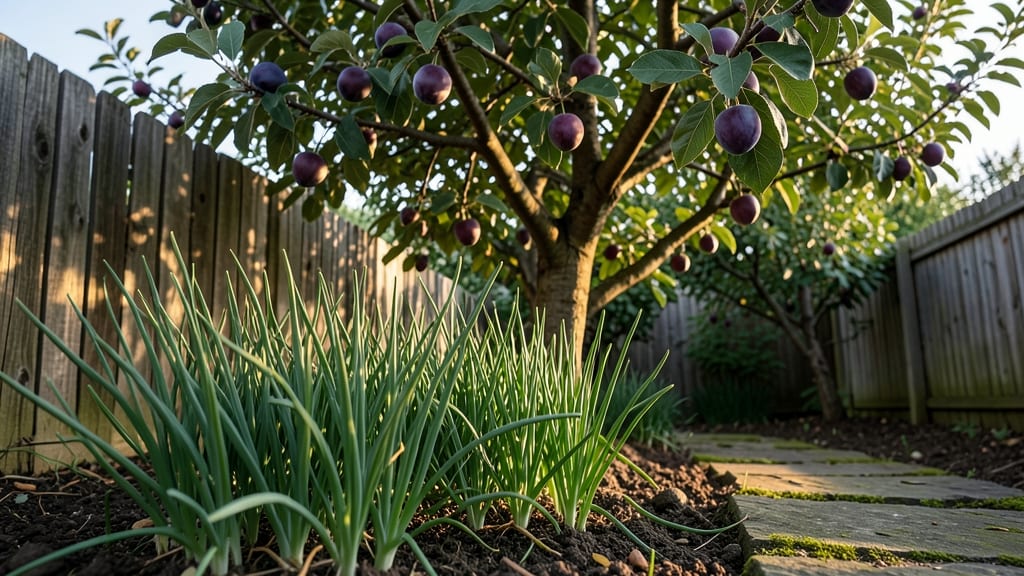
Small urban orchards can benefit from a surprising kitchen garden ally: chives planted near plum trees. These hardy perennial herbs don’t just repel carrot flies—they also infuse your plums with subtle, oniony notes that enhance their natural sweetness.
Chives thrive in partial shade, making them ideal for the dappled light under plum canopies. Space them 6-12 inches from the tree’s drip line to avoid root competition while maximizing their pest-deterring effects. Their purple flower stalks in late spring also attract pollinators, boosting fruit set.
Urban gardeners with limited space will love this dual-purpose plant—it’s both a culinary herb and a natural pest barrier, all while improving your harvest’s flavor. 🌱
Dill Beside Stone Fruit Trees
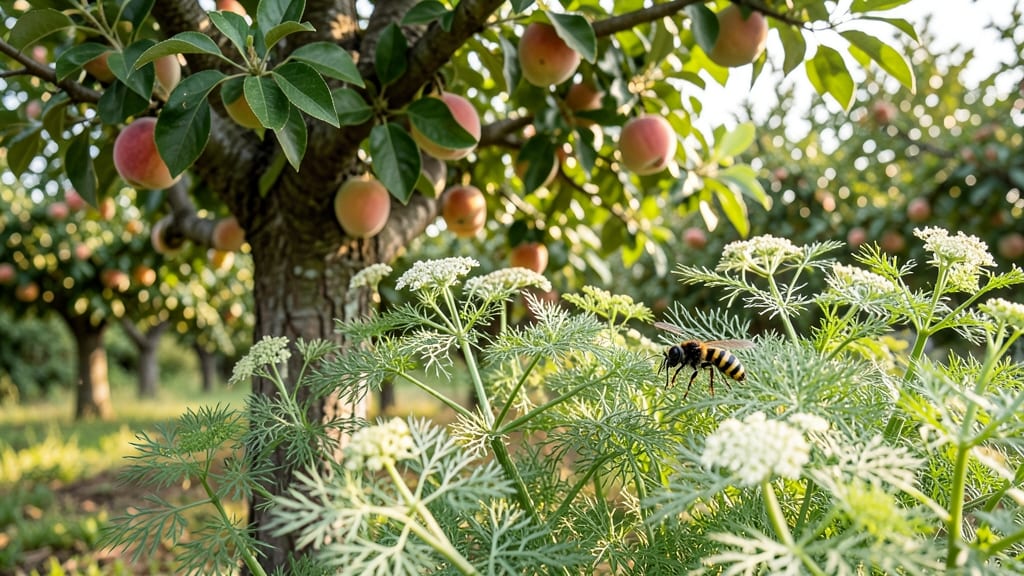
If you’re battling codling moths or other fruit pests in your stone fruit trees (peaches, nectarines, or plums), dill might be your secret weapon. This feathery herb doesn’t just add flavor to your kitchen—it lures predatory wasps that hunt and devour caterpillars and moths before they can damage your harvest.
Plant dill 2–3 feet away from your tree’s drip line, where its tall stems (up to 5 feet) create a natural pest-control barrier. The umbrella-shaped flowers bloom in late summer, releasing nectar that attracts beneficial insects like parasitic wasps—nature’s own pest patrol. For best results, sow seeds directly in the soil after the last frost, as dill thrives in full sun and well-drained soil.
This is a game-changer for organic growers tired of chemical sprays or those with small orchards where space is limited. Plus, you’ll get fresh dill for soups and salads while keeping your fruit trees pest-free! 🌱
Comfrey Under Citrus Trees
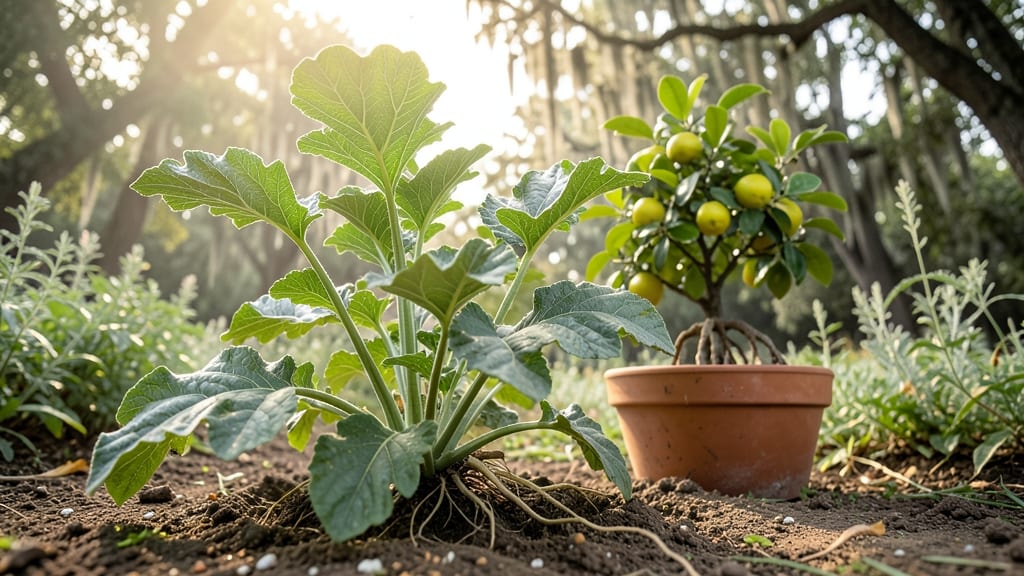
If your citrus trees struggle in nutrient-poor soil or you're growing them in containers, comfrey is the under-the-radar ally you need. This hardy perennial doesn't just tolerate shade—it thrives there, while its deep taproot (up to 6 feet!) pulls up minerals like potassium, calcium, and phosphorus from deep soil layers, making them available to your citrus roots.
Comfrey also acts as a natural snail deterrent, thanks to its fuzzy, slightly sticky leaves that snails avoid. For container citrus, plant comfrey in a separate pot and use its leaf mulch (rich in potassium) around your trees. Water deeply after planting to help establish its roots quickly. The key is to let it grow wild—its unruly size is part of its charm!
This is especially valuable for urban gardeners with limited space or those dealing with sandy, depleted soils. Just be mindful of its aggressive spread—plant it in a contained area or use root barriers if needed. 🌱
Yarrow Around Berry Bushes

If your berry bushes are struggling with pests like Japanese beetles or aphids, yarrow could be the unsung hero you’ve been missing. This hardy perennial thrives in partial shade, making it perfect for the dappled light under berry canes while acting as a pest magnet for beneficial insects.
Yarrow’s fern-like foliage and flat-topped yellow flowers attract ladybugs, lacewings, and hoverflies, which devour common berry pests. Plant it in a loose ring around raspberry, blackberry, or blueberry bushes, keeping stems about 12-18 inches away from the main stems. It’s drought-tolerant once established, so it won’t compete with your berries for water.
This low-maintenance plant is especially valuable for organic growers or those with mixed orchards. The more yarrow you plant, the stronger the pest-deterring effect becomes—ideal for both small backyard patches and larger berry production areas. 🌻